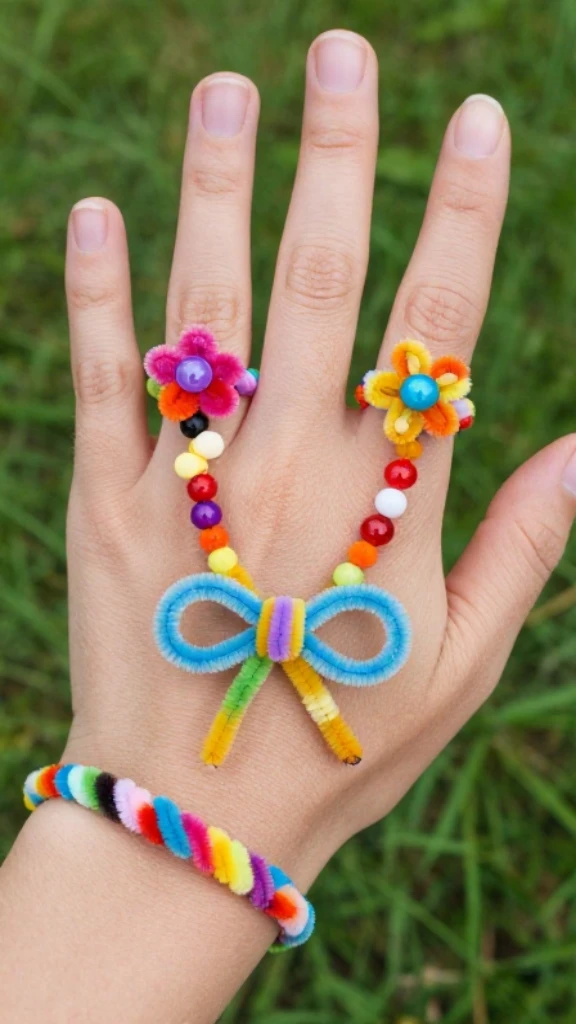
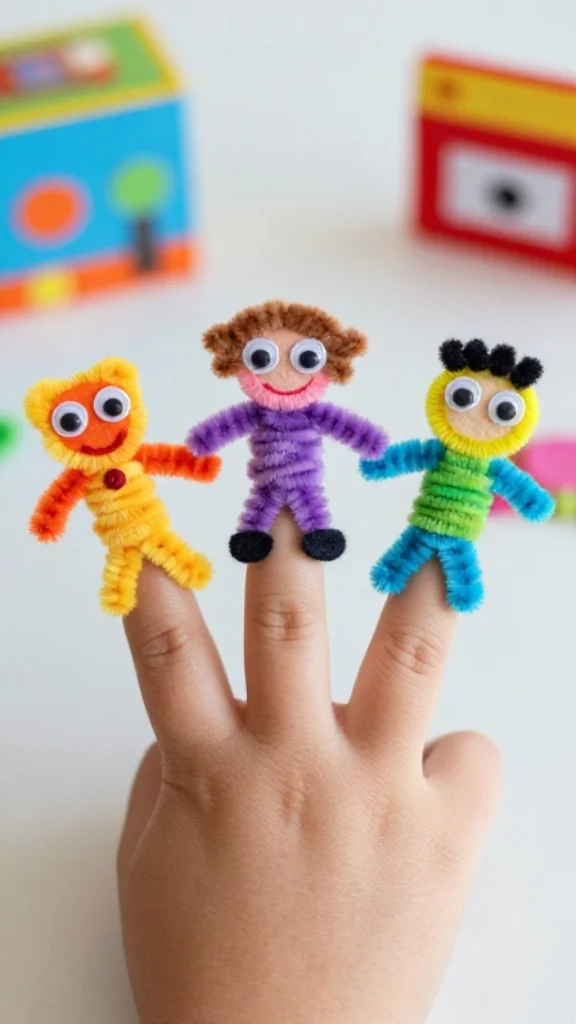
There’s something very relaxing about winding colorful pipe cleaners into exquisite flower forms. I vividly remember constructing my first pipe cleaner bouquet as a kid—bright pink petals that looked nothing like genuine flowers but meant everything to my mom.
These fluffy, tiny stems have come a long way since then. Today, pipe cleaner flowers aren’t simply classroom exercises; they’re actual home decor items, meaningful homemade gifts, and surprisingly peaceful creative pursuits for adults, too.
Whether you’re crafting with children on a rainy afternoon or hunting for budget-friendly decoration ideas, these adaptable chenille stems may morph into lovely blooms that never wilt or need watering.
1. Classic Daisy Design
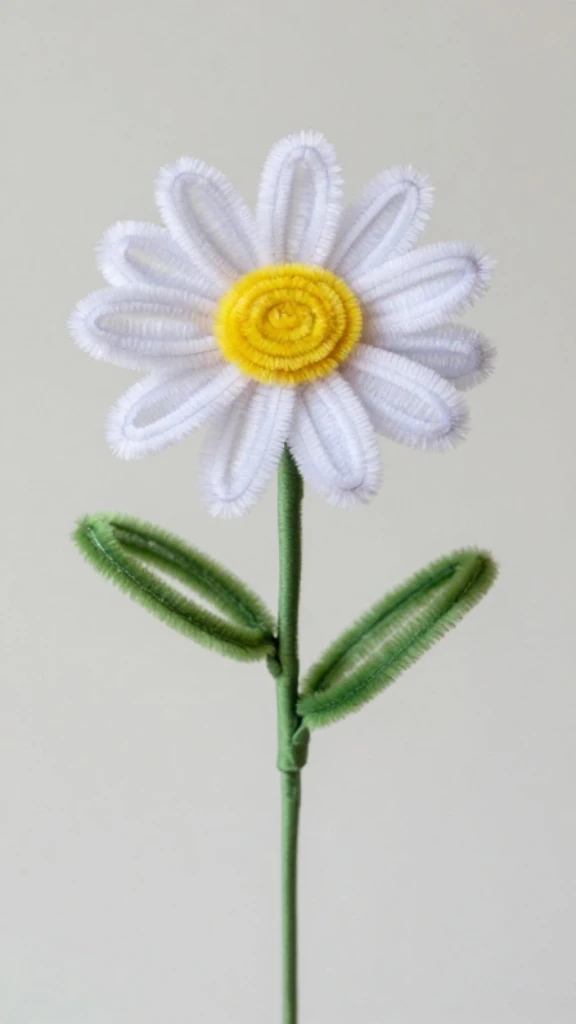
The basic daisy is the best starting point for beginners investigating pipe cleaner flower crafts. Start with a white or yellow pipe cleaner, producing a small loop at one end for the center, then build five to six petal loops around it.
Twist the base securely and attach a green stem. This basic technique teaches fundamental twisting and bending skills while making instantly recognizable flowers. Kids as young as five can grasp this design with minimal supervision.
The charm comes in its versatility—change colors for different daisy types or add googly eyes to the middle for imaginative garden creatures. These daisies work great as cake toppers, gift embellishments, or placed together in small vases for pleasant kitchen windowsill displays.
2. Spiral Rose Creation
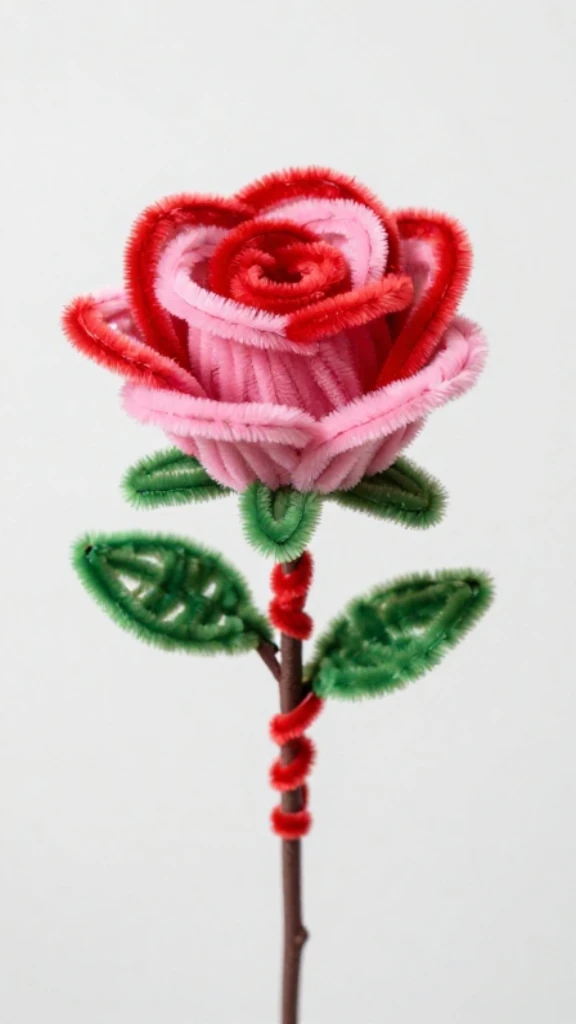
Roses created from pipe cleaners appear surprisingly attractive when you master the spiral technique. Begin with a red or pink pipe cleaner, twisting it firmly around a pencil to produce a coiled spring impression.
Gently extend the coil slightly, then wind it around itself from the center outward, making traditional rose layers. The outside petals should be looser than the tight center bud. Secure everything at the base with another piece twisted as the stem.
These flowers take around ten minutes once you’ve rehearsed the motion. I’ve made many Valentine’s decorations, and guests often wonder if they’re real from across the room!
Add little green pipe cleaner leaves for enhanced authenticity. They’re great for romantic dinner table settings or as enduring anniversary bouquet alternatives.
3. Sunflower Sunshine Burst
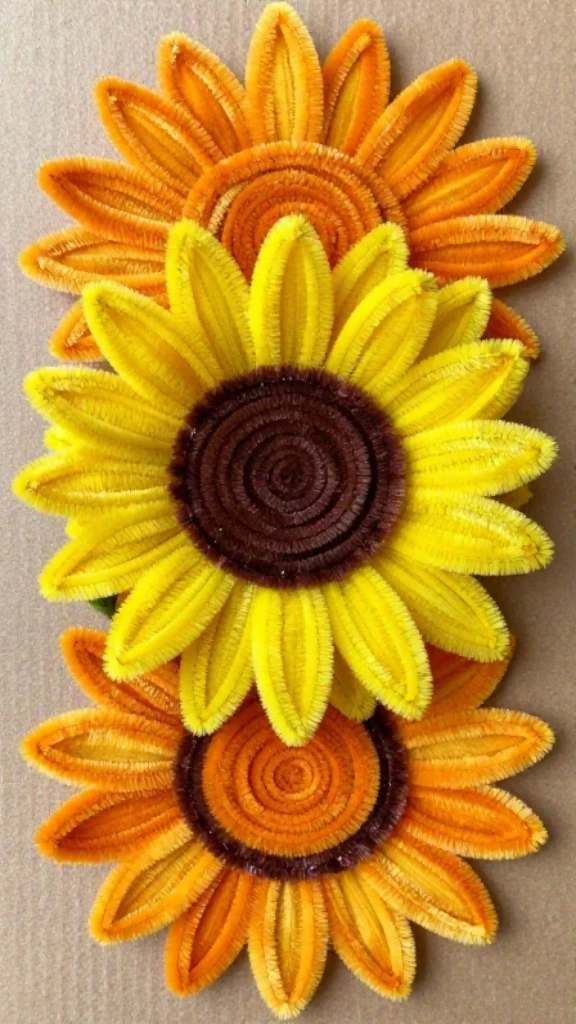
Roses created from pipe cleaners appear surprisingly attractive when you master the spiral technique. Begin with a red or pink pipe cleaner, twisting it firmly around a pencil to produce a coiled spring impression. Gently extend the coil slightly, then wind it around itself from the center outward, making traditional rose layers.
The outside petals should be looser than the tight center bud. Secure everything at the base with another piece twisted as the stem. These flowers take around ten minutes once you’ve rehearsed the motion.
I’ve made many Valentine’s decorations, and guests often wonder if they’re real from across the room! Add little green pipe cleaner leaves for enhanced authenticity. They’re great for romantic dinner table settings or as enduring anniversary bouquet alternatives.
4. Delicate Tulip Shapes
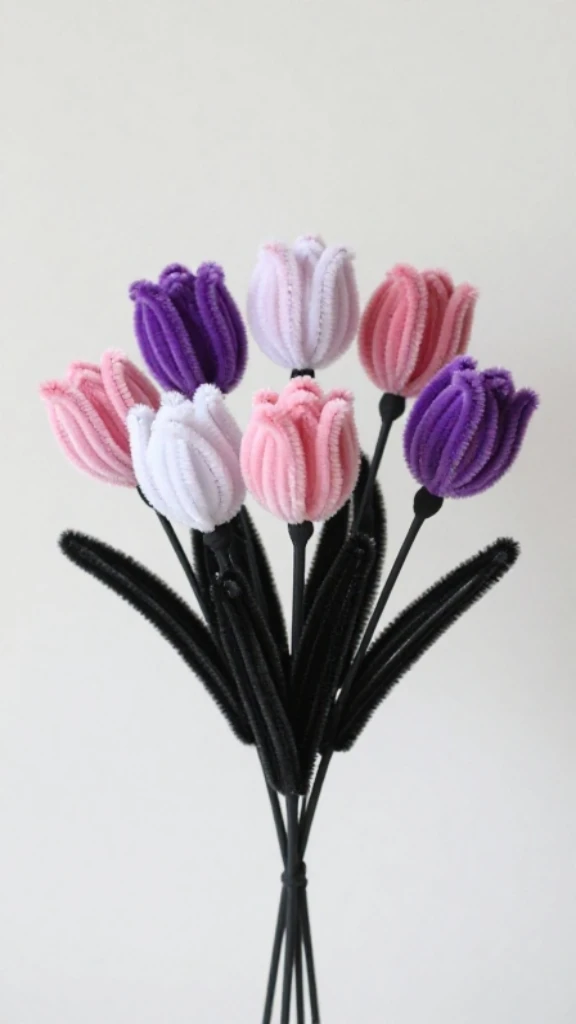
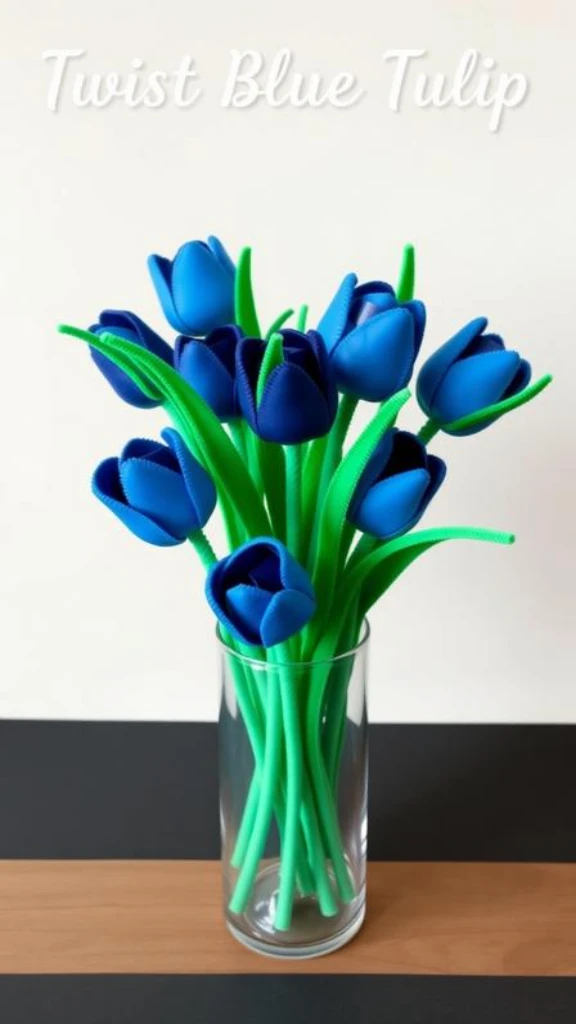
Tulips offer a more sophisticated design that pushes craftsmen to work with graceful curves instead of loops. Form three to four pipe cleaners into elongated petal shapes, pinching one end to create the unique tulip point.
Arrange them in a circular arrangement, overlapping slightly at the base. The stem should be taller and sturdier than other flowers—use two twisted pipe cleaners for strength. Real tulips come in practically every color, so explore freely with purple, pink, white, or even black pipe cleaners.
These work nicely as spring decorations or Easter centerpieces. The streamlined design looks particularly striking when you assemble an entire bouquet in varied heights, simulating how genuine tulips organically bloom at different levels in arrangements.
5. Layered Carnation Texture
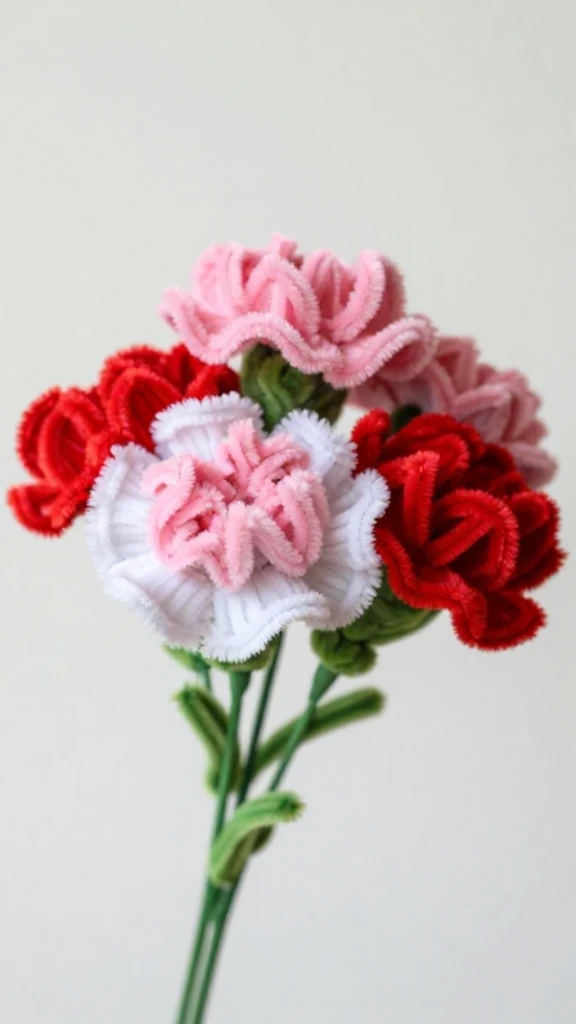
Carnations might seem complex, but they’re actually fairly forgiving and use a delightful ruffling method. Take three pipe cleaners and fold them accordion-style into little zigzag patterns. Bundle these folded pieces together tightly at one end, then fan them out to create the carnation’s unique ruffled appearance.
The more pipe cleaners you use, the fuller your bloom grows. Pink and crimson work for conventional appearances, while white carnations seem almost wedding-worthy. This texture-focused method helps develop fine motor skills differently from loop-based flowers.
I find the constant folding process very calming after difficult workdays. These flowers shine as Mother’s Day crafts because they look far more complex than their simple construction suggests.
6. Whimsical Wildflower Mix
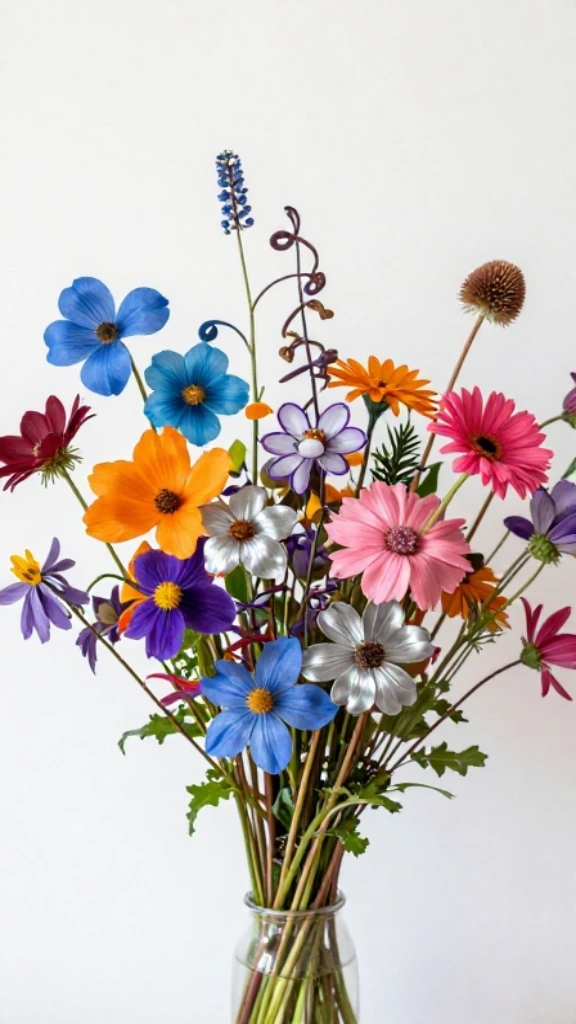
Don’t limit yourself to realistic flowers—invented wildflowers let imagination go absolutely wild with colors and shapes. Combine unexpected hue pairings like blue with orange, or shiny silver with hot pink. Create asymmetrical petal arrangements, different-sized loops on the same flower, or add extra stems shooting off in unexpected directions.
Children particularly like this independence from “correct” floral construction. Mix different flower types together in one diverse bouquet for boho beauty. These fantasy flowers work great for fairy garden decorations or as props in imaginative play settings.
The messier and more inventive, the better—there are simply no restrictions here. Sometimes the “mistakes” become your favorite pieces, with twisted petals or crooked stems giving true handmade character.
7. Tiny Blossom Branches
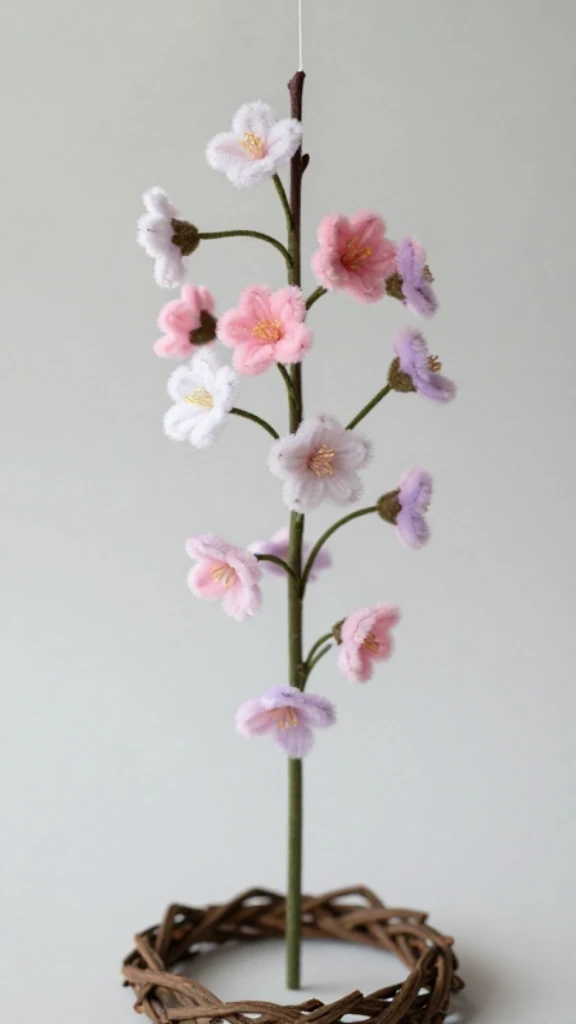
Miniature blossoms gathered along a single stalk resemble cherry blossoms or baby’s breath nicely. Create very small loop flowers using only half a pipe cleaner apiece, generating five to seven tiny blooms. Attach these at intervals along one long green stem, spacing them naturally rather than symmetrically.
This technique generates delicate, airy flowers great for spring decorations or Asian-inspired design themes. The small scale makes them unexpectedly time-consuming yet immensely gratifying. These branches look great in tall, narrow vases or wrapped into wreath bases.
Try white or pale pink for cherry blossom effects, or lavender for a wisteria-inspired design. The lightweight branches can also be suspended from ceilings using clear fishing line for floating garden party decorations.
8. Bold Poppy Petals
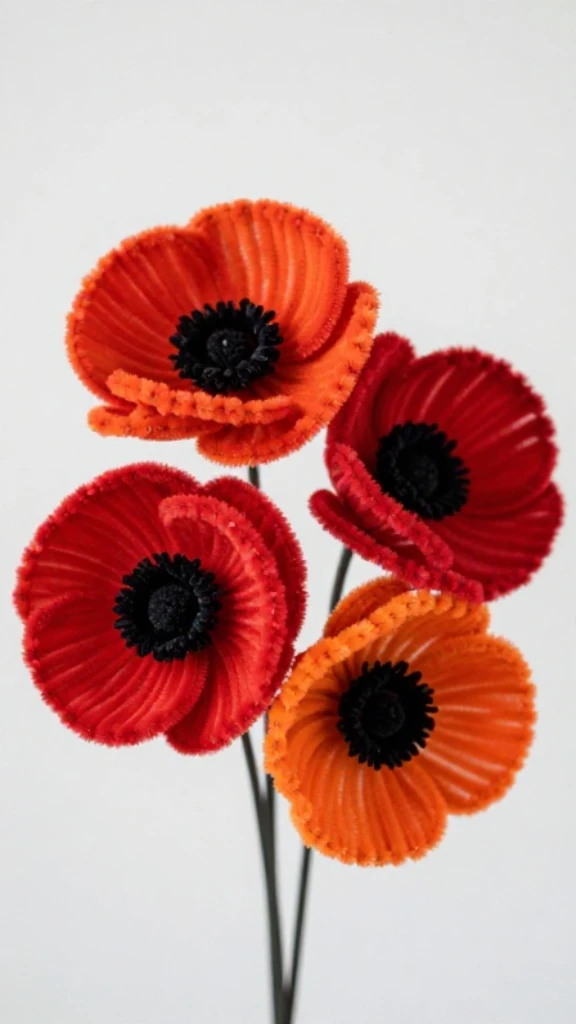
Poppies add dramatic flair with their huge, vivid petals and striking black centers. Use red or orange pipe cleaners to construct four to five giant petal loops, making them larger and rounder than daisy petals.
The center demands extra attention—wrap a black pipe cleaner in a compact ball shape, then add tiny snips or loops to imitate the poppy’s fuzzy stamen. These flowers make dramatic statements singly or together sparingly rather than in huge bouquets.
The simplicity of four or five petals makes construction quick if you nail the size proportions. Poppies work particularly well for Remembrance Day crafts or as strong accent elements in modern minimalist decor.
Their architectural quality translates surprisingly well to pipe cleaner media, keeping the flower’s characteristic form.
9. Colorful Cosmos Garden
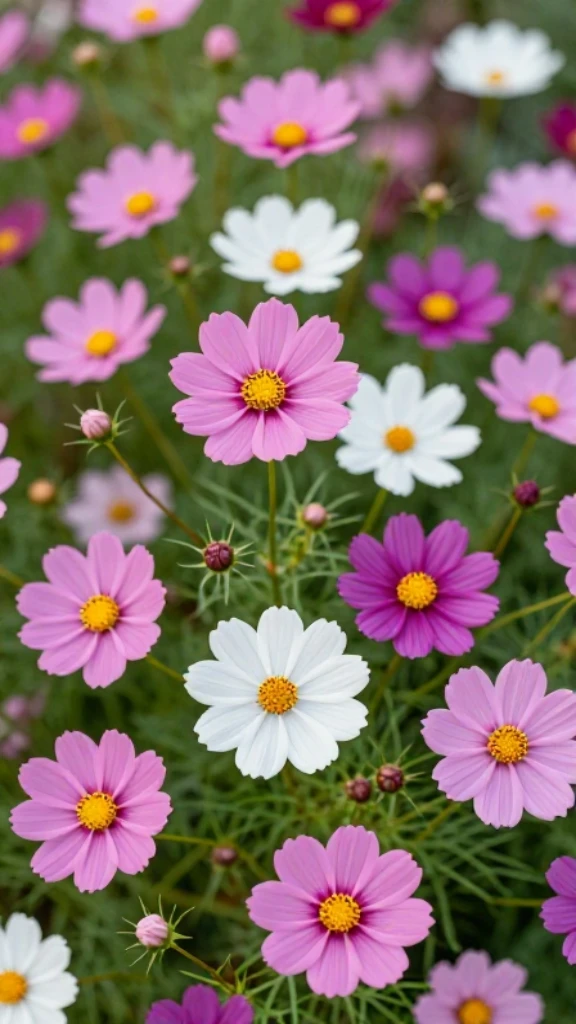
Cosmos flowers possess unusual notched petals that provide a star-like appearance, giving novel design problems. Cut small V-shaped notches into the end of each petal loop before placing them around the center. This minor detail transforms simple loops into recognized cosmos blossoms.
Use pink, white, purple, or bicolor combinations for true variation. The centers should be bright or orange, made with tightly wrapped tiny circles. These flowers teach precision—the notches need to be uniform for the best effect.
Cosmos work wonderfully in shabby chic or cottage-style décor schemes. Their light, delicate appearance, despite being created from hefty craft materials, usually shocks people. Create a mixed cosmos arrangement with varied heights and colors fora garden-fresh appearance.
10. Lavender Stem Bundles
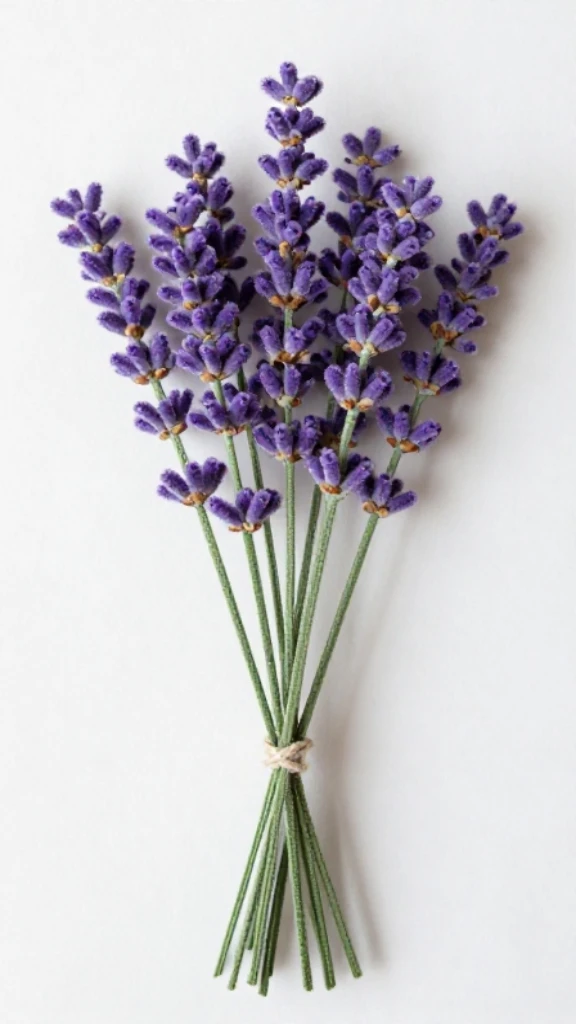
Lavender offers an entirely new construction style employing many little elements along a stem. Create tiny purple loops spaced closely together along the top third of a green pipe cleaner stem. The loops should be short and tight, providing the thick, clustered appearance of lavender flower spikes.
Make numerous stems and wrap them together with ribbon or twine for an authentic lavender bouquet appearance. These smell-free alternatives endure forever, unlike real lavender. The repetitive loop-making becomes almost meditative—I typically make these while watching movies.
Lavender bunches complement farmhouse decor wonderfully or lend rustic appeal toa bathroom shelf. Children might find the repetition monotonous, while older artisans love the soothing, meticulous process. Add a few drops of lavender essential oil to the finished bundle for fragrant authenticity.
11. Cheerful Gerbera Dimensions
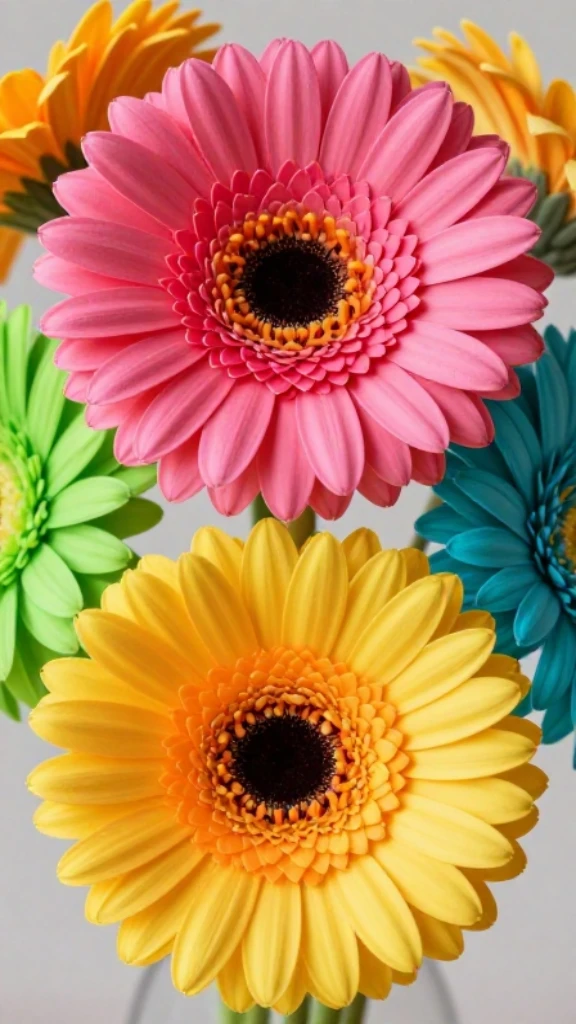
Gerbera daisies require stacking techniques to produce their unique richness and texture. Start with a broad outer ring of petals in brilliant pink, orange, or yellow. Add a second, smaller layer of slightly darker or lighter petals inside the first ring. Finally, construct a contrasting middle circle—black or brown works beautifully. The three-layer method generates an actual depth that pictures nicely.
These flowers demand more pipe cleaners per bloom, yet give a remarkable visual impact. They’re great for artisans willing to progress beyond single-layer flowers. Gerberas make wonderful focal flowers in mixed bouquets or stand alone as spectacular pieces.
The colorful, almost cartoonish style matches children’s room design nicely. Experiment with unique color combinations—lime green gerberas or turquoise ones produce trendy, unexpected designs.
12. Elegant Lily Formation
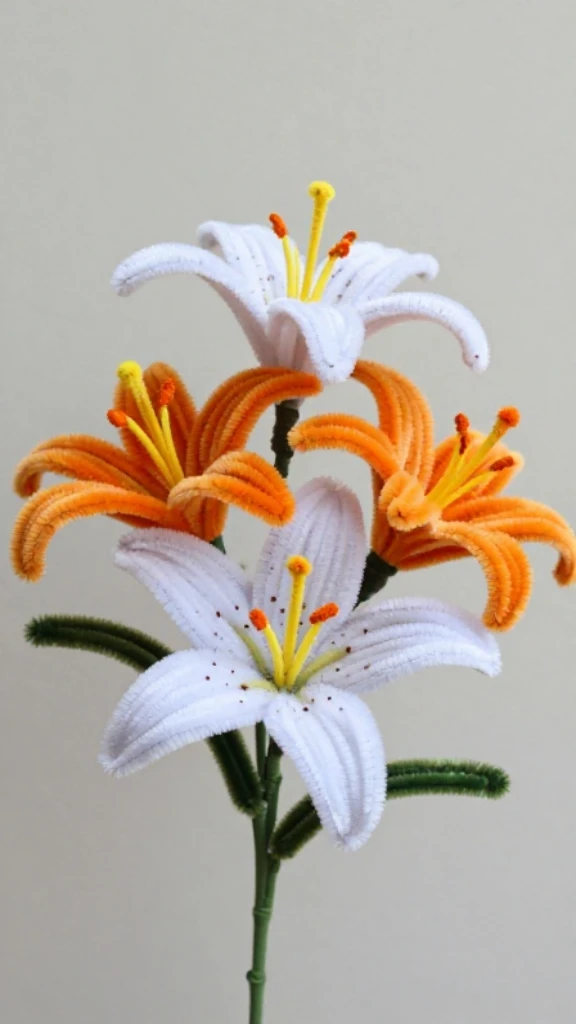
Lilies highlight what’s possible when you manipulate pipe cleaners into exquisite curves and points. Form six long, curved petals that taper to points at both ends, putting them in two layers of three. Add yellow or orange pipe cleaner “stamens” by constructing long, thin stems with little loops at the ends, positioning these to protrude from the flower’s center.
White lilies seem very lovely, while orange ones add lively vigor. The flower shape requires patience—each petal needs careful shaping for elegant curves. These stylish blooms suit grown-up creative projects or wedding decoration DIY attempts.
The amazing outcome makes the extra effort worthwhile. Consider adding small brown dots to white petals with markers to approximate stargazer lily patterns, though this departs from pure pipe cleaner building.
13. Simple Buttercup Brightness
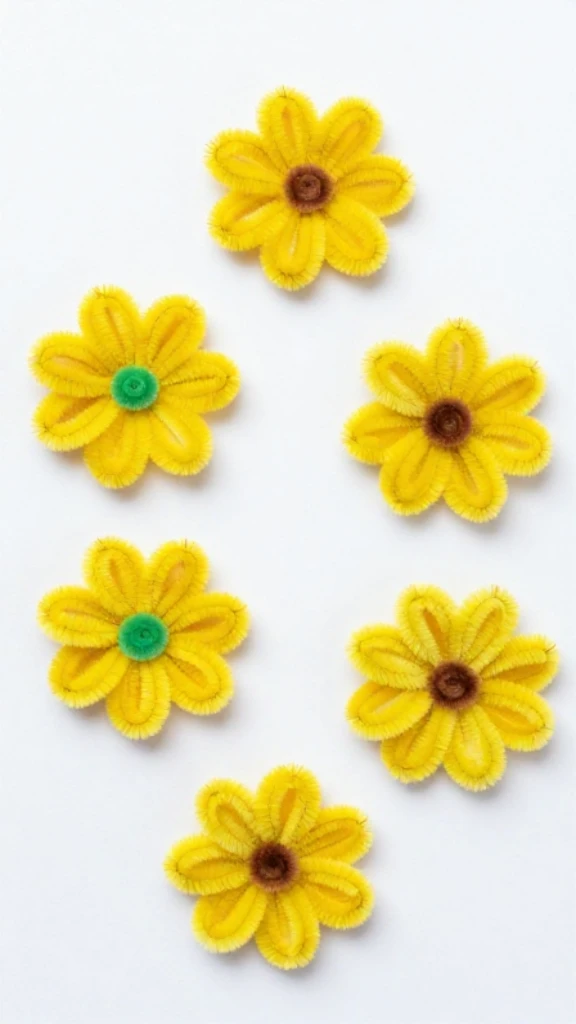
Buttercups convey nostalgic simplicity with their beautiful yellow blooms and petite size. Create five little, rounded petal loops from a bright yellow pipe cleaner, keeping them uniform and compact. The middle needs just a tiny dot of a different colored pipe cleaner—green or brown works great.
These quick-to-make flowers are excellent for bulk crafting sessions when you need several blooms rapidly. String them together as garlands, distribute them across table settings, or use them as cupcake toppers. The uncomplicated assembly makes buttercups perfect for big group craft activities or scout troop projects.
Despite their simplicity, clusters of buttercups provide a pleasant visual impact. They’re also fantastic “starter flowers” for very young children, establishing coordination skills before attempting more sophisticated designs.
14. Dramatic Iris Details
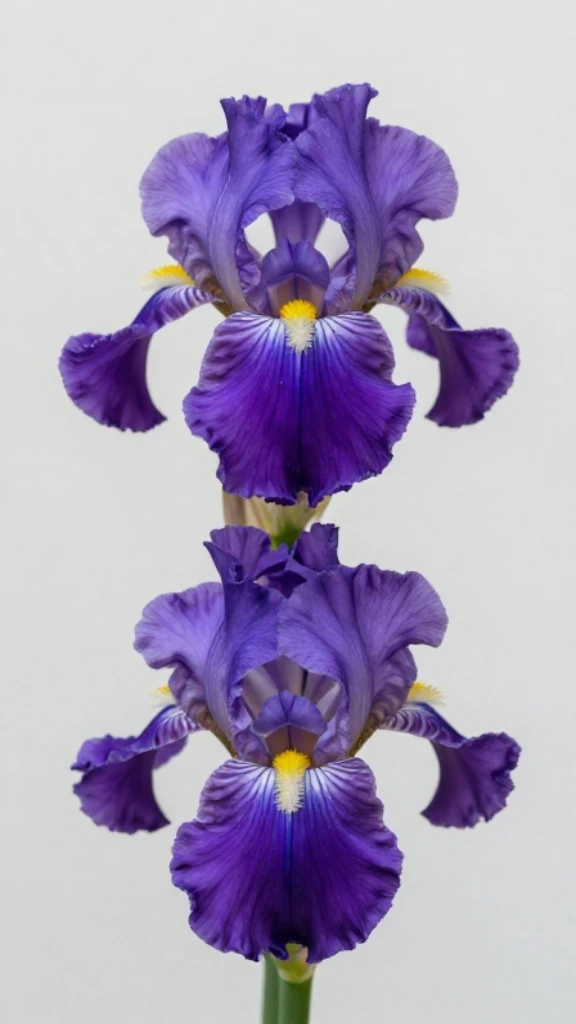
Irises challenge crafters with their unusual three-up, three-down petal arrangement and ruffled edges. Form three upright flowers that stand tall, then construct three drooping petals that fall downward and somewhat outward. Purple remains the basic iris color, although blue, yellow, and white variants occur, too.
The center generally has contrasting colors—add yellow or white embellishments where petals meet. This architectural flower structure teaches spatial thinking and three-dimensional design ideas. Irises work nicely as single specimens rather than in crowded bouquets because their unique shape needs attention.
The bold form matches contemporary or Asian-inspired interior aesthetics. While more time-consuming than simpler flowers, irises produce nuanced results that display improved creative skills. Consider crafting simply two or three to display in a basic arrangement.
15. Playful Pansy Faces
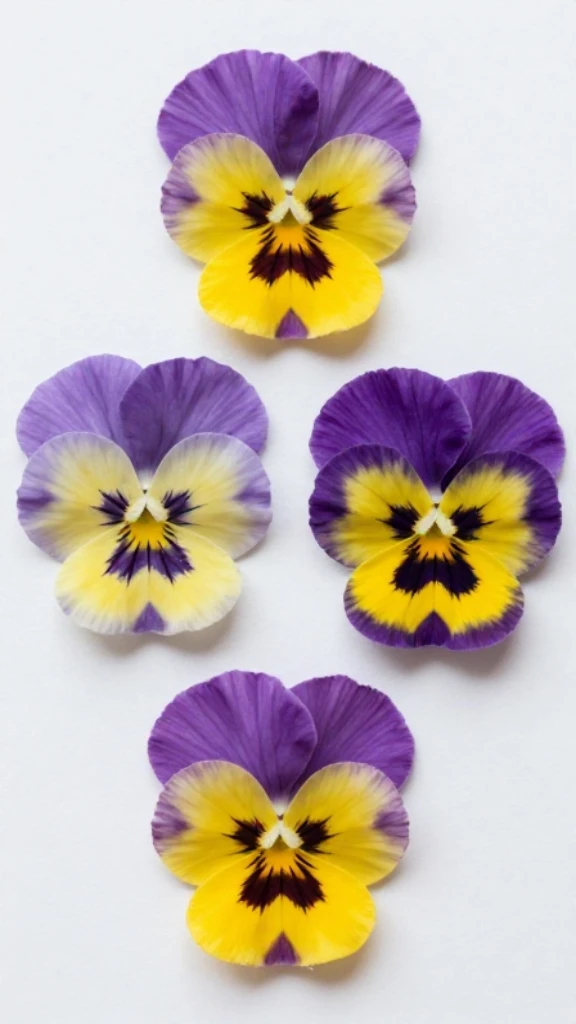
Pansies offer distinctive petal arrangements and color patterns that make them instantly recognizable and entertaining to build. Create five petals with two higher petals somewhat smaller than the three lower ones.
The key is adding “face” elements to the center using contrasting pipe cleaner colors or even permanent markers for the trademark pansy marks. Purple and yellow combos are typical, but pansies exist in practically every color imaginable.
These flowers have personality—each one appears slightly different, giving beauty via variance. Kids especially love adding crazy or artistic faces on their pansies. They work great as hair decorations, brooch pins, or refrigerator magnets.
The forgiving shape allows imperfection beautifully; misaligned petals only add character. Pansies teach color theory and pattern design alongside fundamental making techniques.
16. Hydrangea Cluster Magic
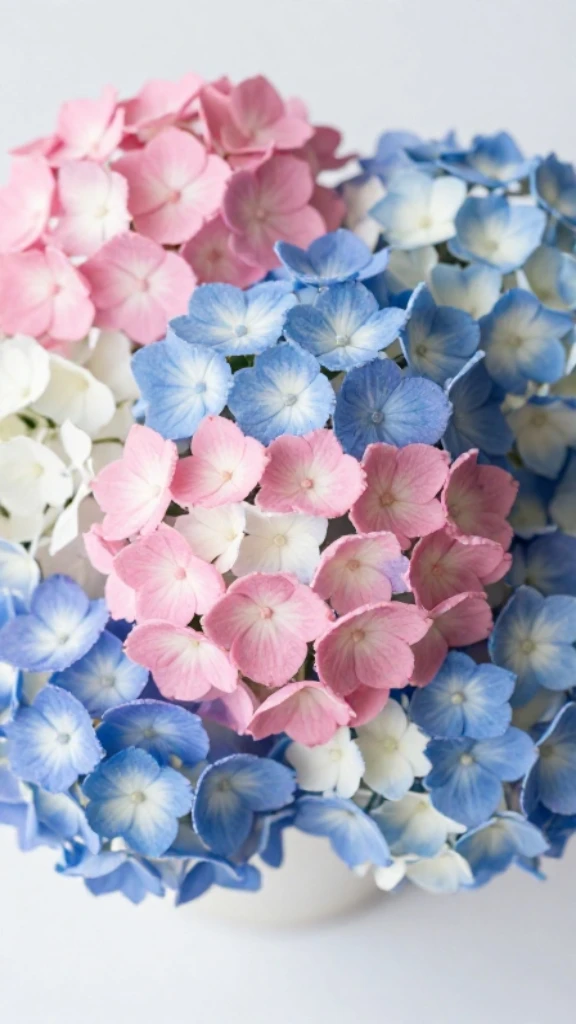
Hydrangeas demand patience but produce an amazing visual impact with clustered tiny blooms. Make around fifteen to twenty miniature four-petal flowers in pink, blue, or white. Attach these little flowers in a spherical cluster formation, building up a dimensional ball shape.
The flowers should be packed relatively densely to simulate hydrangea richness. This project requires numerous pipe cleaners and substantial time, but gives remarkable results worth the expenditure.
The clustered technique generates texture that photographs wonderfully for craft portfolios or social media posts. Hydrangeas complement beautiful occasions or sophisticated home design rather than children’s rooms.
Try generating different colored hydrangeas and putting them in one arrangement for outdoor party decorations. The repetitious little flower crafting becomes hypnotic—I often construct these while listening to podcasts or audiobooks.
17. Exotic Orchid Elegance
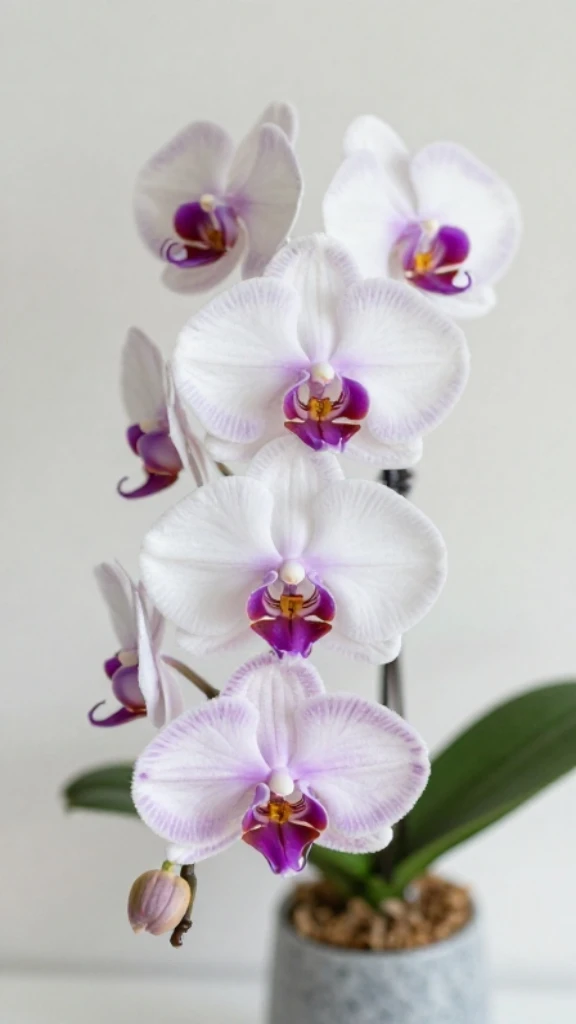
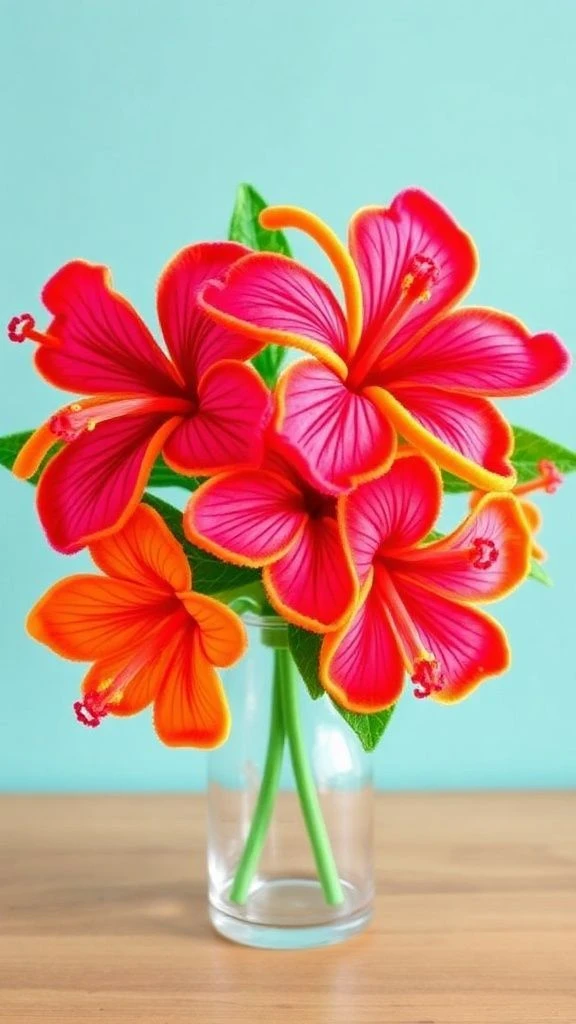
Orchids are the ultimate pipe cleaner flower challenge with their complicated petal structures and elegant curves. Form five petals of diverse sizes—two top petals, two side petals, and one bigger bottom lip petal that frequently curls or ruffles differently.
The center demands elaborate detailing with contrasting hues. White, purple, or pink pipe cleaners work best for an authentic orchid appearance. These elegant blossoms take practice to master but become gorgeous statement pieces.
The sleek form suits mature craftsmen seeking spectacular projects. Display orchids singly in small vases or pots to accentuate their architectural beauty. While tough, successfully crafting recognized orchids gives great delight.
Consider looking at actual orchid photographs for inspiration regarding petal placement and proportions. These highlight how versatile pipe cleaners truly are as a crafting medium.
18. Festive Poinsettia Layers
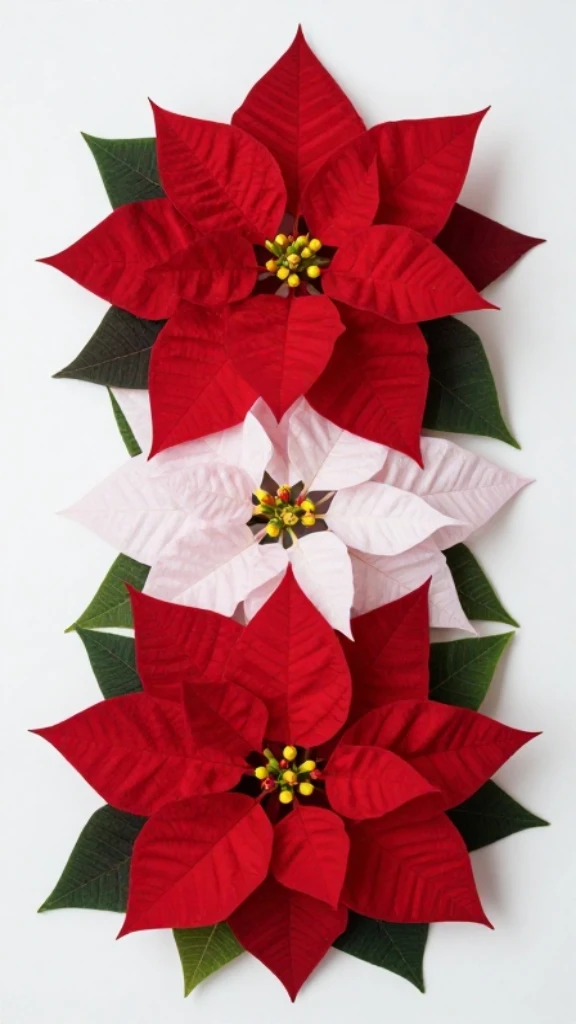
Poinsettias deliver holiday enthusiasm year-round with their characteristic red petal layers and golden cores. Create two or three layers of pointed red petals, starting with larger outer petals and decreasing size toward the center.
Add small yellow loops or balls to the center resembling the poinsettia’s actual tiny flowers. These holiday-associated blossoms work great as Christmas decorations, gift toppers, or festive table scatter. White or pink poinsettias give different color choices.
The tiered construction process extends to many other flower kinds, too, making this a useful skill-building exercise. Poinsettias also work beautifully as hair ornaments or wreath decorations.
Their aggressive, geometric design suits modern holiday decor tastes. While we identify them with winter, the bright red and green color combination actually delivers joyful highlights in any season.
19. Romantic Peony Fullness
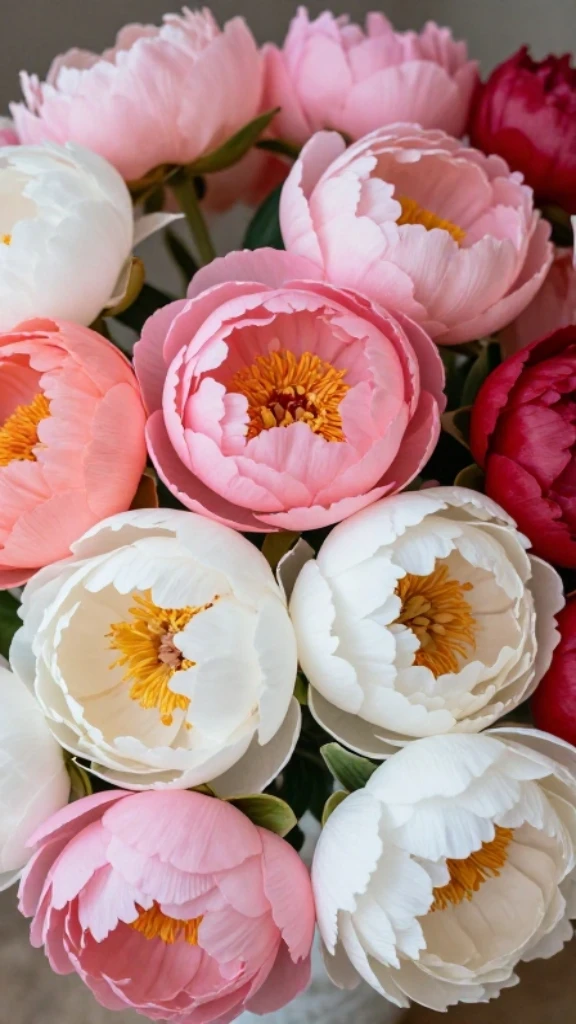
Peonies demand the most pipe cleaners per flower, yet provide lush, passionate flowers worth the material expenditure. Layer many rounds of petals, starting with bigger outer petals and going inside with progressively smaller ones. Use at least three to four layers for convincing peony fullness.
Pink remains the iconic color, although white, coral, or crimson peonies are very stunning. The rich layering produces genuine depth and dimension that appears surprisingly realistic. These flowers complement wedding decor, romantic meal settings, or shabby chic design ideas.
The time investment is significant—expect twenty to thirty minutes per peony—but the magnificent rewards warrant the effort. I’ve crafted peony bouquets as wedding gifts that recipients appreciate for years. The luscious appearance photographs nicely, making peonies great for creative blogs or social media material.
20. Mixed Bouquet Arrangement
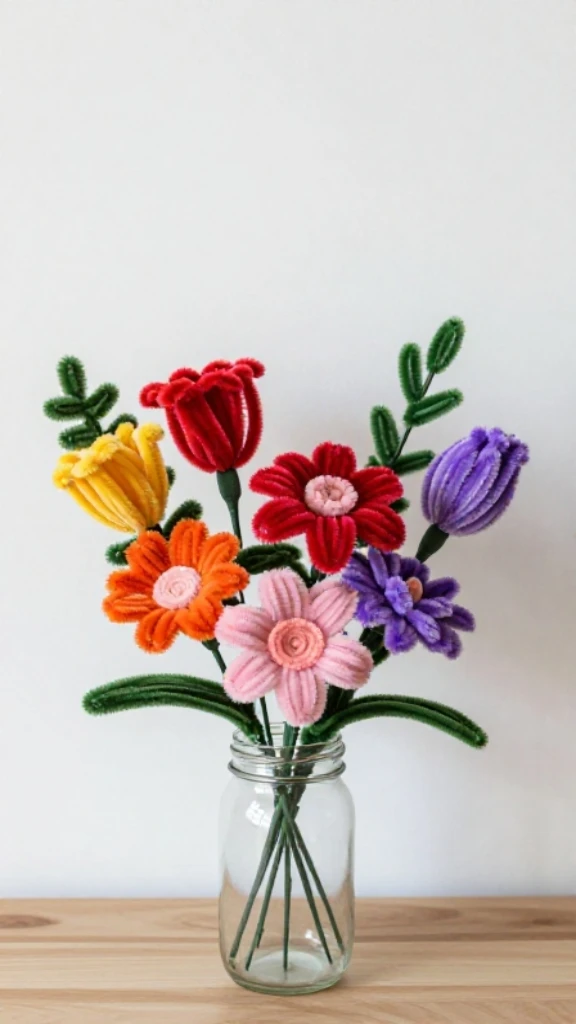
Combining numerous flower kinds into coherent groupings symbolizes the final skill in pipe cleaner flower creation. Select three to five distinct flower types with complementing colors and variable heights.
Add green pipe cleaner leaves at different spots along stems for fullness. Arrange flowers asymmetrically rather than in exact patterns—real bouquets have natural, organic placement. Secure stems together with floral tape, ribbon, or extra pipe cleaners wrapped at the base.
Consider container choices—mason jars, miniature vases, or decorative tin cans all work well. The arranging process teaches design elements like balance, color harmony, and focus points. These entire bouquets make lovely, homemade gifts that recipients genuinely retain and display.
Add personal touches like the recipient’s favorite colors or birth month flowers. Mixed bouquets exhibit all the methods you’ve studied while making genuinely lovely finished products.
FAQs
How many pipe cleaners do I need to start producing flowers?
Begin with a pack of twenty-four pipe cleaners in varied colors, including greens for stems. This provides you with enough resources to build five to seven flowers while experimenting with different styles. Buy more once you learn which flower types you enjoy crafting most.
Can pipe cleaner flowers get wet?
Avoid water exposure as it causes the fuzzy chenille coating to mat and lose texture. These flowers are decorative only, not functional in water-filled containers. If they get dusty over time, lightly brush them with a gentle, dry paintbrush to renew their appearance.
At what age is it good for pipe cleaner floral crafts?
Children as young as four can build simple loop flowers with guidance, while children seven and older can manage most designs independently. Adult crafters appreciate these too—there’s no higher age restriction! Just match project complexity to skill level and patience.
How can I make pipe cleaner flowers look more realistic?
Focus on petal shaping—gently curve and sculpt each petal after generating fundamental loops. Layer different sizes and colors for depth. Add texture by twisting petals slightly or producing ruffled edges. Study real flower photographs for inspiration on proportions and characteristics.
Can I wash pipe cleaner flowers if they get dirty?
Unfortunately, washing damages the fuzzy texture and causes colors to bleed or fade. Instead, store completed flowers in tight pots to prevent dust gathering. For light cleaning, try very gently wiping with a barely damp cloth, although preventive works better than cleaning.
Conclusion
Creating pipe cleaner flowers provides limitless creative options while being surprisingly economical and accessible.
Whether you’re constructing simple daisies with young children or challenging yourself with sophisticated orchids and peonies, these adaptable chenille stems change into permanent beauty that brightens any place.
The skills you gain transfer throughout flower varieties, and before long, you’ll be developing your own designs and color combinations. Start with basic forms, improve your skill, and progressively work toward more ambitious projects.
Remember, handcrafted things don’t need perfection—those slightly crooked petals and uneven loops provide a unique charm that mass-produced decorations lack.
Grab some pipe cleaners today and see how peaceful and satisfying flower creation can be. Your home, your gifts, and honestly, your mental well-being will reward you for this colorful, creative activity.
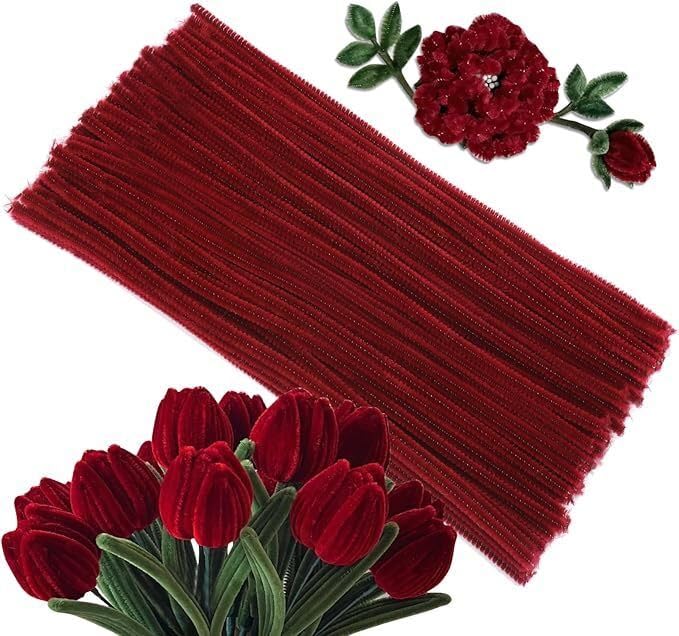
- Premium Craft Quality: Made of soft and flexible chenille material, these pipe cleaners are easy to bend, twist, and shape for various creative projects.
- 100 Pcs Value Pack: Comes with 100 uniformly sized stems, providing enough quantity for multiple art and craft activities.
- Ideal Length & Size: Each stem measures 30 cm, making it suitable for detailed, decorative, and larger craft designs.
- Safe & Easy to Use: Smooth texture and non-toxic material make it comfortable and safe for everyday crafting use.
- Perfect for DIY Projects: Great for kids’ crafts, school assignments, hobby work, model making, decorations, and creative experiments.
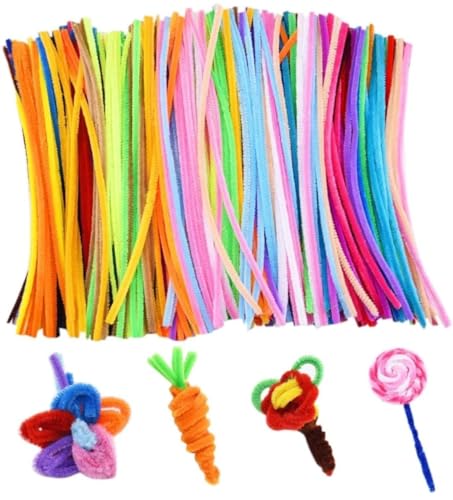
10 DIFFERENT COLORS: Package contains 10 assorted colors pipe cleaners (approx 6mm in diameter, 12 inch in length), 10 pieces of each color, totally 100 Pcs to meet all your crafting needs
WONDERFUL GIFT CHOICE: These colored pipe cleaners are a good gift option for craft lovers who enjoy doing variety of art jobs. Great for developing kids’ imagination and creativity
MADE OF PREMIUM QUALITY: Our jumbo pipe cleaners are made of wire and fiber. You can turn the pipe cleaners into any shape by twisting, curling or wrapping them. Ideal accessory for craft projects…
MULTI-USE: Pipe cleaners are such a wonderful activity for preschoolers and family to have fun together. Great for teachers to enhance classroom projects. Can be formed into puppets, flowers,…
EASY TO CUT AND REUSABLE: These pipe cleaners allow you to cut them into the length you need and the floss will not fall apart. They can also be easily straightened for recreating
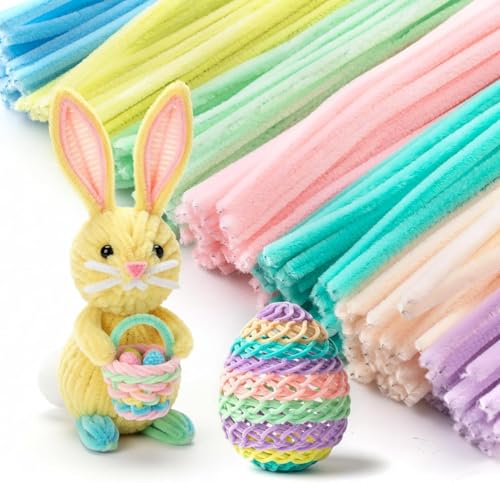
- PREMIUM CRAFT MATERIAL: Thick chenille stems with soft, flexible wire core perfect for creating detailed DIY art projects, decorations, and handmade crafts
- PASTEL MACARON COLOURS: Set includes 3 assorted soft pastel shades inspired by macarons, featuring a sophisticated matte finish for elegant craft creations
- GENEROUS LENGTH: Each pipe cleaner measures 30cm in length, providing ample material for larger projects, sculptures, and intricate designs
- THICK & DURABLE: Extra-thick chenille construction ensures sturdy hold and shape retention whilst remaining easy to bend, twist, and manipulate for various craft applications
- VERSATILE APPLICATIONS: Ideal for school projects, home decorations, party crafts, floral arrangements, children’s activities, and professional art installations
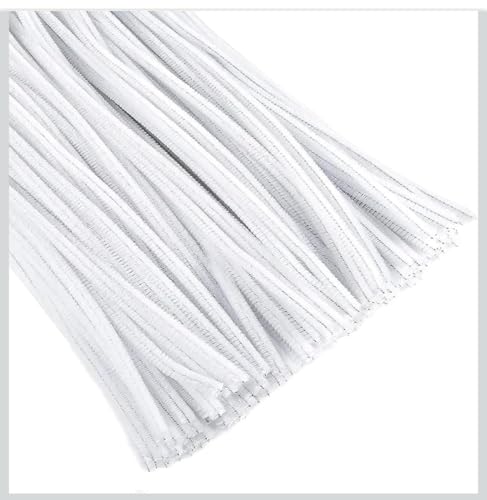
- Great for a variety of craft projects. 12 inch length and 6 mm wide with different colors
- These tinsel can be bent, twisted, curled or wrapped to just about any shape
- Pipe Cleaners – Crush resistant pipe cleaners at an economical price.Ideal for collages
- You can make flowers, finger puppets, fuzzy animal creations, school projects, craft activities and much more.
- Color and Quantity as per selection
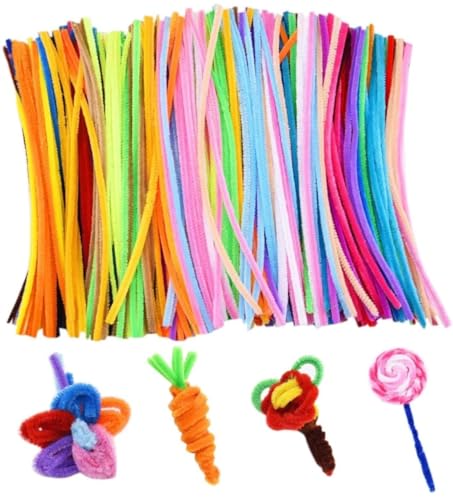
- Package: Available in Pack of 100,200 & 500 Pcs.
- 10 DIFFERENT COLORS: Package contains 10 assorted colors pipe cleaners (approx 6mm in diameter, 12 inch in length), 10 pieces of each color, totally 100 Pcs to meet all your crafting needs
- MADE OF PREMIUM QUALITY: Our jumbo pipe cleaners are made of wire and fiber. You can turn the pipe cleaners into any shape by twisting, curling or wrapping them. Ideal accessory for craft projects…
- EASY TO CUT AND REUSABLE: These pipe cleaners allow you to cut them into the length you need and the floss will not fall apart. They can also be easily straightened for recreating
- Visit VRB Dec Store FOr More………….
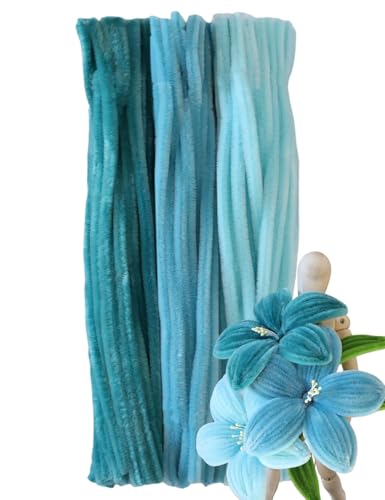
- PREMIUM MATERIAL: Made from high-quality chenille stems with 2.5 kips per square inch tensile strength for durability and flexibility in craft projects
- DIMENSIONS: Each pipe cleaner measures 30 centimetres in length, perfect for various DIY art and craft activities
- COLOUR SELECTION: Features three pastel macaron shades – Purple, Yellow, and Green – ideal for creating vibrant artistic designs
- PACKAGE CONTENTS: Set includes 7 pieces of thick pipe cleaners with matte finish, weighing 100 grams in total
- VERSATILE USE: Suitable for various arts and crafts projects, with convenient package dimensions of 30.0 x 15.0 x 2.0 centimetres
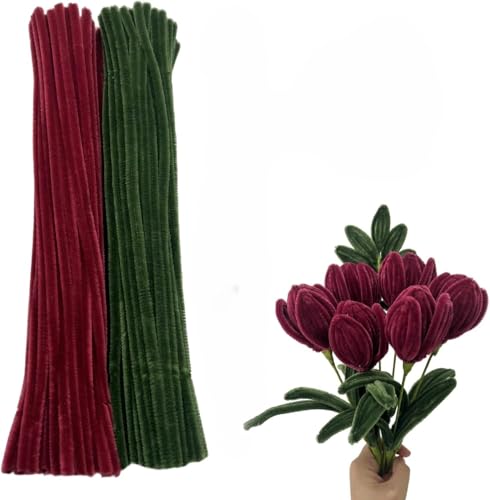
- PREMIUM CRAFT MATERIAL: Thick chenille stems with soft, flexible wire core perfect for creating detailed DIY art projects, decorations, and handmade crafts
- PASTEL MACARON COLOURS: Set includes 3 assorted soft pastel shades inspired by macarons, featuring a sophisticated matte finish for elegant craft creations
- GENEROUS LENGTH: Each pipe cleaner measures 30cm in length, providing ample material for larger projects, sculptures, and intricate designs
- THICK & DURABLE: Extra-thick chenille construction ensures sturdy hold and shape retention whilst remaining easy to bend, twist, and manipulate for various craft applications
- VERSATILE APPLICATIONS: Ideal for school projects, home decorations, party crafts, floral arrangements, children’s activities, and professional art installations
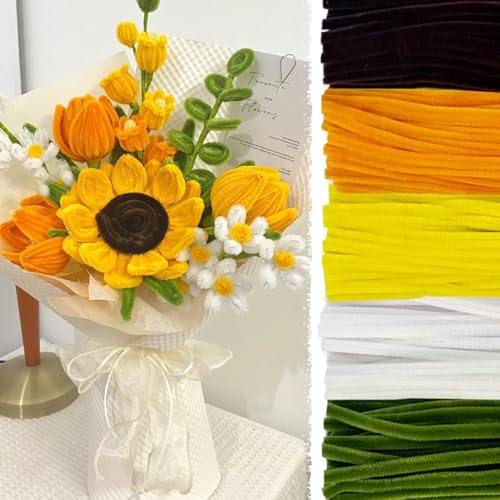
- PREMIUM CRAFT MATERIAL: Professional thick chenille stems with matte finish, ideal for DIY art projects, decorations, and creative crafts
- PASTEL COLOUR PALETTE: Set includes 3 assorted pastel macaron colours that blend beautifully for elegant and sophisticated craft designs
- GENEROUS LENGTH: Each pipe cleaner measures 30 centimetres in length, providing ample material for various creative applications and intricate designs
- THICK AND DURABLE: Professional-grade thickness ensures sturdy construction that holds shapes well whilst remaining flexible and easy to bend
- VERSATILE APPLICATIONS: Perfect for school projects, home decorations, party crafts, floral arrangements, and educational activities for children and adults
- PREMIUM MATERIAL: Made from high-quality chenille stems with 2.5 kips per square inch tensile strength for durability and flexibility in craft projects
- DIMENSIONS: Each pipe cleaner measures 30 centimetres in length, perfect for various DIY art and craft activities
- COLOUR SELECTION: Features three pastel macaron shades – Purple, Yellow, and Green – ideal for creating vibrant artistic designs
- PACKAGE CONTENTS: Set includes 7 pieces of thick pipe cleaners with matte finish, weighing 100 grams in total
- VERSATILE USE: Suitable for various arts and crafts projects, with convenient package dimensions of 30.0 x 15.0 x 2.0 centimetres
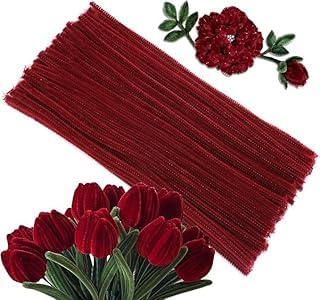
- pipe cleaners (approx 6mm in diameter, 12 inch in length), 10 pieces of each color, totally 100 Pcs to meet all your crafting needs
- WONDERFUL GIFT CHOICE: These colored pipe cleaners are a good gift option for craft lovers who enjoy doing variety of art jobs. Great for developing kids’ imagination and creativity
- MADE OF PREMIUM QUALITY: Our jumbo pipe cleaners are made of wire and fiber. You can turn the pipe cleaners into any shape by twisting, curling or wrapping them. Ideal accessory for craft projects…
- MULTI-USE: Pipe cleaners are such a wonderful activity for preschoolers and family to have fun together. Great for teachers to enhance classroom projects. Can be formed into puppets, flowers,…
- EASY TO CUT AND REUSABLE: These pipe cleaners allow you to cut them into the length you need and the floss will not fall apart. They can also be easily straightened for recreating
- PREMIUM CRAFT MATERIAL: Thick chenille stems with soft, flexible wire core perfect for creating detailed DIY art projects, decorations, and handmade crafts
- PASTEL MACARON COLOURS: Set includes 3 assorted soft pastel shades inspired by macarons, featuring a sophisticated matte finish for elegant craft creations
- GENEROUS LENGTH: Each pipe cleaner measures 30cm in length, providing ample material for larger projects, sculptures, and intricate designs
- THICK & DURABLE: Extra-thick chenille construction ensures sturdy hold and shape retention whilst remaining easy to bend, twist, and manipulate for various craft applications
- VERSATILE APPLICATIONS: Ideal for school projects, home decorations, party crafts, floral arrangements, children’s activities, and professional art installations

- 10 DIFFERENT COLORS: Package contains 10 assorted colors pipe cleaners (approx 6mm in diameter, 12 inch in length), 10 pieces of each color, totally 100 Pcs to meet all your crafting needs
- MADE OF PREMIUM QUALITY: Our jumbo pipe cleaners are made of wire and fiber. You can turn the pipe cleaners into any shape by twisting, curling or wrapping them. Ideal accessory for craft projects…
- EASY TO CUT AND REUSABLE: These pipe cleaners allow you to cut them into the length you need and the floss will not fall apart. They can also be easily straightened for recreating
- WONDERFUL GIFT CHOICE: These colored pipe cleaners are a good gift option for craft lovers who enjoy doing variety of art jobs. Great for developing kids’ imagination and creativity
- MADE IN INDIA
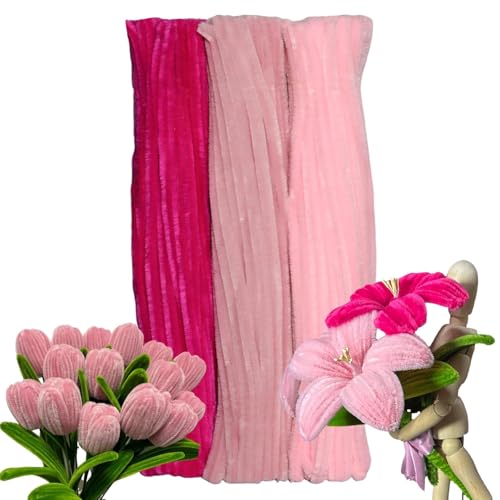
- Package Include: You will get 300 pieces of pipe cleaners in 3 assorted shades,each color 100pcs, approx. 6mm in diameter, 12 inches in length, to bring life to your creations to satisfy your need
- Superior Quality: Made of wire and fiber, can be bent, twisted, curled, or wrapped to most shapes, which are soft and suit for many craft projects
- Great Gift Choice: Our Assorted Colors Pipe Cleaners are a perfect gift for parents, teachers, kids, and hobbyists, which is a great way to have fun in crafting DIY projects with chenille stems supply
- Wide Application: These Chenille Stems can be twisted into any shapes you like, such as animals, fruits, vegetables, create toys, decorations, dolls, birthday cards, and so on by your ideas.
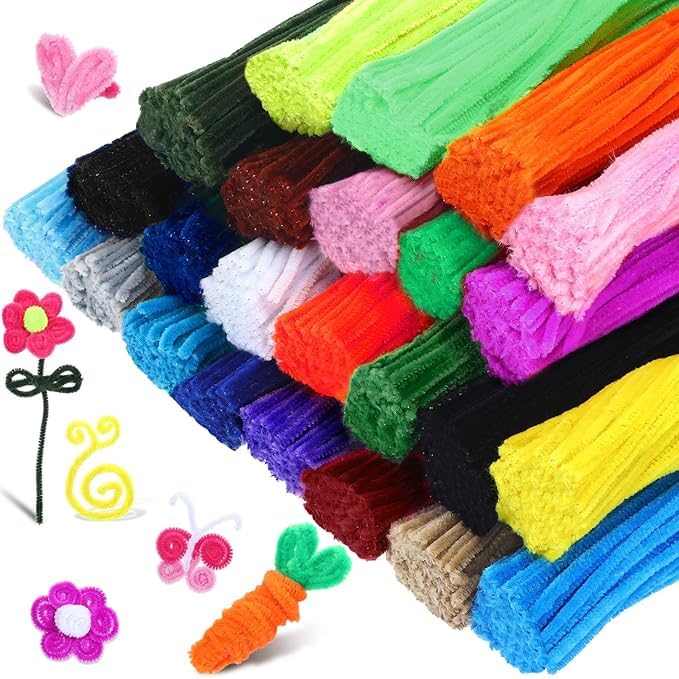
- BULK CRAFT PACK: Set includes 2000 pieces of chenille stems in 20 assorted rainbow colours, providing ample supply for multiple craft projects, classroom activities, and creative decorations
- VERSATILE DIMENSIONS: Each pipe cleaner measures 15.24 cm in length and 6 mm in diameter, ideal size for various DIY art projects, decorations, and educational activities for children and adults
- FLEXIBLE AND BENDABLE: Made from soft chenille material with flexible wire core that can be easily twisted, bent, and shaped into desired forms whilst maintaining their structure for creative designs
- RAINBOW COLOUR VARIETY: Features 20 vibrant assorted colours including red, blue, green, yellow, purple, and more, perfect for colour sorting activities, themed crafts, and festive decorations
- MULTI-PURPOSE CRAFT SUPPLY: Suitable for school projects, holiday decorations, jewellery making, floral arrangements, party decorations, and educational activities to enhance creativity and fine motor…
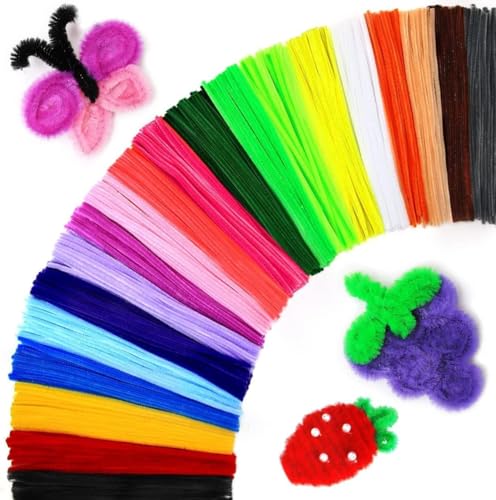
- 10 DIFFERENT COLORS: Package contains 10 assorted colors pipe cleaners (approx 6mm in diameter, 12 inch in length), 10 pieces of each color, totally 100 Pcs to meet all your crafting needs
- MADE OF PREMIUM QUALITY: Our jumbo pipe cleaners are made of wire and fiber. You can turn the pipe cleaners into any shape by twisting, curling or wrapping them. Ideal accessory for craft projects…
- EASY TO CUT AND REUSABLE: These pipe cleaners allow you to cut them into the length you need and the floss will not fall apart. They can also be easily straightened for recreating
- WONDERFUL GIFT CHOICE: These colored pipe cleaners are a good gift option for craft lovers who enjoy doing variety of art jobs. Great for developing kids’ imagination and creativity
- MADE IN INDIA
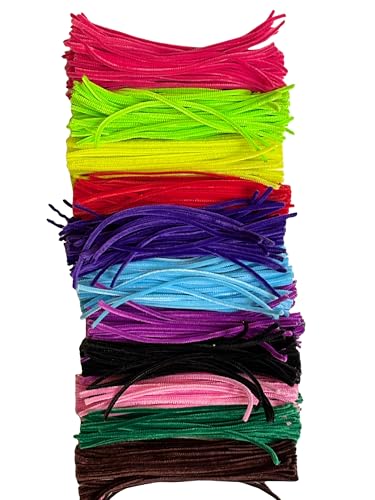
- Pack of 100 multicolor pipe cleaners for endless craft ideas
- Soft, flexible, and easy to bend into shapes
- Perfect for DIY crafts, school projects, and decorations
- Includes 10 bright colors to spark creativity
- Great for making animals, flowers, jewelry, and creative models
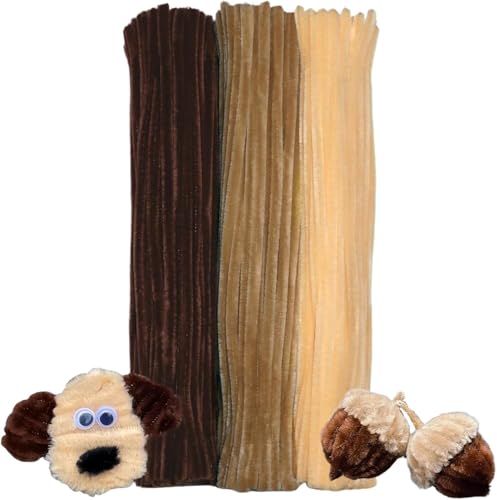
- Vibrant Colour: These pipe cleaners are a vibrant colour, perfect for creating cheerful and eye-catching crafts.
- Versatile Material: Made from soft and flexible chenille stems, these pipe cleaners can be easily bent, twisted, and shaped into various forms.
- Bulk Quantity: This package contains a generous quantity of pipe cleaners, ensuring you have ample supplies for all your craft projects.
- Craft Potential: With their bright hue and malleable nature, these pipe cleaners can be utilised to make decorations, sculptures, jewellery, and more.
- Dimensions: Each pipe cleaner measures approximately 30 centimetres in length and 6 millimetres in diameter.
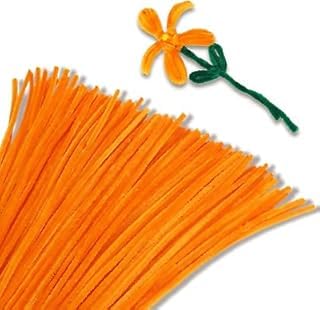
- pipe cleaners (approx 6mm in diameter, 12 inch in length), 10 pieces of each color, totally 100 Pcs to meet all your crafting needs
- WONDERFUL GIFT CHOICE: These colored pipe cleaners are a good gift option for craft lovers who enjoy doing variety of art jobs. Great for developing kids’ imagination and creativity
- MADE OF PREMIUM QUALITY: Our jumbo pipe cleaners are made of wire and fiber. You can turn the pipe cleaners into any shape by twisting, curling or wrapping them. Ideal accessory for craft projects…
- MULTI-USE: Pipe cleaners are such a wonderful activity for preschoolers and family to have fun together. Great for teachers to enhance classroom projects. Can be formed into puppets, flowers,…
- EASY TO CUT AND REUSABLE: These pipe cleaners allow you to cut them into the length you need and the floss will not fall apart. They can also be easily straightened for recreating
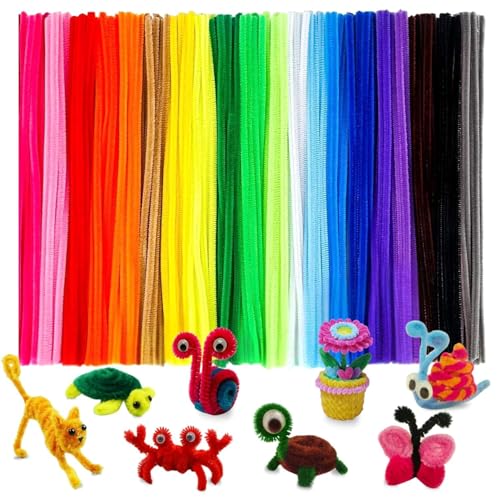
10 DIFFERENT COLORS: Package contains 10 assorted colors pipe cleaners (approx 6mm in diameter, 12 inch in length), 10 pieces of each color, totally 100 Pcs to meet all your crafting needs
WONDERFUL GIFT CHOICE: These colored pipe cleaners are a good gift option for craft lovers who enjoy doing variety of art jobs. Great for developing kids’ imagination and creativity
MADE OF PREMIUM QUALITY: Our jumbo pipe cleaners are made of wire and fiber. You can turn the pipe cleaners into any shape by twisting, curling or wrapping them. Ideal accessory for craft projects…
MULTI-USE: Pipe cleaners are such a wonderful activity for preschoolers and family to have fun together. Great for teachers to enhance classroom projects. Can be formed into puppets, flowers,…
EASY TO CUT AND REUSABLE: These pipe cleaners allow you to cut them into the length you need and the floss will not fall apart. They can also be easily straightened for recreating
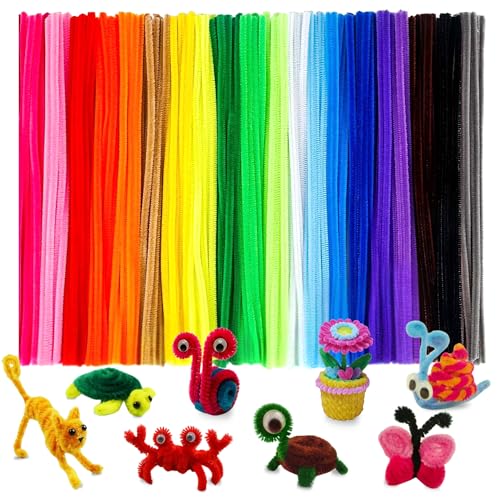
10 DIFFERENT COLORS: Package contains 10 assorted colors pipe cleaners (approx 6mm in diameter, 12 inch in length), 10 pieces of each color, totally 100 Pcs to meet all your crafting needs
WONDERFUL GIFT CHOICE: These colored pipe cleaners are a good gift option for craft lovers who enjoy doing variety of art jobs. Great for developing kids’ imagination and creativity
MADE OF PREMIUM QUALITY: Our jumbo pipe cleaners are made of wire and fiber. You can turn the pipe cleaners into any shape by twisting, curling or wrapping them. Ideal accessory for craft projects…
MULTI-USE: Pipe cleaners are such a wonderful activity for preschoolers and family to have fun together. Great for teachers to enhance classroom projects. Can be formed into puppets, flowers,…
EASY TO CUT AND REUSABLE: These pipe cleaners allow you to cut them into the length you need and the floss will not fall apart. They can also be easily straightened for recreating