There’s something beautiful about going into a kitchen that just seems perfect. For me, it wasn’t until I saw a friend’s soft sage kitchen that I realized how much color could transform a room’s mood. Green kitchens are having a serious moment, and honestly, it’s about time.
They bring nature within, promote peace, and go with practically any style—from sleek and modern to homey farmhouse sentiments.
Whether you’re dreaming of a major renovation or just want to add some green touches, these ideas can help you create a kitchen that’s both beautiful and invigorating.
Let’s dive into 25 ways to create that fresh, natural feel into your kitchen space.
1. Soft Sage Shaker Cabinets Paired With Gold Hardware
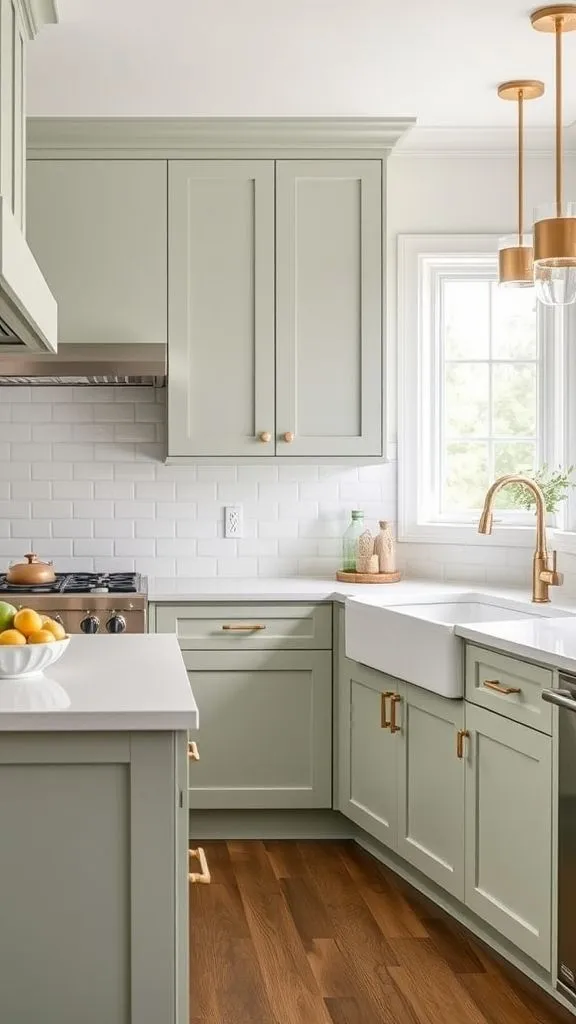
Imagine cabinetry in a whisper-soft sage tone, their traditional shaker profile bringing timeless beauty to your kitchen. Now image warm gold pulls and knobs catching the light—it’s the right blend between understated elegance and just enough glitter.
This combination works great in kitchens with abundance of natural light, making the space feel open and welcome. The subdued green doesn’t overpower, while the metallic elements provide a hint of elegance without feeling too pretentious.
Pair this style with light-colored countertops and you’ve got yourself a kitchen that feels both modern and timeless. It’s versatile enough to function in a cottage or a contemporary home, which is presumably why it’s become such a popular choice lately.
2. Deep Forest Green Cabinets With Smooth Matte Coating
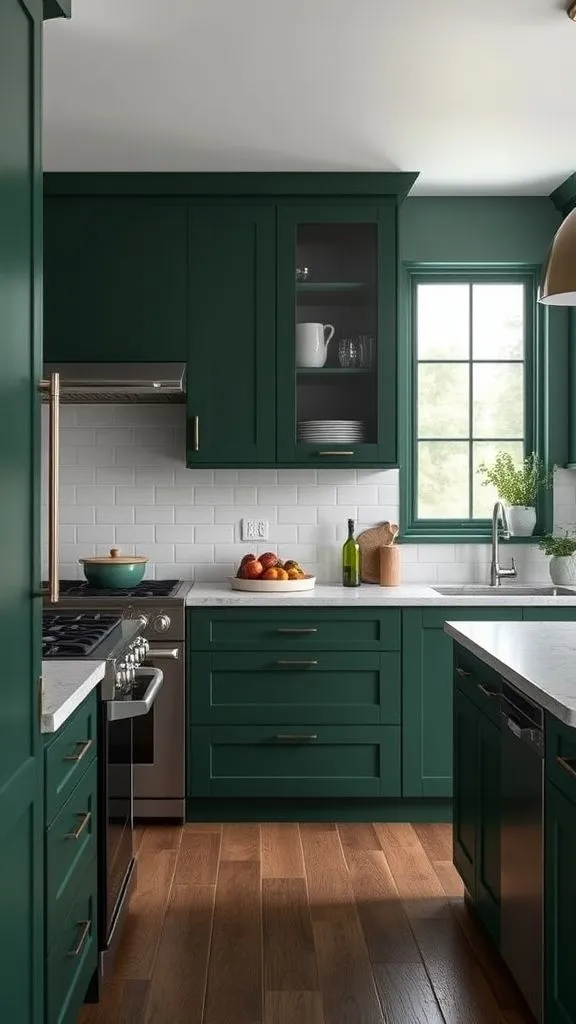
Bold and confident, forest green cabinets make a serious statement. The matte finish keeps things elegant rather than shiny or excessively formal, giving depth that glossy finishes just can’t duplicate.
This darker tone works extremely well in bigger kitchens where you can enjoy the richness without making the area feel cramped. Consider matching it with stainless steel appliances and concrete-look countertops for an ultra-modern aesthetic.
The beauty of this deep green is how it varies throughout the day—bright and vivid in morning light, somber and intimate by dusk. If you want a kitchen with individuality that still feels grounded and natural, this is your answer.
3. Warm Olive Cabinets With Simple Floating Shelves
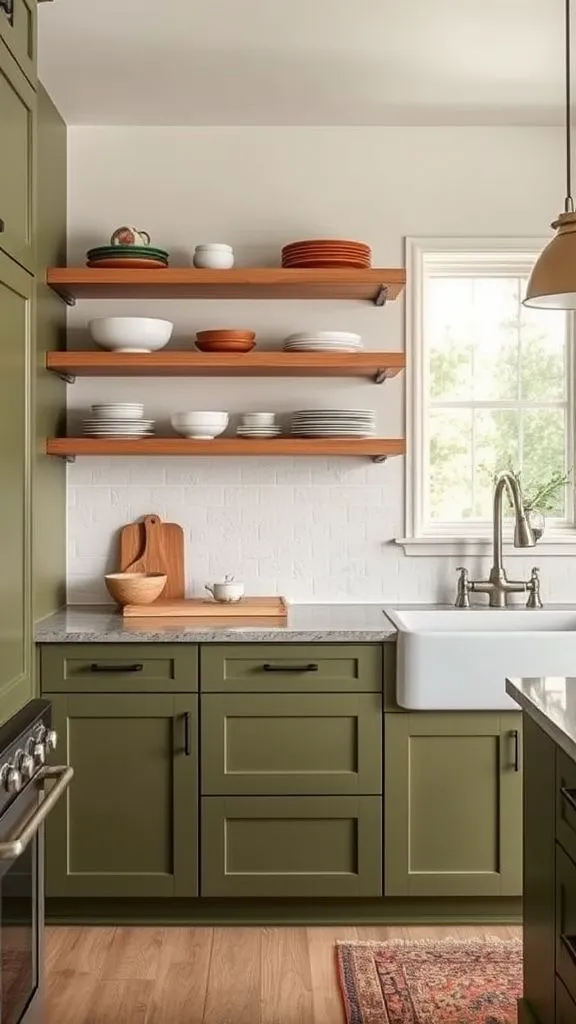
Olive green has this earthy, grounded tone that instantly makes a kitchen seem lived-in and loved. When you combine olive-toned cabinets with open floating shelves, you generate visual intrigue and efficient storage in one go.
The shelves break up the single hue and provide you an opportunity to display attractive dishes, plants, or cookbooks. This approach works brilliantly in kitchens when you desire a calm, organic vibe.
The olive tone is surprisingly neutral—it pairs wonderfully with natural wood, warm metals, and even terracotta accents. Plus, those floating shelves push you to keep everything tidy and curated, which somehow makes cooking feel more intentional and joyful.
4. Split Design With Green Lower Cabinets And White Uppers
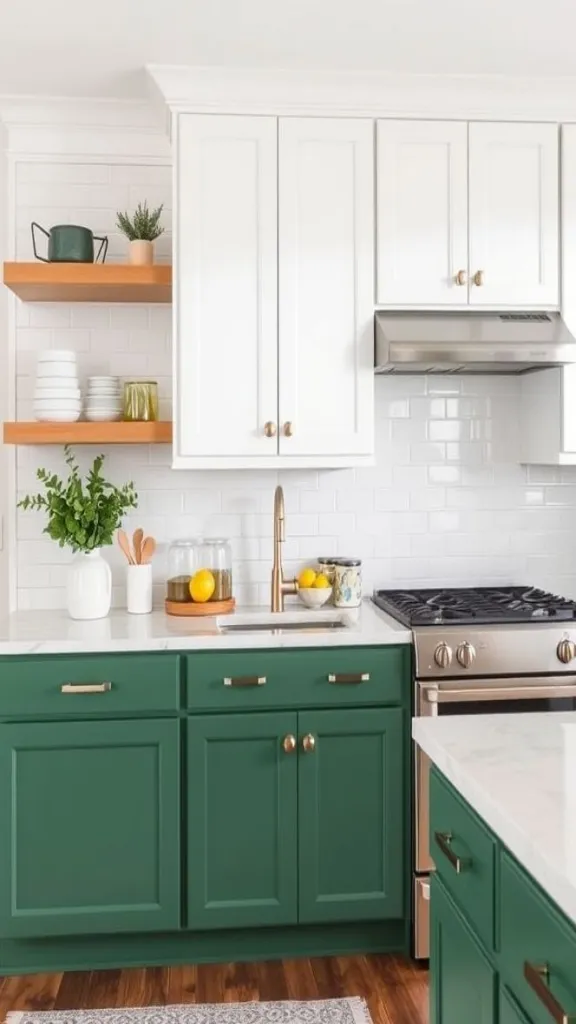
Can’t decide between green and white? This two-tone approach gives you the best of both worlds. Green lower cabinets ground the space and hide regular wear and tear, while white upper cabinets keep things bright and breezy up above.
This design approach is especially brilliant in kitchens with lower ceilings—the white leads the eye upward, making the area feel taller. You can dabble with the shade of green here, from mild mint to deep hunter, depending on your style.
The transition line between colors should ideally touch just at countertop level for the most natural look. It’s a realistic choice that seems purposefully made rather than undecided.
5. Statement Dark Green Island In Crisp White Kitchen
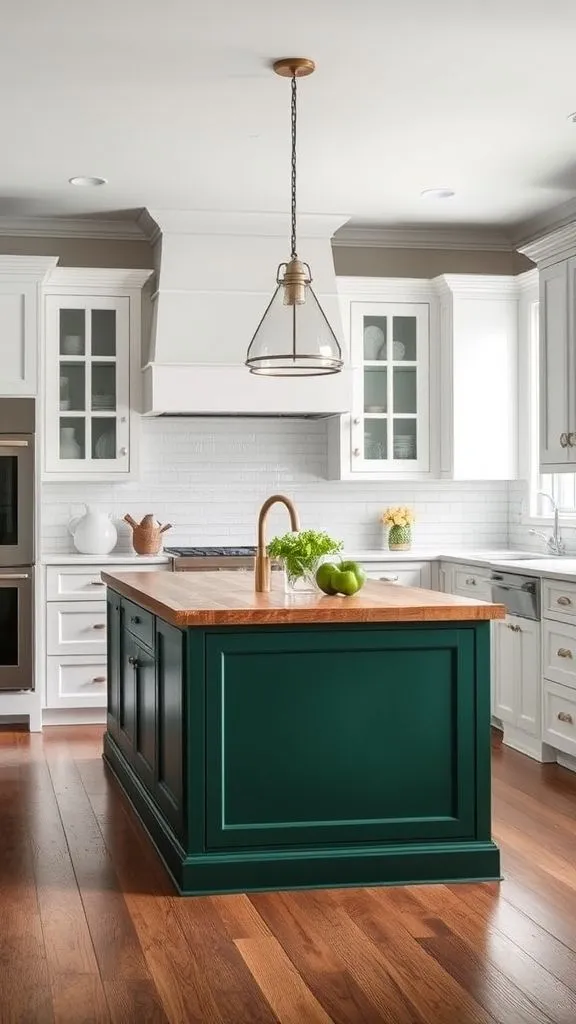
If you’re not ready to commit to green everywhere, start with your island. A deep green island surrounded by white cabinets creates an instant focal point that anchors the entire room. This method provides you the drama and flair of colored cabinets without dominating the space.
The island becomes more than just more prep space—it’s a design moment. Choose a tint like deep teal-green or rich hunter to make the contrast truly pop.
Top it with butcher block or marble for more texture, and suddenly your kitchen has levels of appeal. This is one of those designs that seems impressive but is actually pretty forgiving if you change your mind later.
6. Narrow Sage Green Galley With Smart Layout
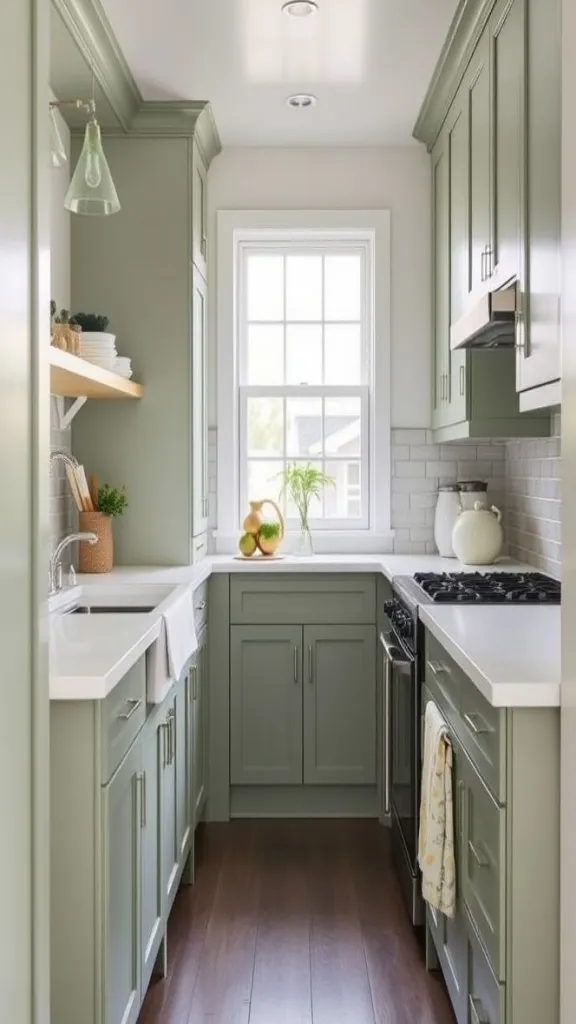
Galley kitchens get a poor image, but in sage green? They’re nice and efficient. The soothing green color on parallel cabinets provides a comfortable hallway that doesn’t feel tight when done appropriately.
The idea is keeping the shade light enough to reflect whatever natural light you have while preserving that wonderful green undertone. In a galley plan, everything is within arm’s reach, which actually makes cooking more efficient.
Add under-cabinet lighting to brighten work areas, and consider glass-front cabinets on one side to add depth. The constant sage hue along both walls adds coherence, making the tight room feel intentional rather than restricted.
7. Earthy Moss Green With Natural Wood Elements
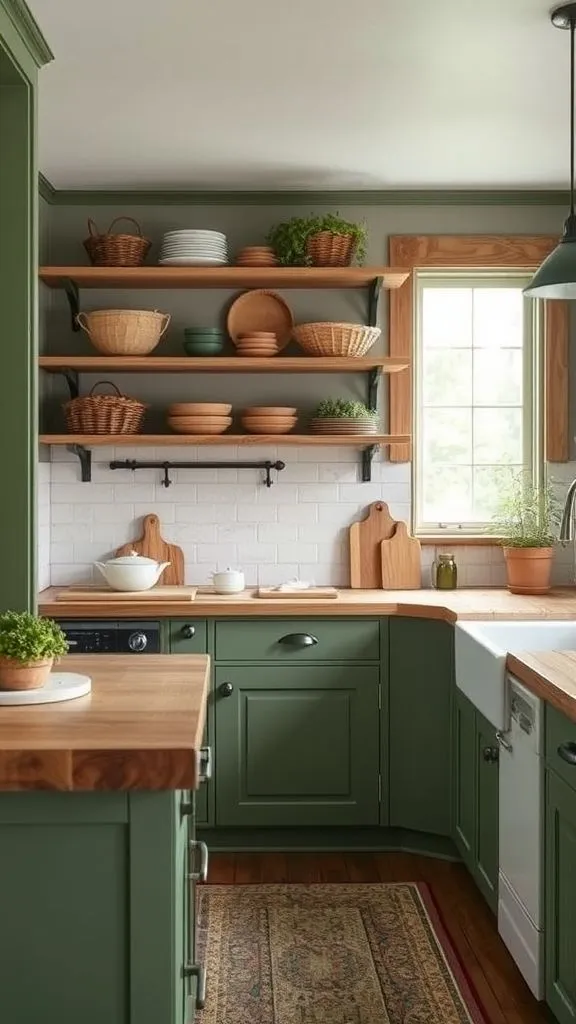
Moss green has this organic aspect that begs to be matched with natural materials. Think rough-hewn wooden bookcases, butcher block worktops, or reclaimed wood accents throughout the space.
This combo delivers serious cottage-in-the-woods vibe without feeling overly rustic or dated. The somewhat grayed undertone of moss green is more sophisticated than brighter greens, making it suitable in both traditional and contemporary settings.
Add some woven baskets, clay pots with plants, and maybe an antique rug, and you’ve created a kitchen that feels like an extension of nature. It’s the kind of area where you’d want to spend a quiet Sunday morning preparing pancakes and coffee.
8. Delicate Mint Cabinets In Sleek Contemporary Space
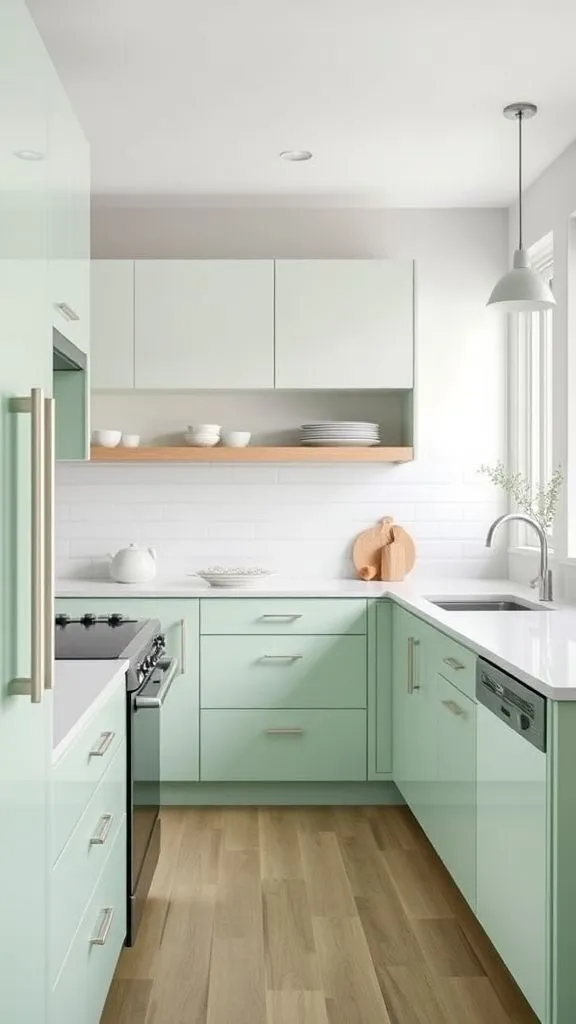
Mint green might sound antiquated, but in a modern kitchen with clean lines, it feels fresh and unexpected. We’re talking pale, barely-there mint—not the vibrant, ice-cream parlor shade.
This light tint combines wonderfully with modern aspects like handleless cabinets, integrated appliances, and minimalist hardware. The subtle green offers just enough warmth to prevent a stark white kitchen from feeling clinical.
Pair it with cool-toned counters like white quartz or gray stone, and keep the entire design basic and uncomplicated. This is excellent for small spaces or apartments where you want color without visible weight. It’s happy without being loud, which is a tough balance to create.
9. Jewel-Toned Emerald With Glossy Cabinet Fronts
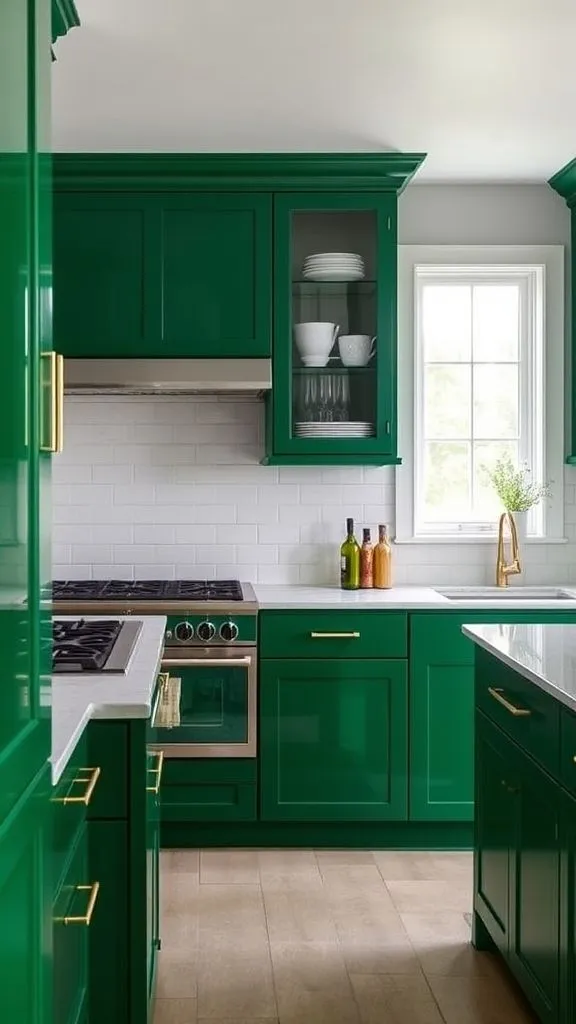
If you want to make an entrance every time you enter into your kitchen, emerald green with a high-gloss finish delivers. This is tremendous drama—rich, intense color that looks like liquid jewels when the light hits it just so.
The shiny surface reflects light, which actually helps the rich color feel less weighty than you’d anticipate. This bold choice works well in kitchens with excellent lighting, both natural and artificial.
Balance the energy with neutral surroundings—white or gray walls, plain counters, and subtle floors. Gold or brass hardware emphasizes the sumptuous feeling. Fair warning: this isn’t for the faint of heart, but if you enjoy it, you’ll truly love it.
10. Green Cabinets Paired With Classic White Apron Sink
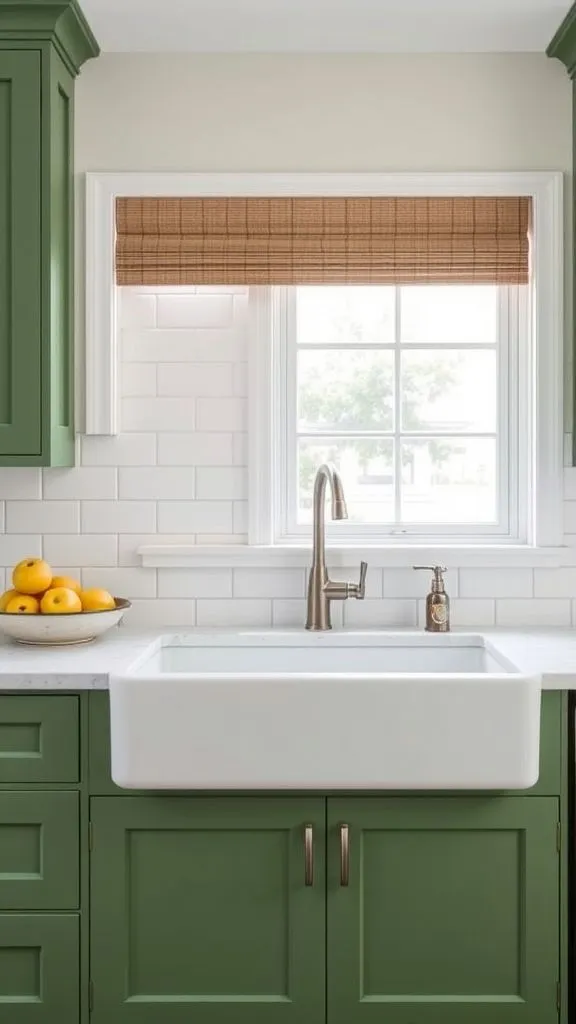
There’s something timelessly charming about a white farmhouse sink set against green cabinets. The contrast is clean and fresh, and that deep basin is extremely handy for washing large pots and pans.
The white sink becomes a design element itself, breaking up the green cabinets and adding a bit of classic elegance. This combination works across many green shades—from delicate sage to deep forest—because the white sink provides a continuous anchor point.
Consider an exposed apron front in fireclay or porcelain for that authentic farmhouse vibe. Add a conventional bridge faucet in brushed nickel or oil-rubbed bronze to complete the classic design that never goes out of style.
11. Sage Cabinets Under Natural Overhead Window
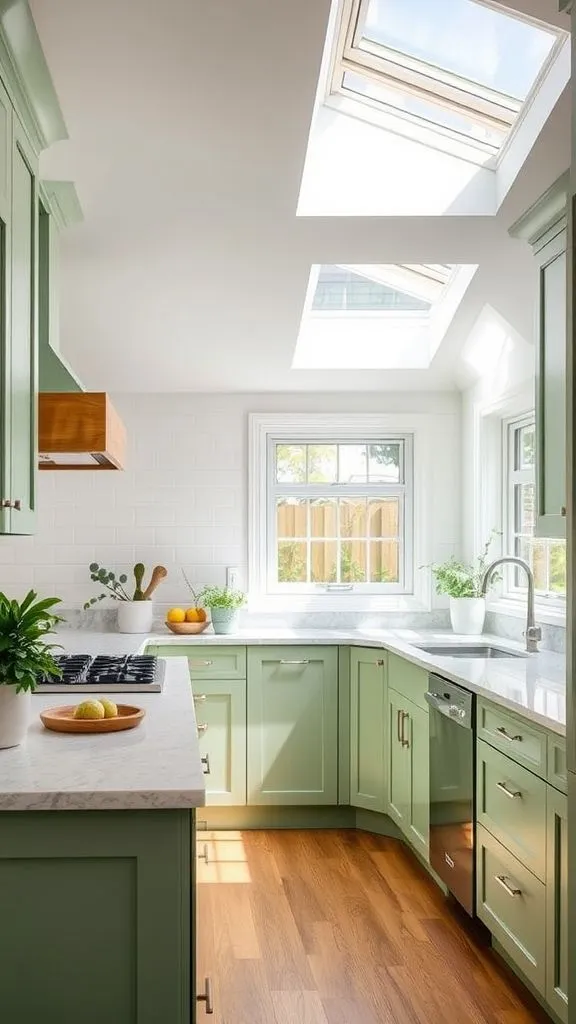
Natural light elevates sage green from nice to very magnificent. A skylight floods the space with sunshine, making the soothing green color fluctuate throughout the day—cooler in morning light, warmer in afternoon radiance.
This combination is perfect for kitchens that can otherwise feel a touch dark or contained. The sage green actually helps amplify the natural light rather than absorbing it, which darker colors may.
If you’re designing from scratch, consider where the skylight falls—positioning it over the island or main prep area maximizes both light and the color’s impact. Plants certainly flourish in these bright settings too, so you may add living greenery that suits your cabinet color brilliantly.
12. Rich Dark Green With Exposed Storage Display
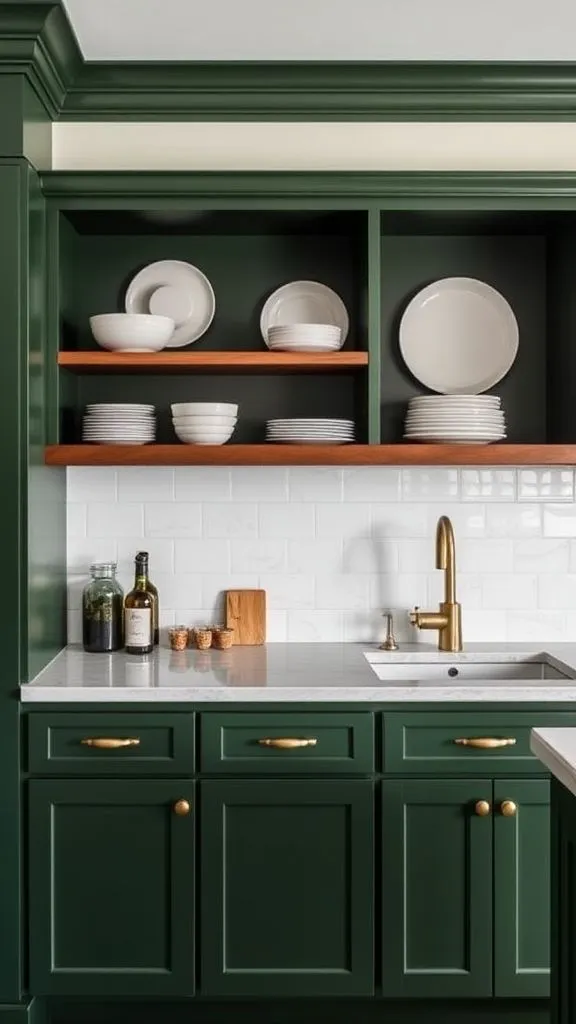
Dark green cabinets gain individuality when you remove the upper doors and install open shelves instead. This breaks up the solid color mass and provides you space to display gorgeous dishes, glasses, or collections.
The deep green provides a dramatic backdrop that makes white plates pop or colored pottery stand out. This method feels less formal than all-closed cabinetry and invites you to pick what you display. It’s also practical—frequently used objects become easy to reach.
Just be honest with yourself about whether you’ll keep those shelves looking beautiful, because they’ll be on show regularly. The juxtaposition of closed dark cabinets below and open shelf above creates excellent equilibrium.
13. Green Cabinetry With Warm Copper Fixtures
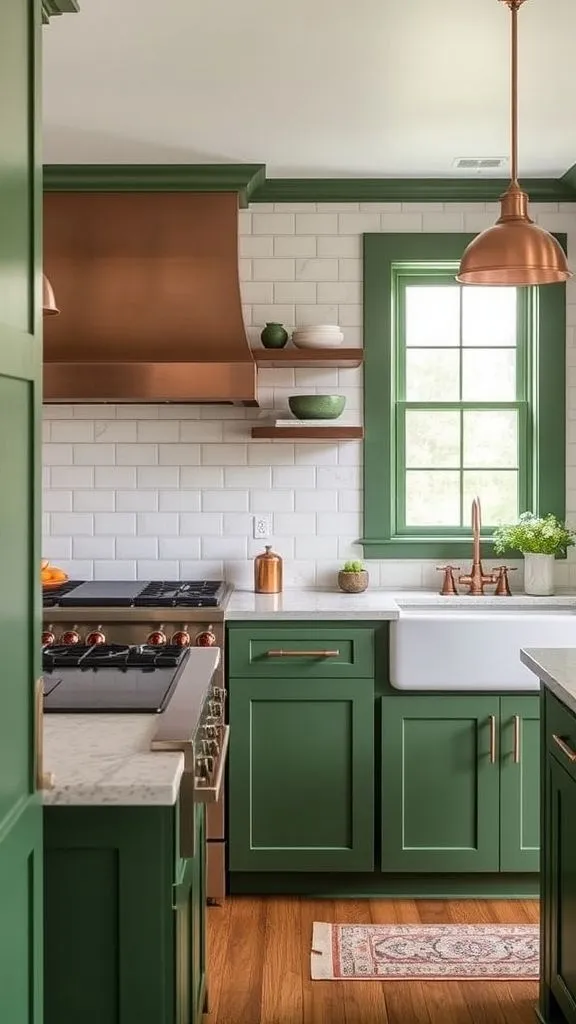
Copper and green are natural mates, like peanut butter and jelly for your kitchen. The warm, rosy tones of copper—whether in faucets, light fixtures, or cabinet hardware—bring out the undertones in green brilliantly.
This combination works across the green spectrum, though it notably shines with olive, sage, and forest tints. Copper acquires a patina over time, which adds character rather than looking worn out.
Consider a copper farmhouse sink for maximum effect, or start simpler with only copper handles and pendant lights. The metallic warmth stops green from looking too chilly or sterile, producing a kitchen that feels friendly and lived-in from day one.
14. Soft Pastel Green In Compact Apartment Kitchen
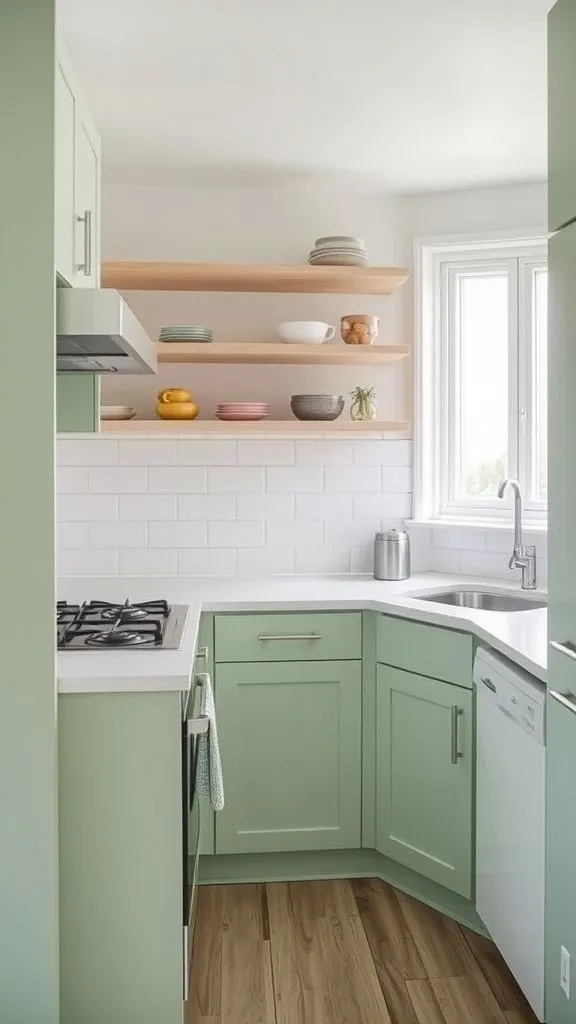
Small rooms benefit enormously from soft, pale greens that open out the room rather than sealing it in. In a modest apartment kitchen, pastel green cabinetry add personality without overpowering limited square footage.
The light shade reflects whatever natural light you have, making the space feel larger than its real size. Keep everything else minimal—simple hardware, open storage when practical, and light-colored counters.
This delicate green goes wonderfully with white subway tiles and light wood or laminate floors. The color gives just enough flair to make the kitchen feel consciously created rather than merely practical. Even in 50 square feet, you may have a kitchen with style.
15. Deep Hunter Cabinets Over Decorative Tile Floor
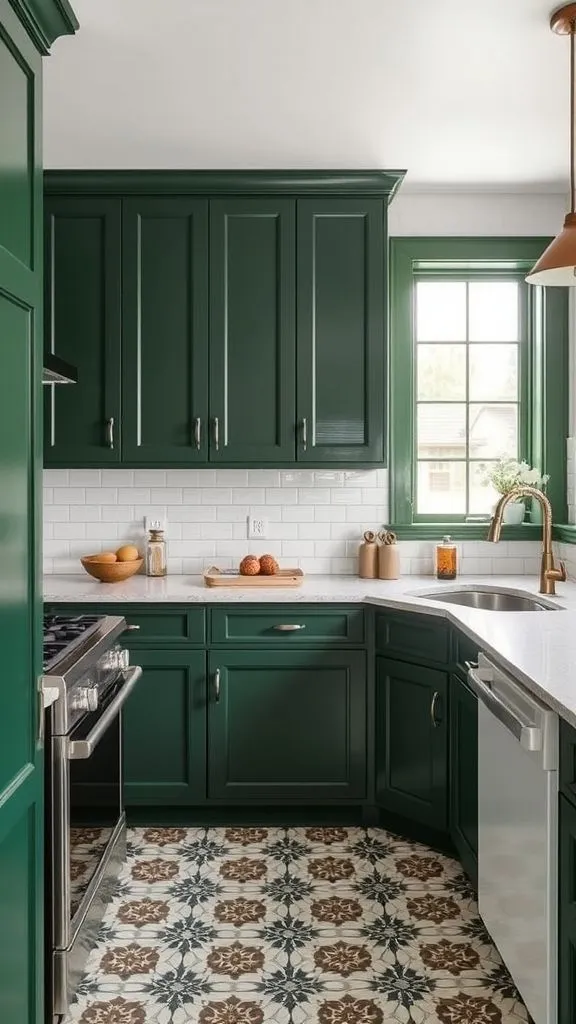
Hunter green cabinets are bold enough to manage an equally statement-making floor. Think patterned cement tiles, bright encaustic motifs, or even a traditional black-and-white motif. The deep green creates a rich, sturdy basis that enables the floor pattern shine without competing.
This combo works brilliantly in kitchens with a vintage or quirky vibe. The trick is ensuring your counters and walls remain relatively plain so the room doesn’t become visually confusing.
Hunter green is sophisticated enough to anchor all that pattern below while keeping the upper portion of the space grounded. If you enjoy both color and pattern, this is how you make them work together peacefully.
16. Green Cabinets Against Exposed Red Brick Feature Wall
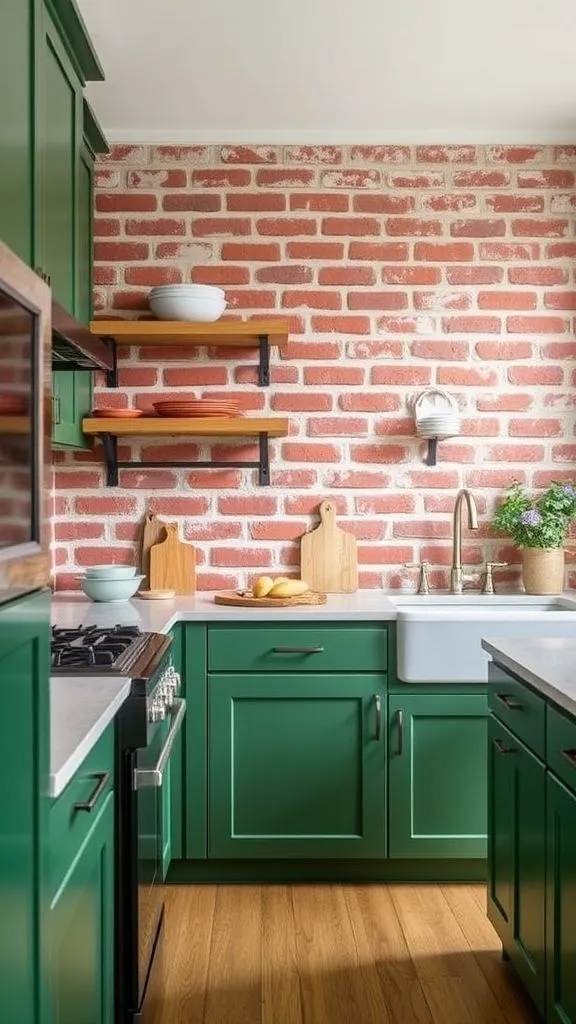
Talk about character! Green cabinetry coupled with an exposed brick wall offer instant warmth and texture. The natural terracotta tones of brick complement practically any shade of green—they’re both nature-inspired colors that seem great together.
This combination works particularly well in lofts or older homes where exposed brick is an established feature. The rough roughness of brick contrasts wonderfully with smooth cabinet faces, generating visual intrigue through material variations.
Leave the brick natural or give it a light whitewash if you want a softer effect. Add some open wooden storage against the brick, and you’ve got a kitchen that feels acquired over time rather than designed all at once.
17. Clean-Lined Green Kitchen With No Upper Cabinets
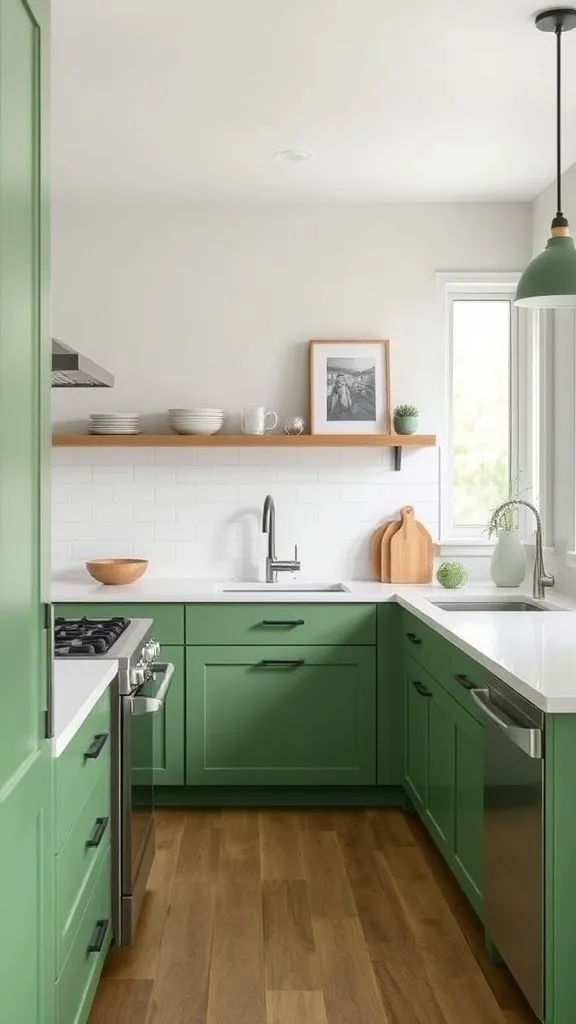
Minimalist doesn’t mean boring, especially when you choose green for your base cabinets and delete uppers entirely. This produces an open, breezy impression while the green adds enough color to minimize starkness.
Open walls above the counters allow you opportunity for artwork, a dramatic backsplash, or just clean simplicity. Floating shelves can give some storage without the visual weight of entire cabinets.
This strategy demands discipline—with limited storage, you’ll need to be selective about what you preserve. But the payoff is a kitchen that seems big, modern, and surprisingly calming. The green grounds the design and gives just enough visual interest without clutter.
18. Classic Green Cabinets With Paneled Wall Details
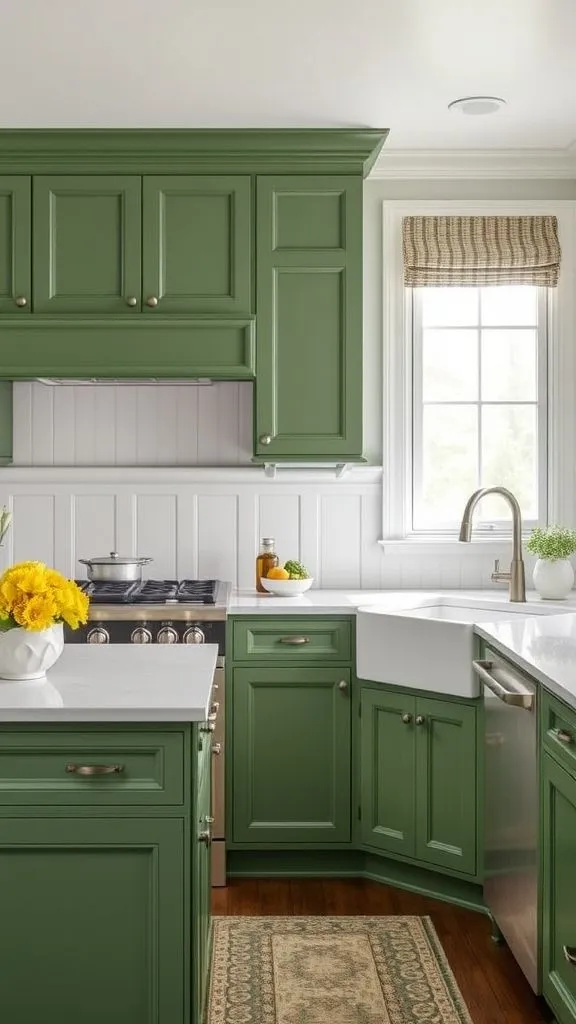
For a traditional design with depth, mix green cabinets with wainscoting or paneled walls. This layering of architectural features gives richness and dimension that flat walls simply can’t equal.
The paneling can be painted the same green for a cohesive, enveloping impression, or in white to contrast and brighten. This strategy works great in older homes or when you’re trying to add charm to new construction.
Consider extending green up to chair-rail height with white or cream above to maintain brightness. Crown molding, elaborate cabinet trim, and other traditional characteristics feel at home here. It’s traditional without being stuffy, classic without being dated—just lovely and timeless.
19. Green Kitchen Featuring Cozy Built-In Breakfast Nook
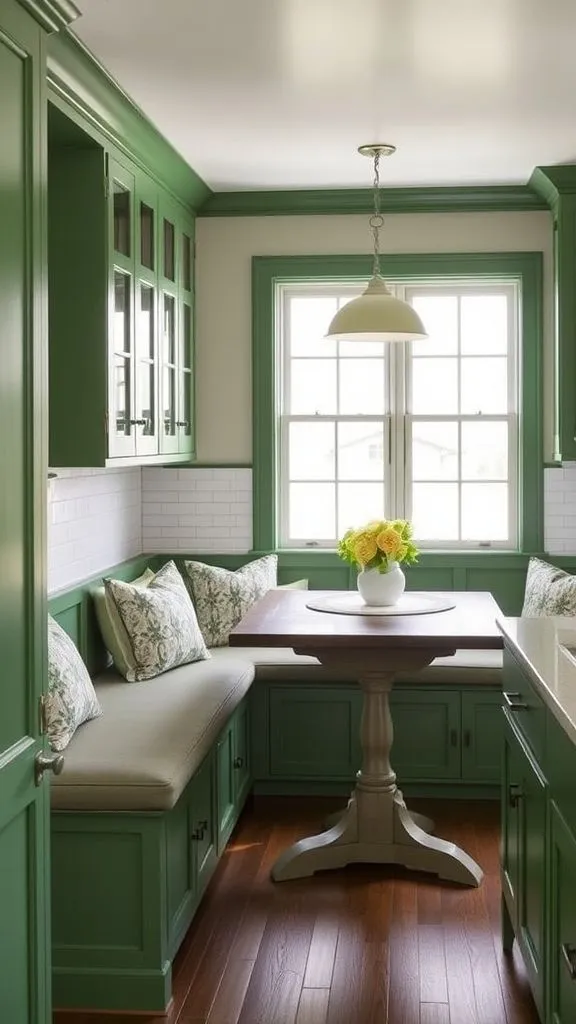
A built-in banquette transforms your green kitchen into a gathering room that’s as much about people as food. The green cabinetry extends into seating area design, offering visual cohesion throughout the space.
Built-in seating is space-efficient and might incorporate storage underneath—always a bonus in any kitchen. Add cushions in complementing patterns, a farmhouse table, and decent lighting overhead, and suddenly you have the most popular area in your home.
The green gives a cozy, inviting vibe that makes this area excellent for extended morning coffees or school sessions. It’s that rare design feature that’s equally lovely and functional.
20. Sage Green Combined With Natural Oak Elements
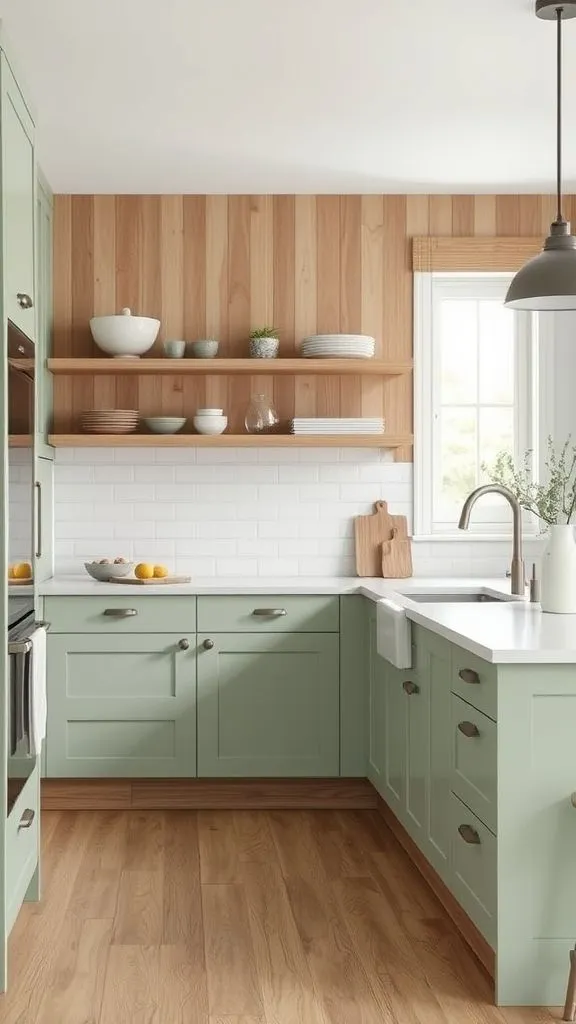
The juxtaposition of soft sage green with warm oak creates a Scandinavian-inspired appearance that’s equal parts snug and clean. The natural wood grain gives warmth and texture without clashing with the mild green color.
This combination feels organic and calming—perfect for a kitchen where you want to start your day feeling serene. Oak can feature as floors, countertops, open shelving, or even as a contrasting island foundation.
The fine grain of wood keeps everything bright while adding visual appeal through its natural patterns. This is a classic pairing that won’t feel old in five years, making it a wise decision if you’re hoping to stay in your house long-term.
21. Bright Lime Accents In Otherwise Neutral Modern Space
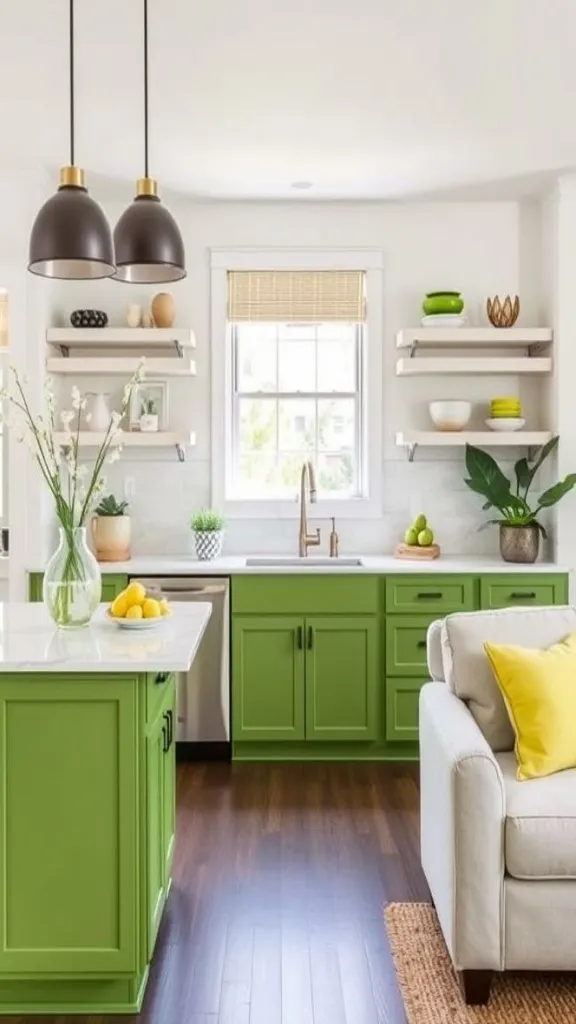
Not ready for green cabinets? Add lime green through tiny accents in a mostly white or gray kitchen. Think bar stools, pendant lighting, tiny appliances, or maybe simply a feature wall. These colorful pops enliven the area without committing to color everywhere.
Lime green is bright and youthful, excellent for households who don’t take themselves too seriously. The beauty of choosing accent pieces is you can change them out when you’re ready for something new without a large remodel.
This strategy helps you test whether you really appreciate living with green before making permanent choices. Plus, it’s budget-friendly—a few hundred bucks can totally transform your kitchen’s atmosphere.
22. Flat Green Cabinets With Industrial Concrete Details
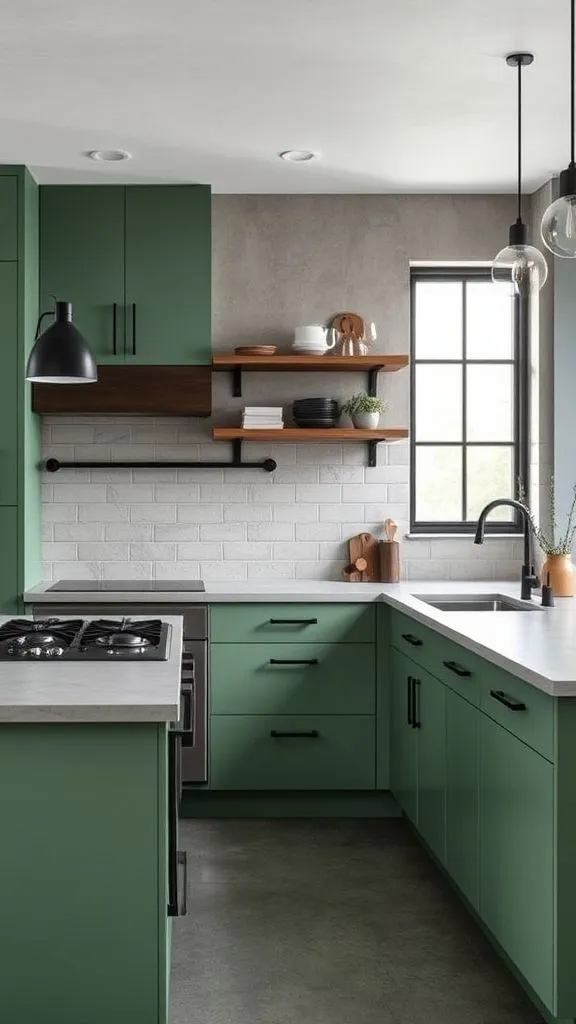
For an urban, industrial vibe, match matte green cabinets with concrete countertops or backsplashes. The soft, powdery sheen of matte paint contrasts wonderfully with concrete’s smooth but textured appearance.
This mix feels current and a touch edgy while the green keeps it from being too chilly or severe. Concrete’s gray tones match practically any shade of green, from mild mint to deep forest. Add black metal hardware and fixtures to reinforce the industrial vibe.
Exposed bulbs, metal shelving, and maybe some subway tile complete the design. It’s smart and urban without trying too hard—just naturally stylish.
23. Retro-Inspired Green With Classic Checkerboard Flooring
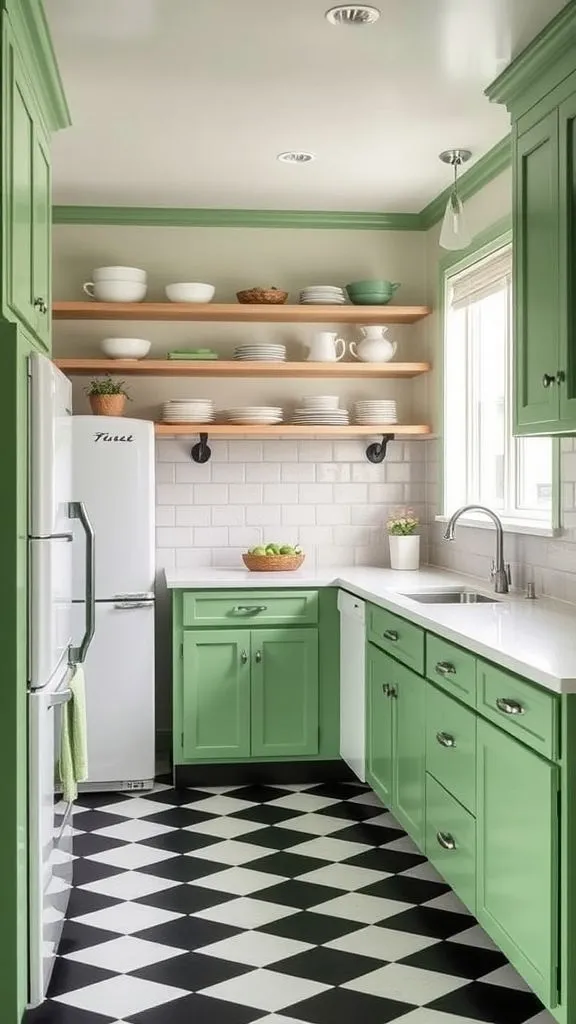
Embrace retro charm with green cabinetry over black-and-white checkered floors. This mix is pure nostalgia but feels fresh rather than antiquated when executed effectively. Choose your green carefully—a little subdued sage or moss works better than brilliant lime for real vintage vibes.
Add chrome fittings, a retro-style refrigerator in white or cream, and open shelving with vintage dishware. The checkerboard floor is dramatic enough to anchor the overall design, so keep walls and other features simpler.
This is excellent for anyone who loves mid-century charm or wants a kitchen with quirky personality. Every time you walk in, it should make you grin.
24. Dark Cabinets Under Sloped Ceiling With Exposed Wooden Beam
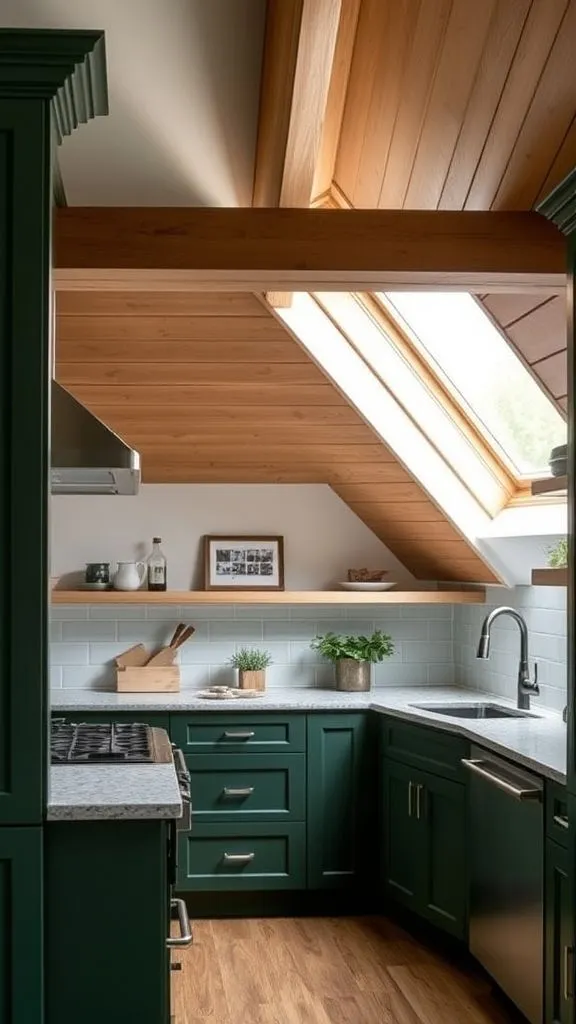
In a kitchen with architectural flair like slanted ceilings and exposed beams, dark green cabinets enhance rather than conflict with these aspects. The deep color generates drama while the natural wood overhead gives warmth and texture.
An overhead window is vital here—without it, the dark cupboards and slanted ceiling may feel cave-like. But with natural light flooding in, the area becomes comfortable rather than tight. The green appears to alter depth throughout the day as light moves.
This works brilliantly in attic conversions, loft areas, or homes with unique rooflines. The architectural details and cabinet color combine together to produce something very distinctive.
25. Olive Cabinets With White Vertical Board Walls
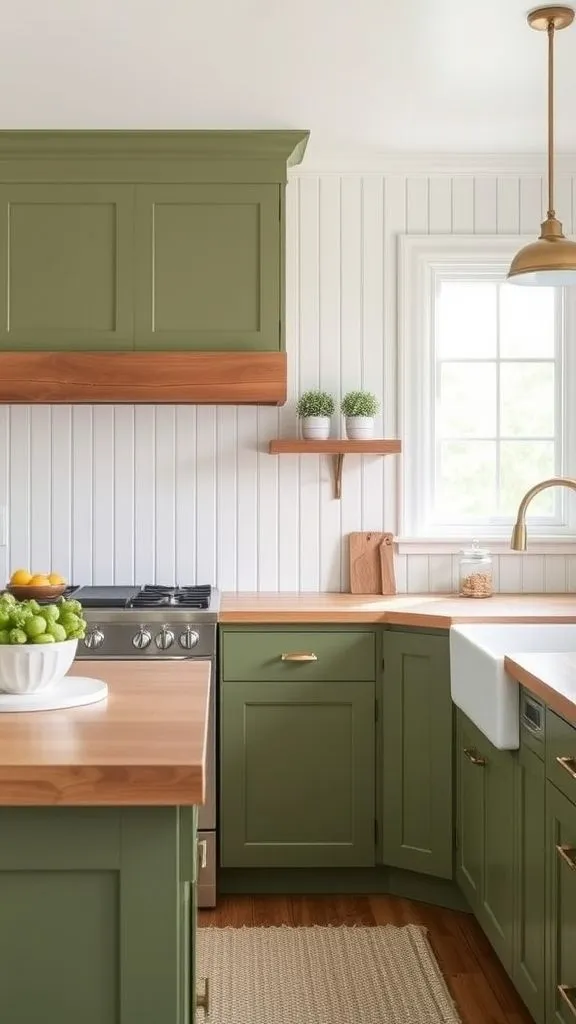
Beadboard or vertical shiplap painted white gives a cottage-fresh backdrop for olive green cabinetry. The vertical lines drive the eye upward, making ceilings feel higher, while the texture adds complexity without fuss.
This combination hits that exact blend between casual and put-together—it’s polished without being formal. The white walls make things bright and airy while the olive green grounds the space and stops it from feeling too precious.
Consider continuing the beadboard to chair-rail height or all the way up, depending on your ceiling height and personal preference. Add butcher block counters and brass hardware, and you’ve got a kitchen that seems collected and comfy.
FAQs
What hue of green works best in small kitchens?
Lighter greens like sage, mint, or mild olive perform nicely in compact areas. They reflect light and make the room feel larger rather than sealing it in. Avoid very dark greens in tiny kitchens unless you have fantastic natural light to offset them.
Can green kitchens function with stainless steel appliances?
Absolutely! Stainless steel is neutral and works with practically every green shade. The cool metal tones match both warm olive greens and cooler sage or mint tones. Just ensure your hardware finishes coincide with your appliance finish for a unified look throughout.
How can I prevent a green kitchen from looking dated?
Choose quality materials and classic cabinet styles over fashionable ones. Shaker doors, simple hardware, and timeless layouts never go out of style. The key is balancing your green with neutral surroundings and avoiding extremely matchy-matchy accessories that scream “decorated in 2025.”
What countertop colors pair well with green cabinets?
White, cream, light gray, butcher block, and even black marble all work well. The best pick depends on your green tint and overall style—warmer greens prefer wood and cream, while cooler greens shine with white quartz or gray stone.
Should I paint existing cabinets green or replace them?
If your cabinets are physically solid with good bones, painting is a cost-effective choice that may totally transform your room. Proper prep work is essential—clean, sand, prime, and apply quality cabinet paint. Replacement makes sense only if cabinets are damaged or the layout needs updating.
Conclusion
Creating a green kitchen is about more than just following trends—it’s about bringing nature’s most relaxing color into the heart of your house. Whether you go dramatic with emerald gloss or discreet with soft sage, green gives unlimited opportunities for creative expression.
I’ve liked watching green kitchens progress from country-cottage staple to sophisticated design choice that works in any type home. Start with what speaks to you, consider your lighting and area size, and don’t be hesitant to test paint samples in several spots before committing.
Your kitchen should make you joyful every single time you step into it. With these 25 ideas as inspiration, you’re well on your way to creating a fresh, inviting space that feels distinctly yours.
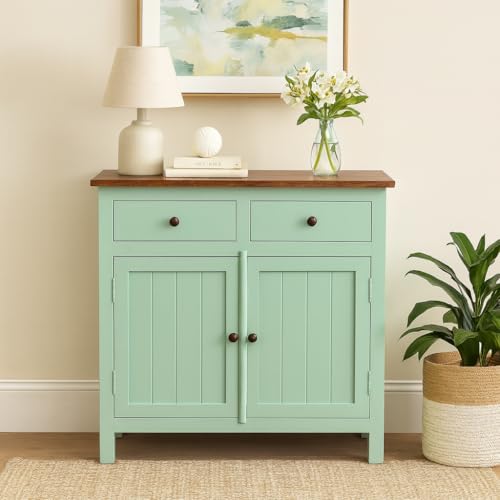
- Dimesion (L × W × H) – 31. × 13.8 × 31.5 Inch , 80x35x80 cm
- Finish – Scratch-resistant Tubaq Top with Sage Green
- Primary Material- Mango Wood Secondary Material MDF (For Back Panel)
- Designs are made with natural materials and are handcrafted one at a time. There may be natural variations in colour and texture that are not product flaws, they make your design truly one-of-a-kind.
- Warranty- 12 months against manufacturig defects
- VERSATILE STORAGE FOR EVERY ROOM – From kitchen spices to bathroom essentials, office files to bedroom books, this wooden cabinet for storage adapts to your needs with elegance and efficiency….
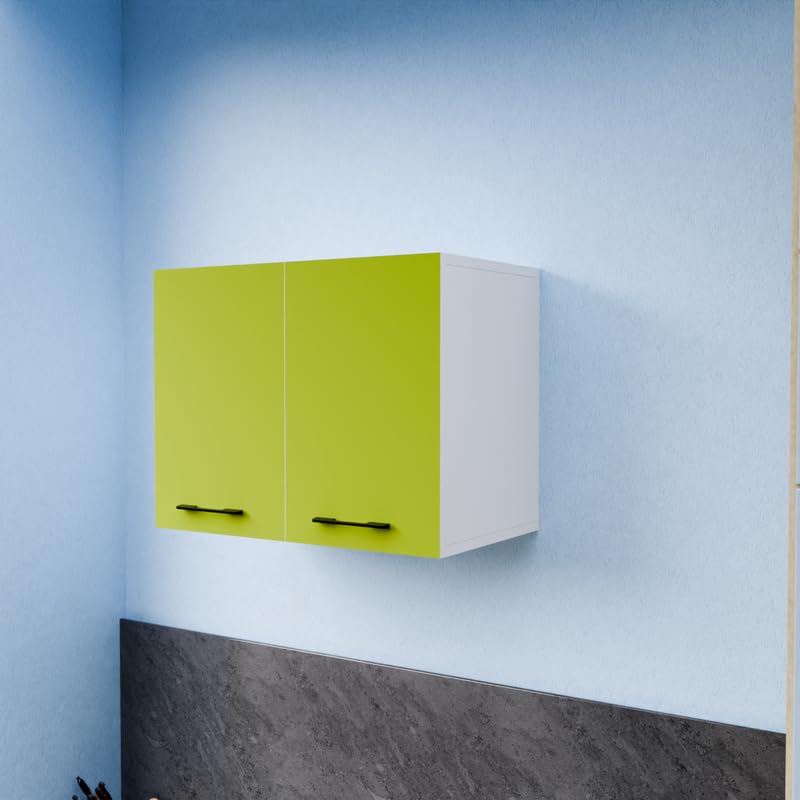
- SMART SPACE-SAVING WALL MOUNTED DESIGN – Reclaim your floor and transform your vertical space with kitchen cabinets wall mounted to perfection. Measuring a generous 60x33x43.1 Cm, it’s tailored for…
- CLEAN AESTHETIC – Designed to impress, the elegant matte finish paired with wood tones adds a calming, modern vibe to any setting. A true design chameleon, it elevates both light and dark interiors….
- DIY INSTALLATION – EFFORTLESS, EMPOWERING, YOURS – Why wait or pay for installation? This is a Do-It-Yourself wall mounted cabinet with all hardware and easy-to-follow instructions included. Your…
- FUNCTIONAL FLEXIBILITY – The 3 closed compartments keep things tidy and hidden, while the open shelf invites personality—style it your way. Ideal as a storage cabinet for bedroom, office display,…
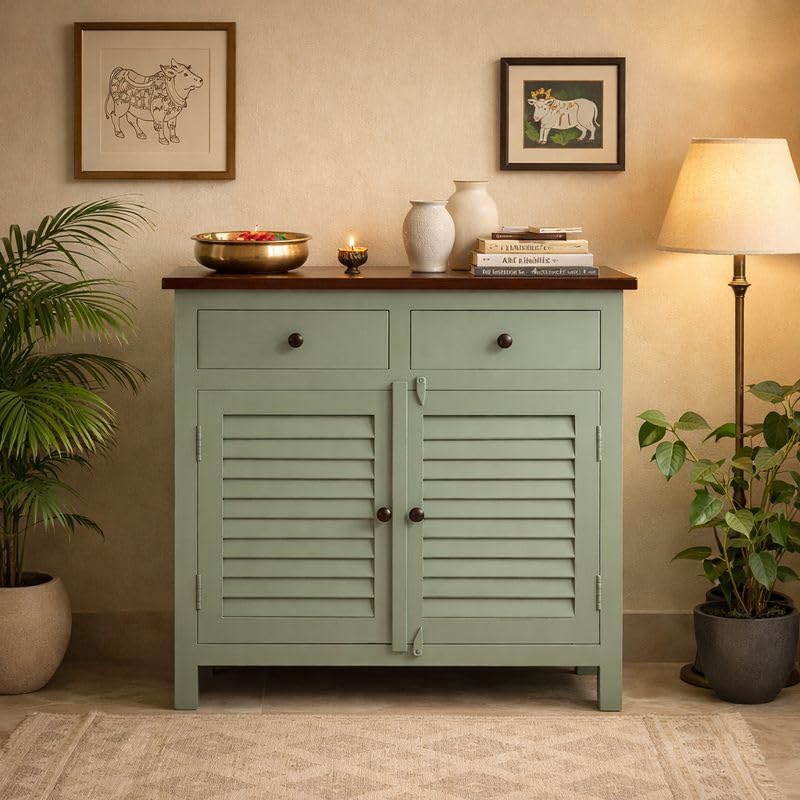
- Primary Material- Mango Wood, Secondary Material- MDF
- Dimensions – 80 × 35 × 80 cm / 31.5 × 13.8 × 31.5 inches
- Finish: Sage Green & Tubaq
- Warranty- 12 months against manufacturing defects
- The product is eligible for 10 days replacement in an unlikely event of damaged, defective or wrong item delivered. Please keep the product in original packing for successful pickup.
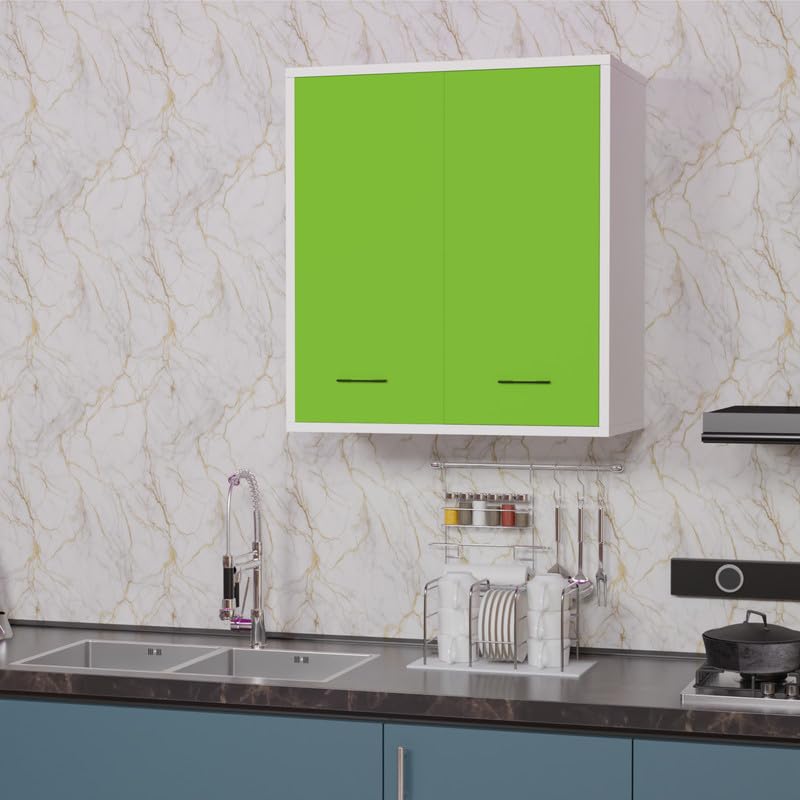
- Multipurpose Storage for Any Room: Perfect for Kitchen, Bedroom, Living Room & Home Office, this cabinet keeps your essentials neatly organized while enhancing your room décor.
- Space-Saving Wall Mounted Design: Designed to maximize floor space, the sturdy wall-mount structure offers smart vertical storage for compact and modern homes.
- Premium Engineered Wood Construction: Built from high-quality engineered wood with a smooth laminated finish that is durable, scratch-resistant, moisture-resistant and easy to clean.
- Adjustable & Fixed Shelves: Comes with a combination of flexible adjustable shelves and fixed compartments to store items of different heights and sizes with ease.
- Easy DIY Installation: Includes all required hardware and simple instructions, allowing quick and hassle-free setup without professional help.
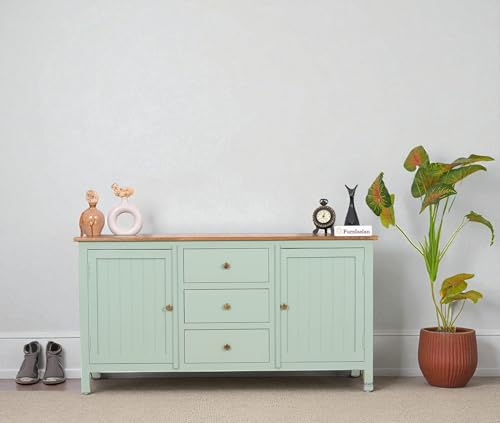
- Dimensions: Length (40 cm), Width (144 cm), Height (74 cm)
- Primary Material: Solid Wood
- PREMIUM DESIGN, REAL MATERIALS | Built in real 100% solid wood with a toughened engineered wood back, the piece showcases an eye-pleasing geometric white pattern
- ABUNDANT STORAGE | A mix of doors & drawers – there’s space for your books, laptops, small accents, remotes or crockery, expensive china & anything you can think of. The top can be decorated with…
- DURABLE FINISH | The exquisite wood stain is covered with a protective clear lacquer on top that keeps your piece exactly the same without any external stains & wear & tear. Wipe the piece clean, no…
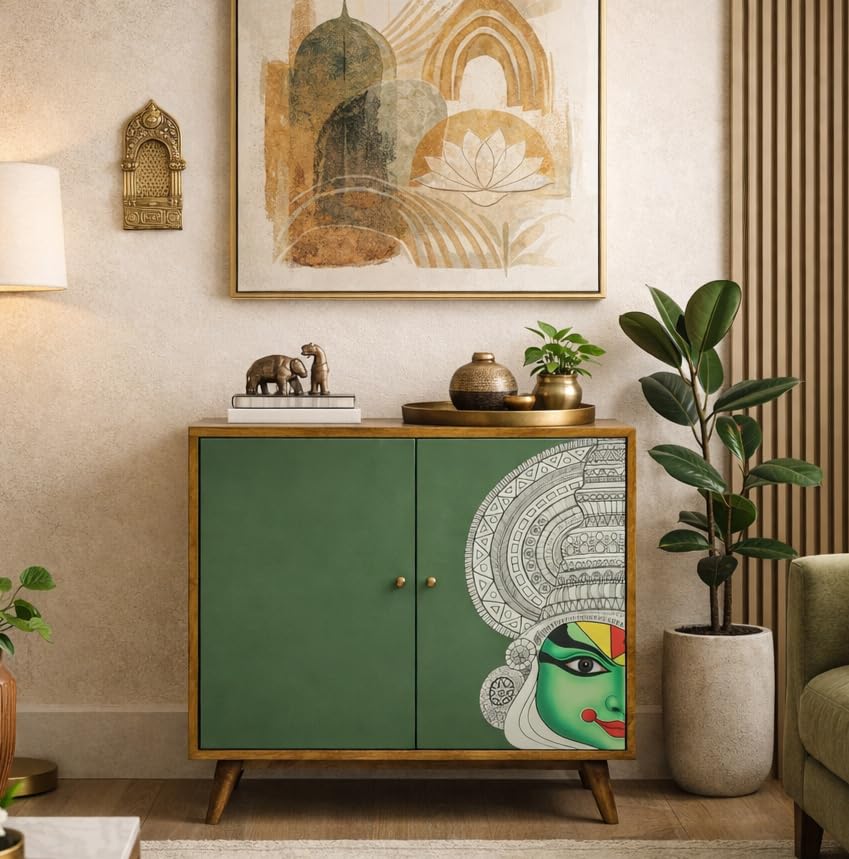
- Dimensions – 80 x 40 x 80 cm , 31.5″ x 15.75″ x 31.5″ inches
- Finish- Olive green & Light Brown
- 12 Months Warranty against Manufacturing Defects
- The product is eligible for replacement for 10 days from the date of delivery if the product has arrived damaged or defective
- Primary Material- Mango Wood, Secondary Material- MDF(For back panel and base panel for the doors)
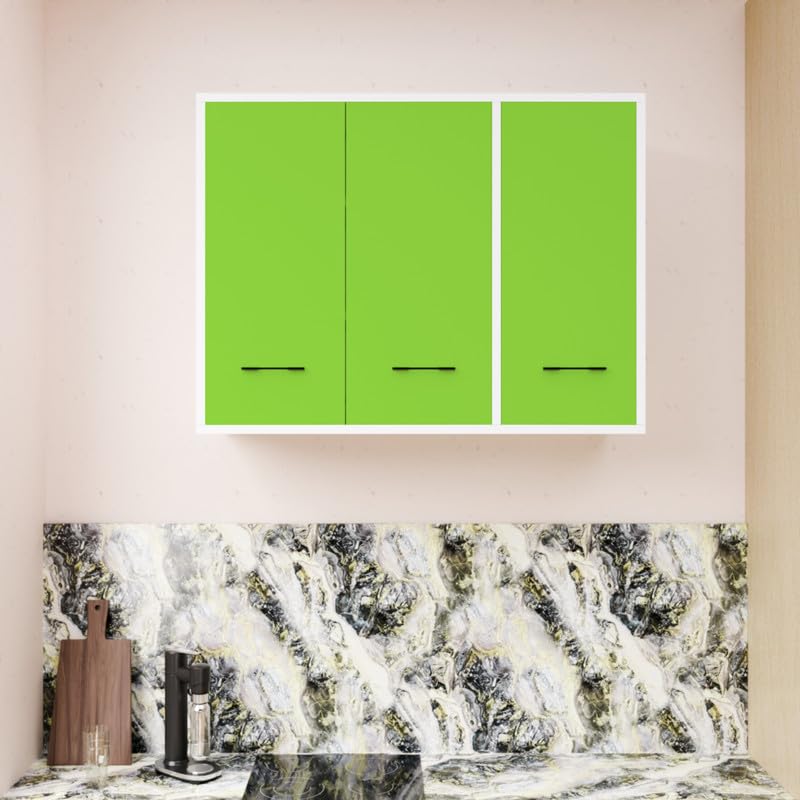
- Multipurpose Storage for Any Room: Perfect for Kitchen, Bedroom, Living Room & Home Office, this cabinet keeps your essentials neatly organized while enhancing your room décor.
- Space-Saving Wall Mounted Design: Designed to maximize floor space, the sturdy wall-mount structure offers smart vertical storage for compact and modern homes.
- Premium Engineered Wood Construction: Built from high-quality engineered wood with a smooth laminated finish that is durable, scratch-resistant, moisture-resistant and easy to clean.
- Adjustable & Fixed Shelves: Comes with a combination of flexible adjustable shelves and fixed compartments to store items of different heights and sizes with ease.
- Easy DIY Installation: Includes all required hardware and simple instructions, allowing quick and hassle-free setup without professional help.
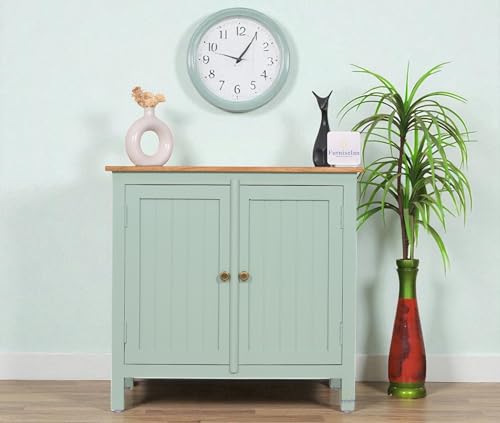
- Dimensions: Length (40cm), Width (76 cm), Height (76 cm)
- Primary Material: Solid Wood
- PREMIUM DESIGN, REAL MATERIALS | Built in real 100% solid wood with a toughened engineered wood back, the piece showcases an eye-pleasing geometric white pattern
- ABUNDANT STORAGE | A mix of doors & drawers – there’s space for your books, laptops, small accents, remotes or crockery, expensive china & anything you can think of. The top can be decorated with…
- DURABLE FINISH | The exquisite wood stain is covered with a protective clear lacquer on top that keeps your piece exactly the same without any external stains & wear & tear. Wipe the piece clean, no…
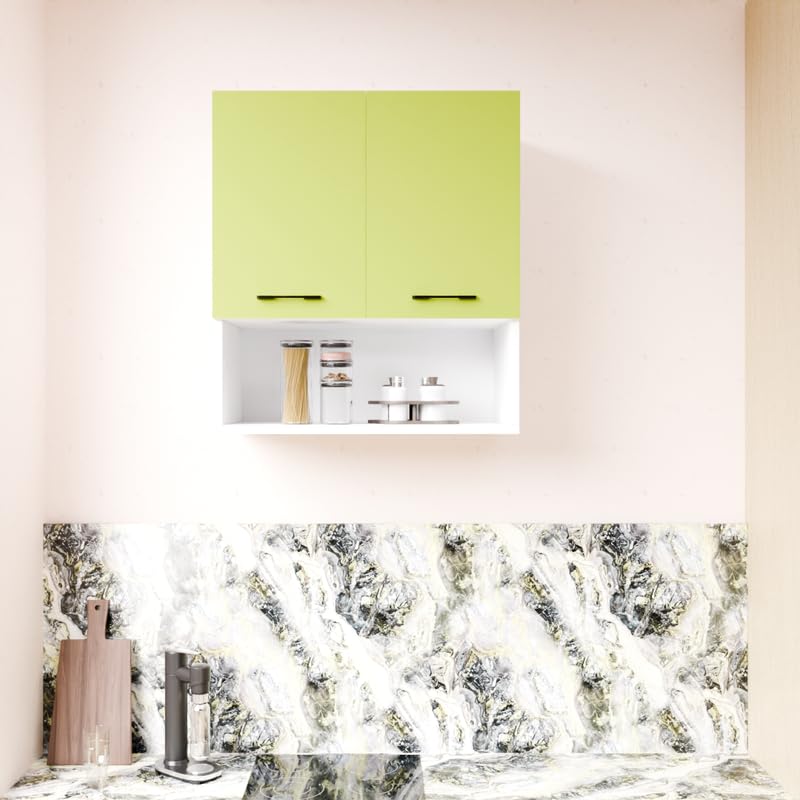
- VERSATILE STORAGE FOR EVERY ROOM – From kitchen spices to bathroom essentials, office files to bedroom books, this wooden cabinet for storage adapts to your needs with elegance and efficiency….
- SMART SPACE-SAVING WALL MOUNTED DESIGN – Reclaim your floor and transform your vertical space with kitchen cabinets wall mounted to perfection. Measuring a generous 93x30x63 cm, it’s tailored for…
- CLEAN AESTHETIC – Designed to impress, the elegant matte finish paired with wood tones adds a calming, modern vibe to any setting. A true design chameleon, it elevates both light and dark interiors….
- DIY INSTALLATION – EFFORTLESS, EMPOWERING, YOURS – Why wait or pay for installation? This is a Do-It-Yourself wall mounted cabinet with all hardware and easy-to-follow instructions included. Your…
- FUNCTIONAL FLEXIBILITY – The 1 closed compartments keep things tidy and hidden, while the open shelf invites personality—style it your way. Ideal as a storage cabinet for bedroom, office display,…
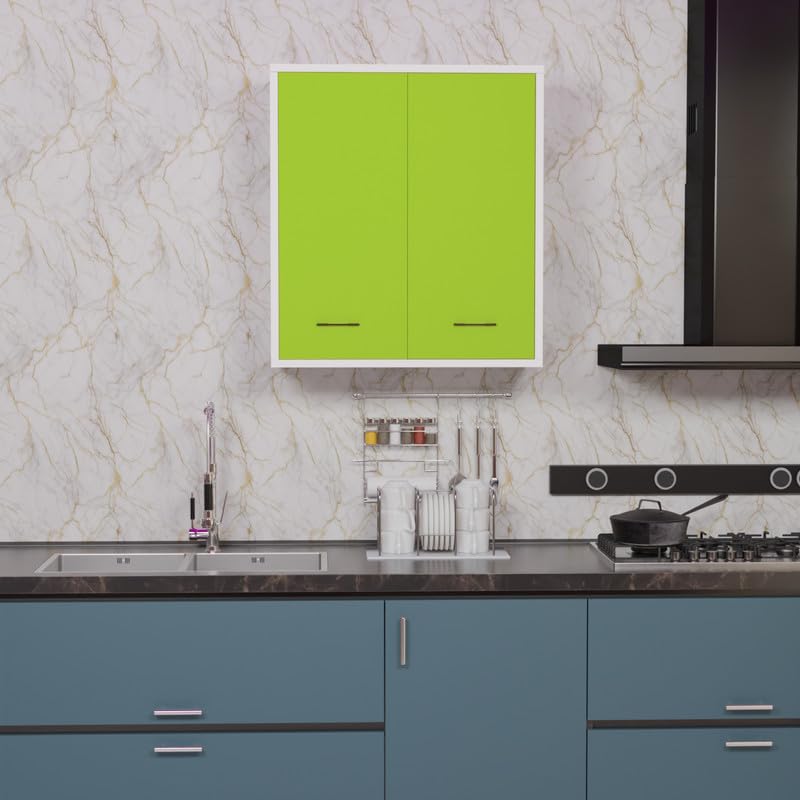
- VERSATILE STORAGE FOR EVERY ROOM – From kitchen spices to bathroom essentials, office files to bedroom books, this wooden cabinet for storage adapts to your needs with elegance and efficiency….
- SMART SPACE-SAVING WALL MOUNTED DESIGN – Reclaim your floor and transform your vertical space with kitchen cabinets wall mounted to perfection. Measuring a generous 60x33x63.8 cm, it’s tailored for…
- CLEAN AESTHETIC – Designed to impress, the elegant matte finish paired with wood tones adds a calming, modern vibe to any setting. A true design chameleon, it elevates both light and dark interiors….
- DIY INSTALLATION – EFFORTLESS, EMPOWERING, YOURS – Why wait or pay for installation This is a Do-It-Yourself wall mounted cabinet with all hardware and easy-to-follow instructions included. Your…
- FUNCTIONAL FLEXIBILITY – The 1 closed compartments keep things tidy and hidden, while the open shelf invites personality—style it your way. Ideal as a storage cabinet for bedroom, office display,…
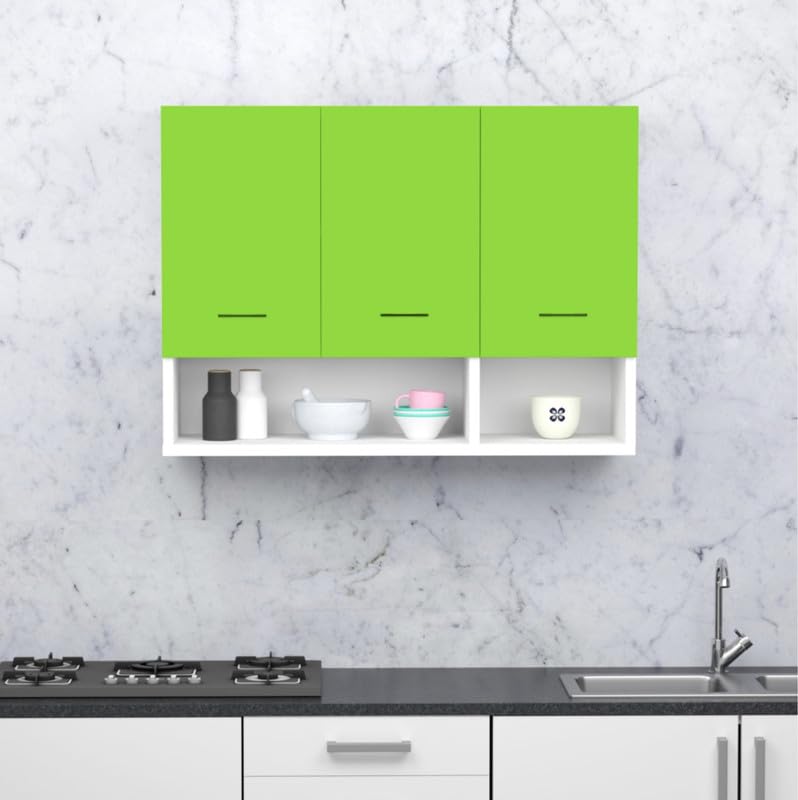
- VERSATILE STORAGE FOR EVERY ROOM ? From kitchen spices to bathroom essentials, office files to bedroom books, this wooden cabinet for storage adapts to your needs with elegance and efficiency. Whether…
- SMART SPACE-SAVING WALL MOUNTED DESIGN ? Reclaim your floor and transform your vertical space with kitchen cabinets wall mounted to perfection. Measuring a generous 90x27x62 cm, it’s tailored for…
- CLEAN AESTHETIC ? Designed to impress, the elegant matte finish paired with wood tones adds a calming, modern vibe to any setting. A true design chameleon, it elevates both light and dark interiors….
- DIY INSTALLATION ? EFFORTLESS, EMPOWERING, YOURS ? Why wait or pay for installation? This is a Do-It-Yourself wall mounted cabinet with all hardware and easy-to-follow instructions included. Your…
- FUNCTIONAL FLEXIBILITY ? The 3 closed compartments keep things tidy and hidden, while the Adjustable Shelf invites personality?style it your way. Ideal as a storage cabinet for bedroom, office…
- VERSATILE STORAGE FOR EVERY ROOM – From kitchen spices to bathroom essentials, office files to bedroom books, this wooden cabinet for storage adapts to your needs with elegance and efficiency….
- SMART SPACE-SAVING WALL MOUNTED DESIGN – Reclaim your floor and transform your vertical space with kitchen cabinets wall mounted to perfection. Measuring a generous 93x30x63 cm, it’s tailored for…
- CLEAN AESTHETIC – Designed to impress, the elegant matte finish paired with wood tones adds a calming, modern vibe to any setting. A true design chameleon, it elevates both light and dark interiors….
- DIY INSTALLATION – EFFORTLESS, EMPOWERING, YOURS – Why wait or pay for installation? This is a Do-It-Yourself wall mounted cabinet with all hardware and easy-to-follow instructions included. Your…
- FUNCTIONAL FLEXIBILITY – The 1 closed compartments keep things tidy and hidden, while the open shelf invites personality—style it your way. Ideal as a storage cabinet for bedroom, office display,…
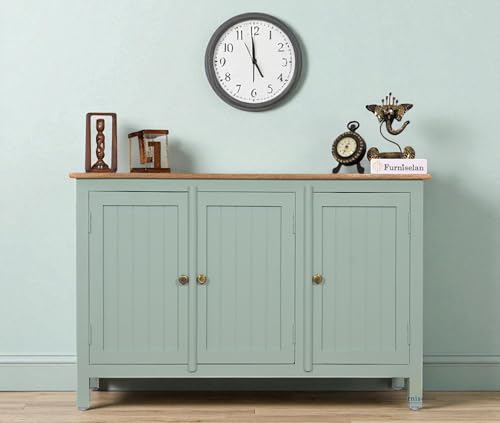
- Dimensions: Length (40 cm), Width (114 cm), Height (76 cm)
- Primary Material: Solid Wood
- PREMIUM DESIGN, REAL MATERIALS | Built in real 100% solid wood with a toughened engineered wood back, the piece showcases an eye-pleasing geometric white pattern
- ABUNDANT STORAGE | A mix of doors & drawers – there’s space for your books, laptops, small accents, remotes or crockery, expensive china & anything you can think of. The top can be decorated with…
- DURABLE FINISH | The exquisite wood stain is covered with a protective clear lacquer on top that keeps your piece exactly the same without any external stains & wear & tear. Wipe the piece clean, no…
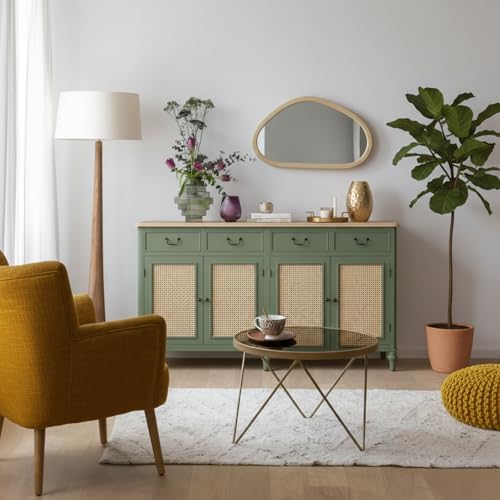
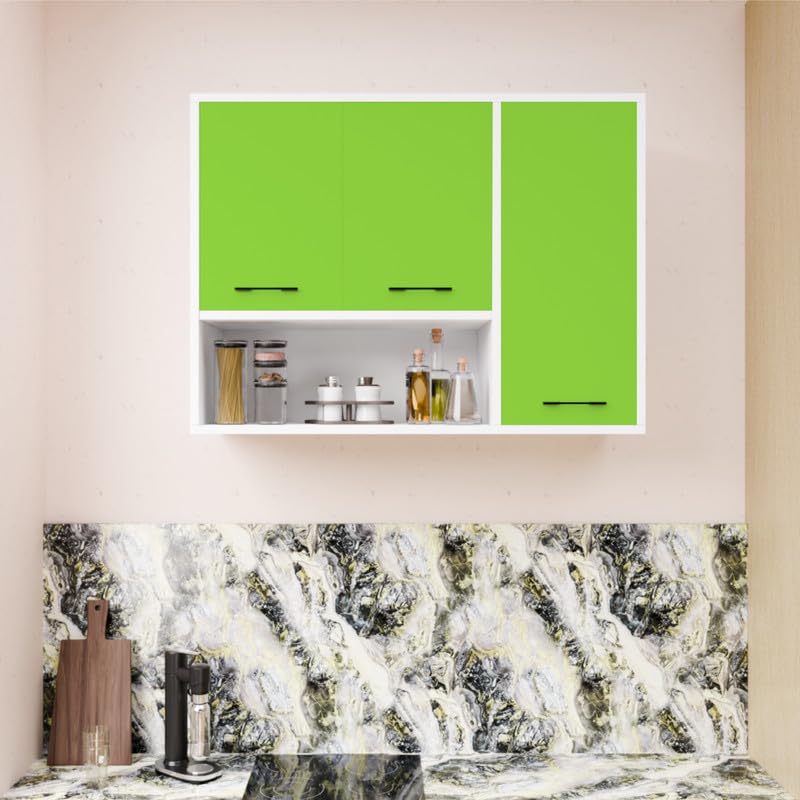
- Multipurpose Storage for Any Room: Perfect for Kitchen, Bedroom, Living Room & Home Office, this cabinet keeps your essentials neatly organized while enhancing your room décor.
- Space-Saving Wall Mounted Design: Designed to maximize floor space, the sturdy wall-mount structure offers smart vertical storage for compact and modern homes.
- Premium Engineered Wood Construction: Built from high-quality engineered wood with a smooth laminated finish that is durable, scratch-resistant, moisture-resistant and easy to clean.
- Adjustable & Fixed Shelves: Comes with a combination of flexible adjustable shelves and fixed compartments to store items of different heights and sizes with ease.
- Easy DIY Installation: Includes all required hardware and simple instructions, allowing quick and hassle-free setup without professional help.
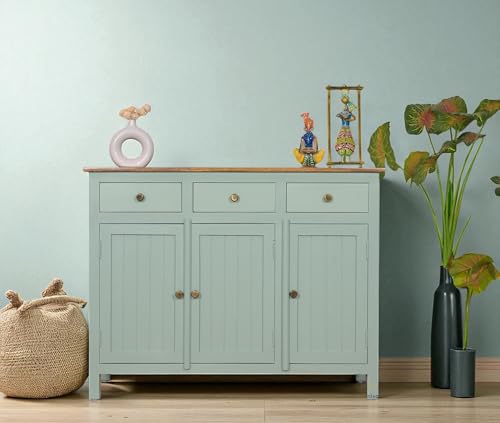
- Dimensions: Length (40 cm), Width (115 cm), Height (88 cm)
- Primary Material: Solid Wood
- PREMIUM DESIGN, REAL MATERIALS | Built in real 100% solid wood with a toughened engineered wood back, the piece showcases an eye-pleasing geometric white pattern
- ABUNDANT STORAGE | A mix of doors & drawers – there’s space for your books, laptops, small accents, remotes or crockery, expensive china & anything you can think of. The top can be decorated with…
- DURABLE FINISH | The exquisite wood stain is covered with a protective clear lacquer on top that keeps your piece exactly the same without any external stains & wear & tear. Wipe the piece clean, no…
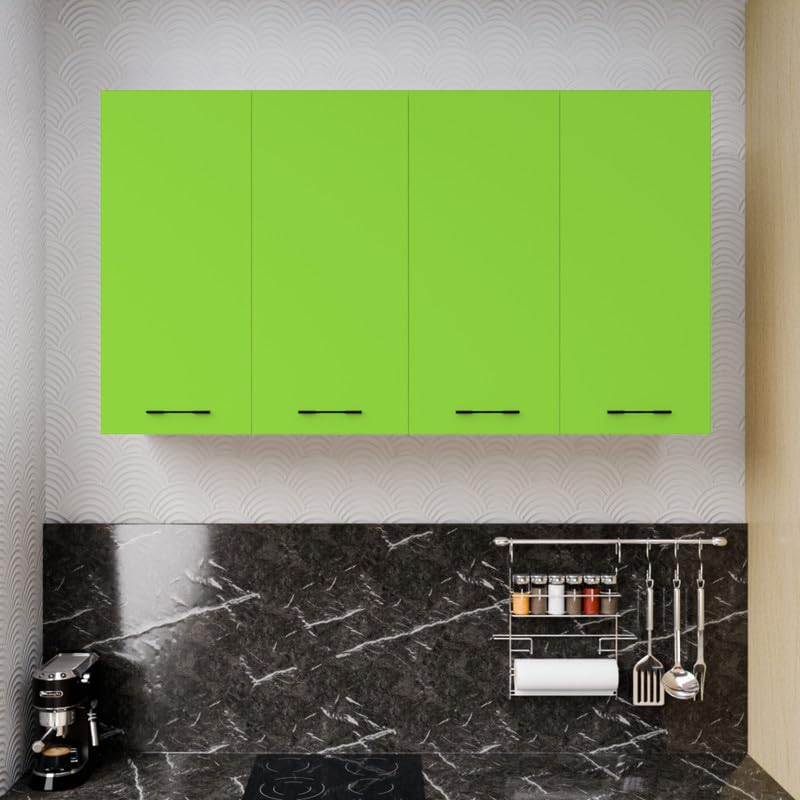
- Multipurpose Storage for Any Room: Perfect for Kitchen, Bedroom, Living Room & Home Office, this cabinet keeps your essentials neatly organized while enhancing your room décor.
- Space-Saving Wall Mounted Design: Designed to maximize floor space, the sturdy wall-mount structure offers smart vertical storage for compact and modern homes.
- Premium Engineered Wood Construction: Built from high-quality engineered wood with a smooth laminated finish that is durable, scratch-resistant, moisture-resistant and easy to clean.
- Adjustable & Fixed Shelves: Comes with a combination of flexible adjustable shelves and fixed compartments to store items of different heights and sizes with ease.
- Easy DIY Installation: Includes all required hardware and simple instructions, allowing quick and hassle-free setup without professional help.
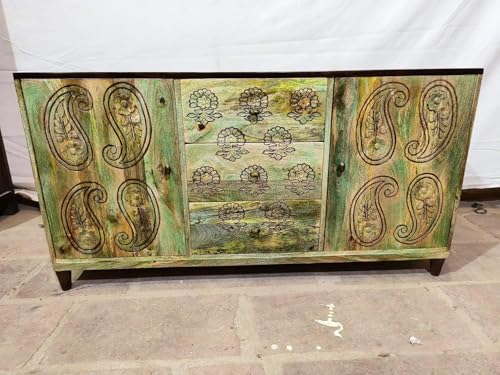
- HANDCRAFTED DESIGN: Beautifully hand-carved paisley patterns and floral motifs adorn this vintage-style wooden sideboard, showcasing exceptional artisanal craftsmanship
- STORAGE SOLUTION: Features 4 spacious drawers for ample storage space, perfect for organizing dining essentials or decorative items
- RUSTIC FINISH: Distinctive green distressed finish adds character and charm, creating an eye-catching vintage aesthetic
- VERSATILE FURNITURE: Functions as a stunning statement piece suitable for dining rooms, living areas, or hallways
- TRADITIONAL STYLE: Classic wooden construction with intricate carved details reflects timeless furniture-making traditions
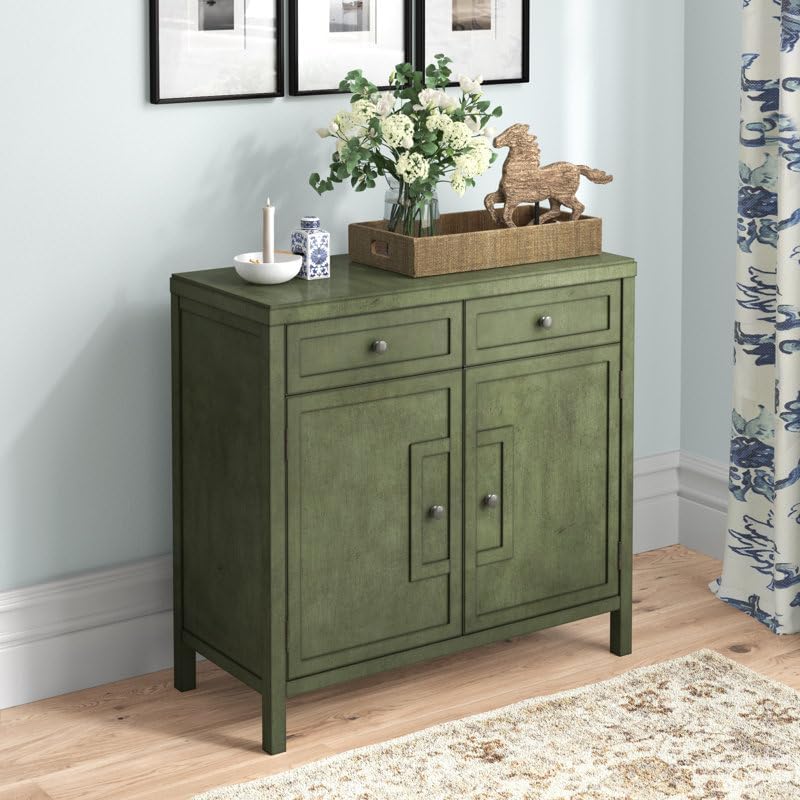
- This wooden storage cabinet is a classic addition to any space, be it the kitchen, workplace, or living area, thanks to its inherent beauty and robustness.
- The sideboard cabinet is perfect for arranging kitchen cabinet contents, dishes, video equipment, and other living room necessities because it has several storage options
- Designed to optimize storage without taking up too much area, this kitchen cabinet offers plenty of space for securely keeping files and books.
- With its contemporary appearance, this accent cabinet gives your room a sense of the seaside. Using both engineered and solid timber in construction
- Ideal for use as a wooden clothing cupboard or kitchen storage unit
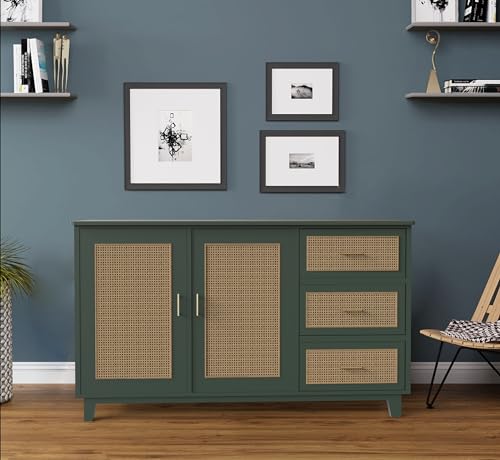
- Responsibly Sourced Wood From Licensed Partners With Complete Channel Documentation
- Solid Seasoned Wood, Harvested From FSC Certified Renewable Forests Of India
- Premium Quality Hardware
- Premium Cane Inlay
- Smooth Drawers