Moving into a college dorm can feel both exhilarating and overwhelming. You’re stepping into this tiny room that’s supposed to be your home for the next year, and honestly?
It can look very dull at first. I still recall staring at those blank white walls and that standard-issue furniture, wondering how I’d ever make it feel like my home.
But here’s the thing—with a little ingenuity and some clever planning, your dorm can become a lovely refuge that represents your personality while keeping utilitarian.
Whether you’re a freshman facing your first move-in day or a returning student ready for a fresh start, these ideas will help you create a room that feels comfortable, orderly, and distinctively yours.
1. Layer Your Lighting for Instant Ambiance
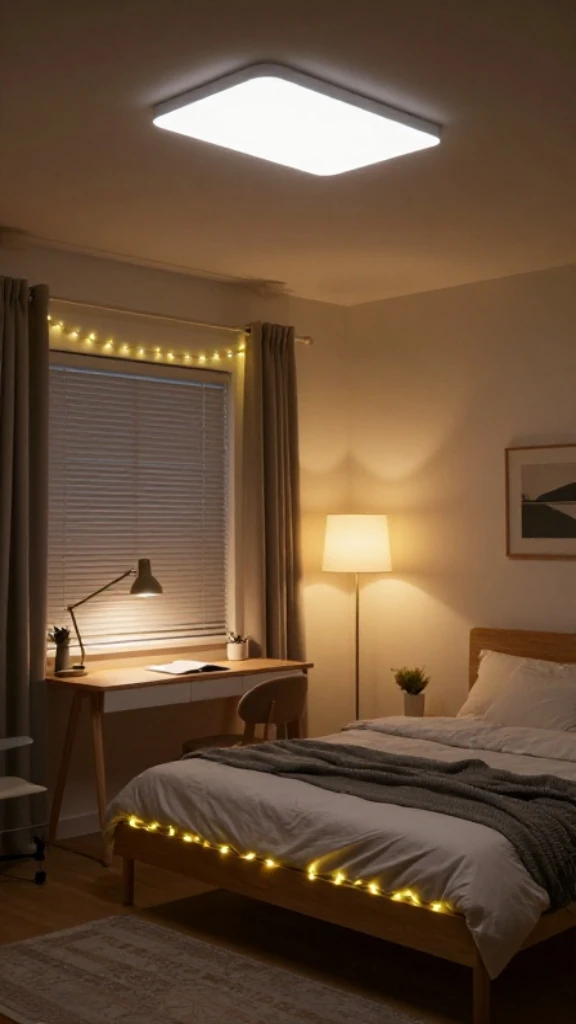
Overhead fluorescent lights are the enemy of warm vibes. Instead of relying entirely on that harsh overhead lighting, create a cozy ambiance by layering multiple light sources throughout your area.
Add a tiny desk lamp for study sessions, thread lights along your headboard or window frame, and consider a floor lamp in the corner. Fairy lights aren’t just pretty—they’re functional for late-night reading when your roommate is sleeping.
You may also try LED strip lights under your desk or under your bed frame for a trendy touch. The idea is to have options depending on your mood and activity. Soft, warm lighting instantly makes any place feel more friendly and less institutional.
Trust me, your study sessions and Netflix marathons will thank you for eliminating that fluorescent nightmare.
2. Maximize Vertical Space with Wall Storage
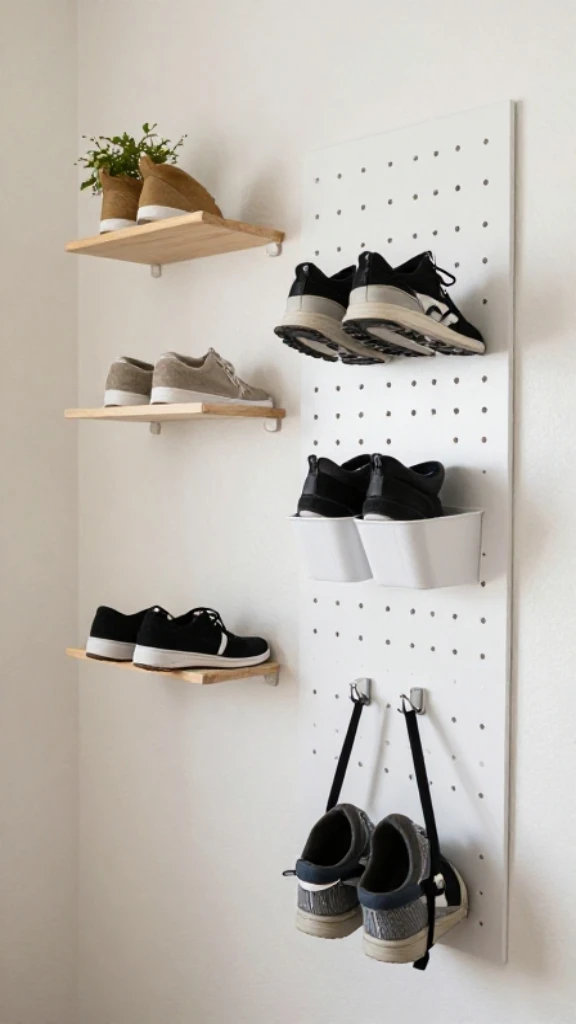
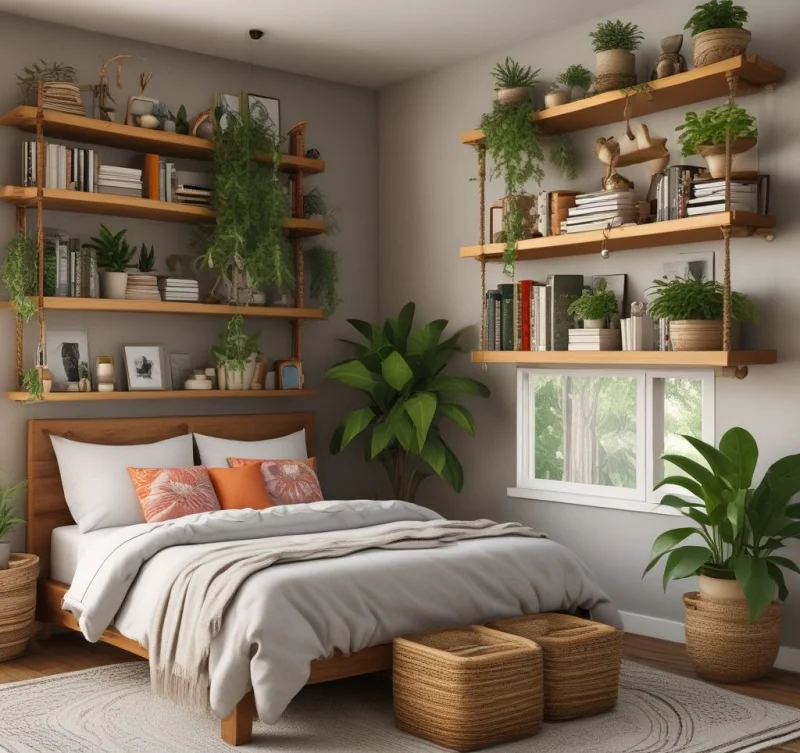
When floor space is limited, think upward. Your walls are excellent real estate that often goes underused in dorm rooms. Install removable hooks, floating shelves, or hanging organizers to keep basics within reach without cluttering surfaces.
Over-the-door organizers work well for shoes, accessories, or toiletries—basically anything that would otherwise pile up on the floor. Pegboards are another excellent choice for creating a personalized storage wall where you can hang baskets, hooks, and clips.
Just make sure everything you install is damage-free and dorm-approved. Most schools have tight restrictions concerning wall damage, adhesive strips, and command hooks are your best friends. By leveraging vertical space, you’ll free up important floor area and make your room feel more open.
Plus, having everything visible and accessible makes your morning routine so much smoother when you’re racing to that 8 AM class.
3. Invest in Under-Bed Storage Solutions
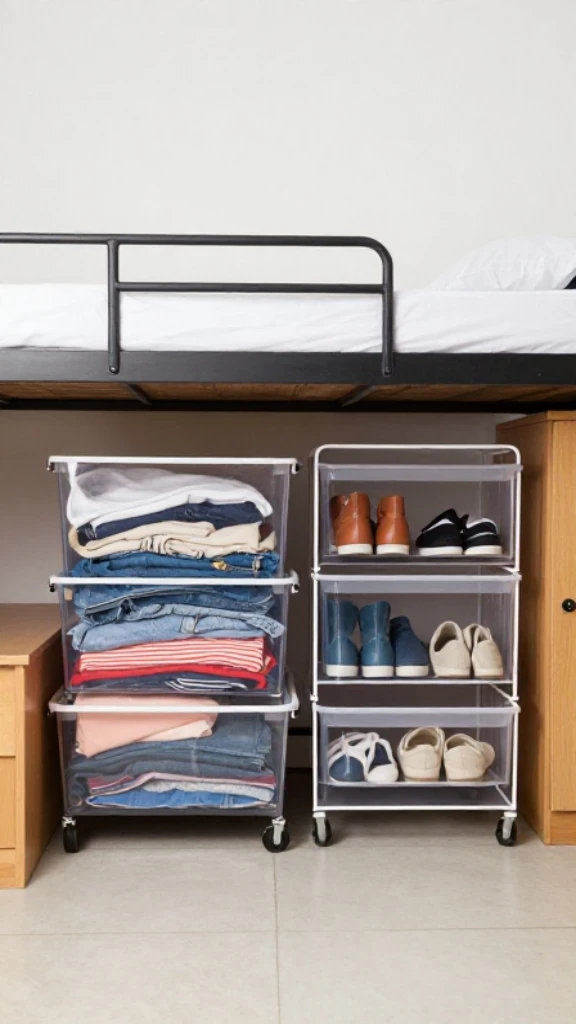
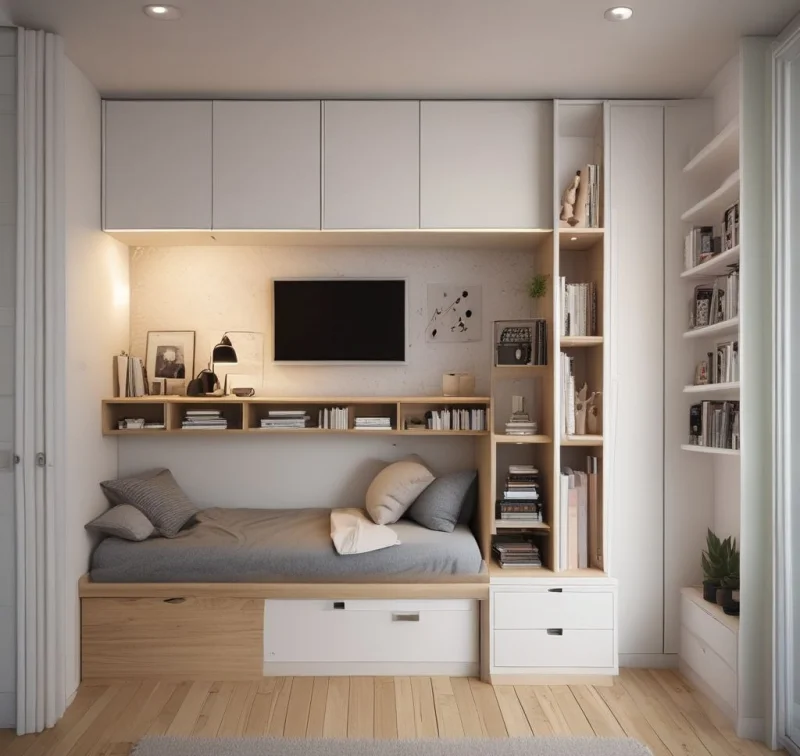
The space beneath your bed is like a hidden treasure chest begging to be arranged. Most dorm mattresses can be changed to different heights, so elevate yours up and place storage bins below. Rolling bins are excellent since you can effortlessly pull them out when needed and push them back for a tidy look.
Use this room for seasonal apparel, extra bedding, shoes, or those big items you don’t need daily. Clear containers are wonderful since you can see what’s inside without going through everything. You could also use bed risers to create even more clearance if your school allows it.
Some students get really creative and make the under-bed area into a little wardrobe with hanging organizers.
This easy approach essentially doubles your storage capacity without taking up any additional room space. It’s especially critical if you’re sharing a small dorm with limited closet access.
4. Create a Gallery Wall with Removable Adhesives
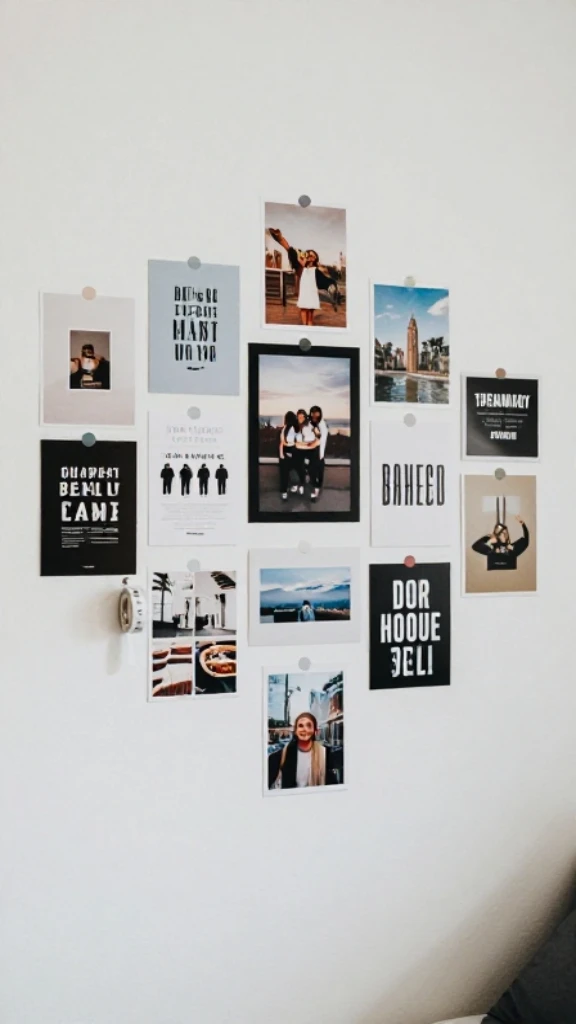
Bare walls make dorm rooms feel cold and impermanent, but a personalized gallery wall transforms everything. Print your favorite images, inspirational messages, postcards, or artwork and arrange them in a collage above your workstation or bed.
Use removable adhesive strips or washi tape to hang everything—no nails or thumbtacks needed. Mix varied sizes and orientations for visual interest rather than making everything absolutely symmetrical.
This is your time to showcase what matters to you, whether that’s trip memories, family photos, concert tickets, or motivational prints. The advantage of utilizing removable adhesives is that you can quickly rearrange or exchange items throughout the year as your mood changes.
A gallery wall quickly adds personality and makes your space feel curated rather than generic. It’s also an excellent discussion starter when friends visit your room for the first time.
5. Choose a Color Scheme and Stick to It
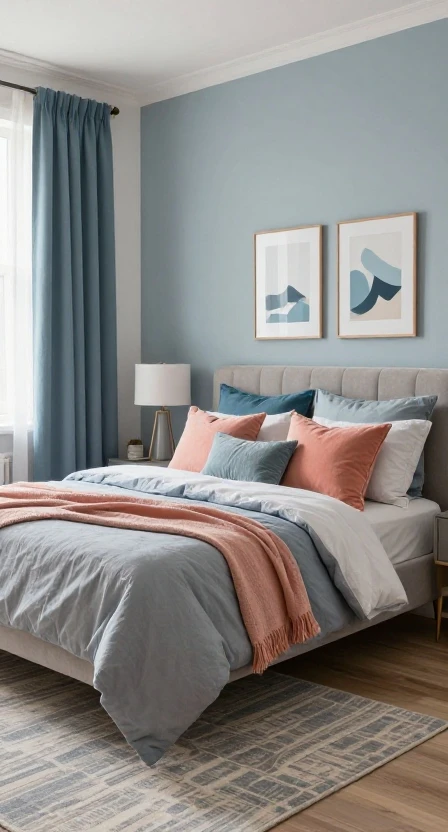
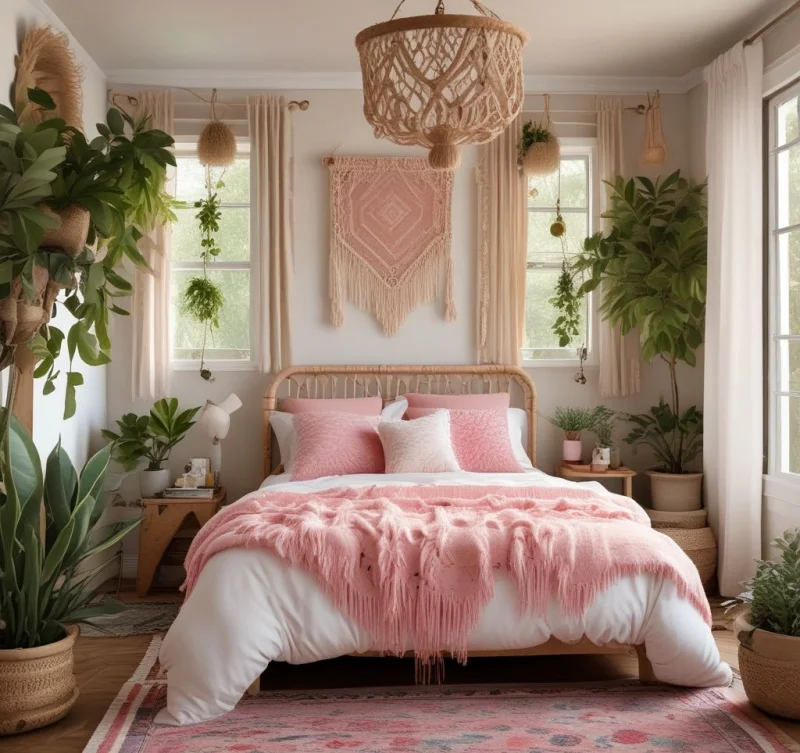
Having a cohesive color scheme helps even the tiniest area feel planned and brought together. Pick two or three major colors that you love and incorporate them throughout your bedding, drapes, carpets, and decorative elements.
This doesn’t imply everything needs to match perfectly—in fact, blending patterns and textures within your selected colors generates visual intrigue. Maybe you go with peaceful blues and grays, or perhaps vibrant coral and turquoise speak to you.
Whatever you select, consistency is crucial. When all your elements coincide, the area feels larger and more orderly, even if you have a lot of stuff jammed in there. I learnt this the hard way during my first semester when my room looked like a rainbow exploded—pretty, but chaotic.
Avoid the temptation to buy odd, cute pieces that don’t fit your plan. Your wallet and your aesthetic will both appreciate the discipline.
6. Add Texture with Throws and Pillows
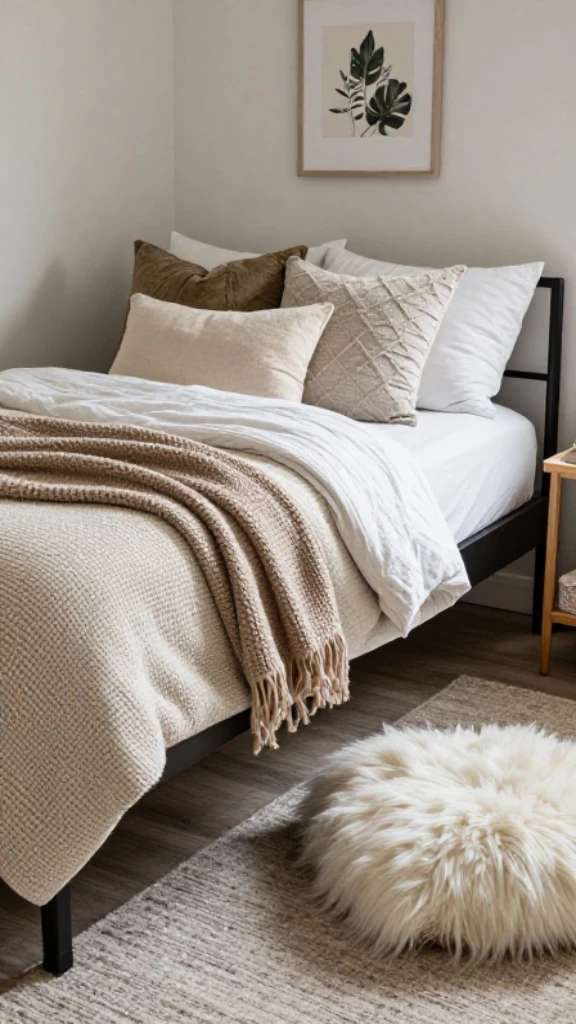
Standard dorm beds and furniture aren’t recognized for their comfort or design, but textiles may transform them fast. Layer your bed with a nice throw blanket, add numerous ornamental pillows in varying sizes, and consider a plush rug beside your bed for those frigid morning floor encounters.
These soft features don’t simply look good—they make your environment actually more comfortable and inviting. Mix textures like bulky knits, faux fur, velvet, or woven textiles to provide depth and interest.
A fuzzy ottoman or floor cushion gives extra seating when visitors are around without taking up much space. Textiles also help attenuate sound, which is unexpectedly effective in dorm buildings where noise travels readily.
Plus, having that soft throw within reach makes study breaks and movie nights infinitely cozier. Don’t underestimate how much these little additions can affect your daily comfort and mood.
7. Designate Zones for Different Activities
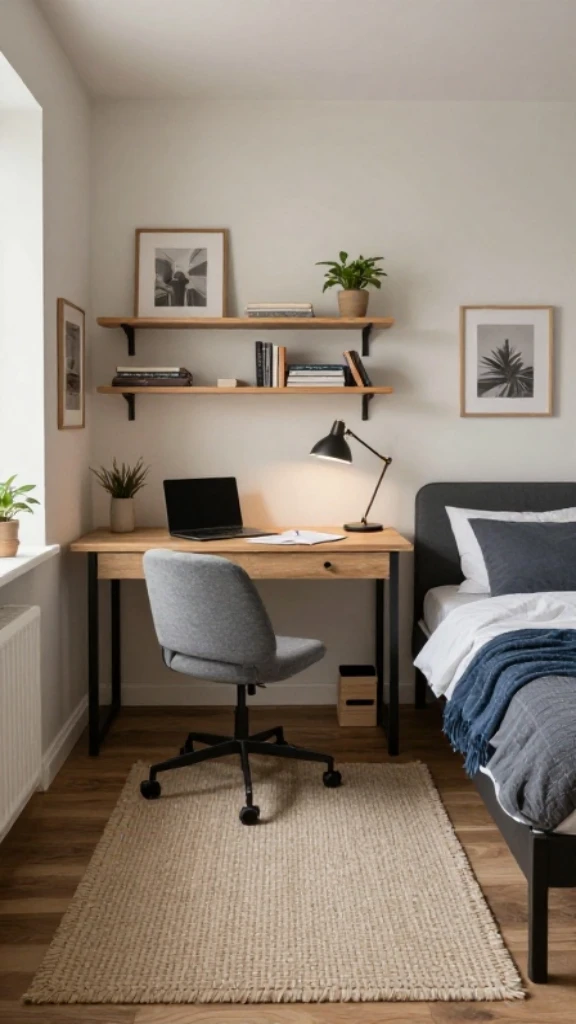
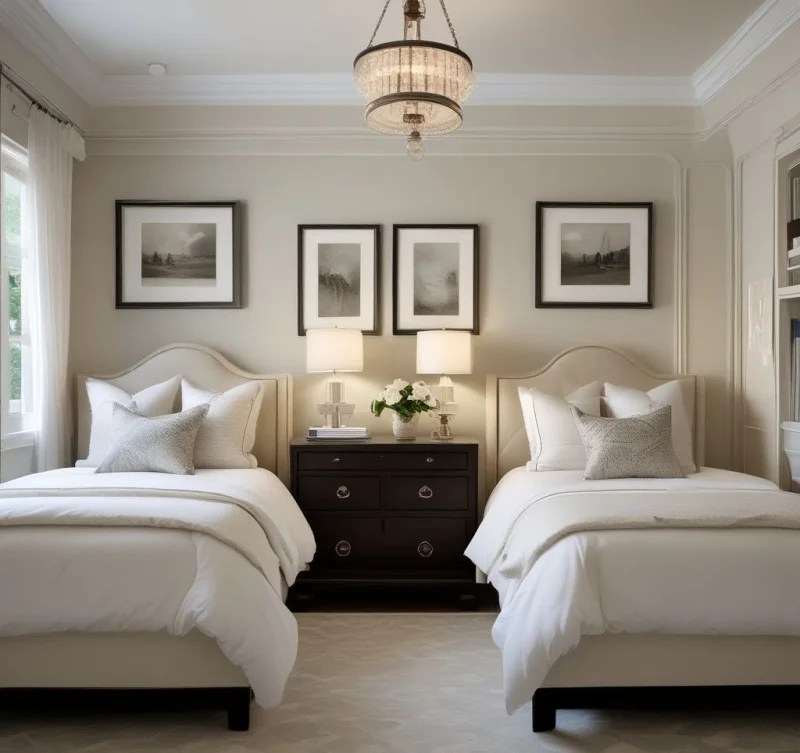
Even in a cramped dorm room, creating various zones helps your brain adjust between study mode, sleep mode, and leisure mode. Keep your desk area completely for schooling, your bed for sleeping and lounging, and maybe a corner with a soft chair for reading or conversing. This mental division is surprisingly potent for productivity and sleep quality.
When you frequently work at your desk, your brain identifies that place with focus, making it easier to concentrate. Similarly, keeping your bed primarily for sleep helps preserve good sleep habits. Use modest rugs, different lighting, or even just the arrangement of furniture to visually designate these zones.
If your roommate is game, coordinate zones jointly so the room operates effectively for both of you. This method becomes more vital during finals week when you’re spending more time in your room than normal. Clear boundaries between activities prevent the overwhelming feeling of everything bleeding together.
8. Bring in Plants for Life and Fresh Air
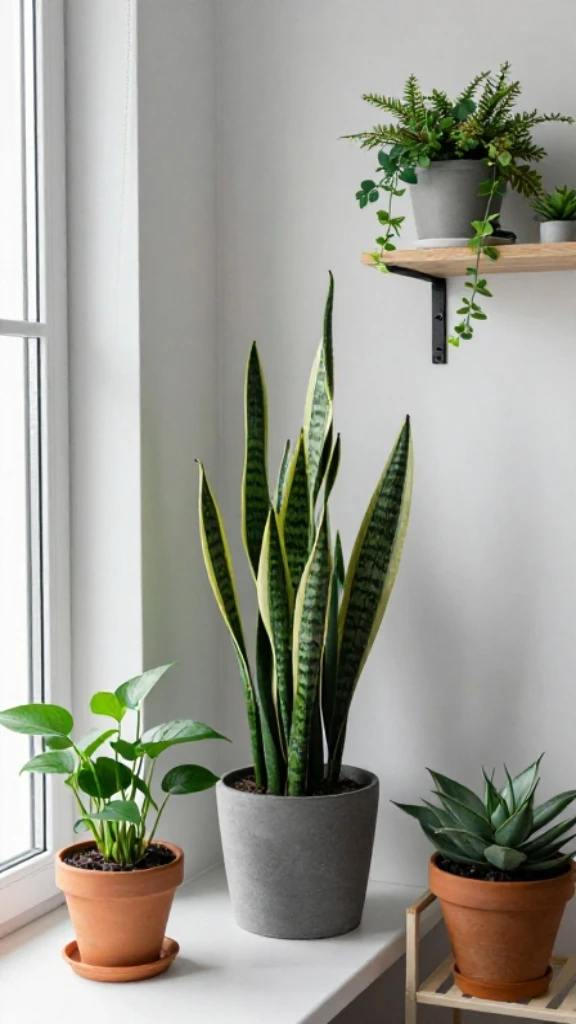
Nothing livens up a space quite like greenery, and plants offer both aesthetic and functional benefits. They purify the air, relieve tension, and provide natural beauty to your environment. Choose low-maintenance options like pothos, snake plants, or succulents that may endure occasional neglect during test weeks.
Place them on windowsills, shelves, or hanging planters to bring bursts of green throughout your room. If you’re anxious about your plant-parenting skills, start with one or two and see how it goes. Real plants are best, but high-quality artificial plants work too if your space lacks natural light or if you’re gone frequently during breaks.
I lost approximately three succulents before discovering ones that survived my irregular watering routine, so don’t feel terrible if you’re not a natural gardener. The trick is picking hardy kinds and setting phone reminders to water them. Even one thriving plant makes your dorm feel less antiseptic and more alive.
9. Utilize Door and Closet Space Creatively
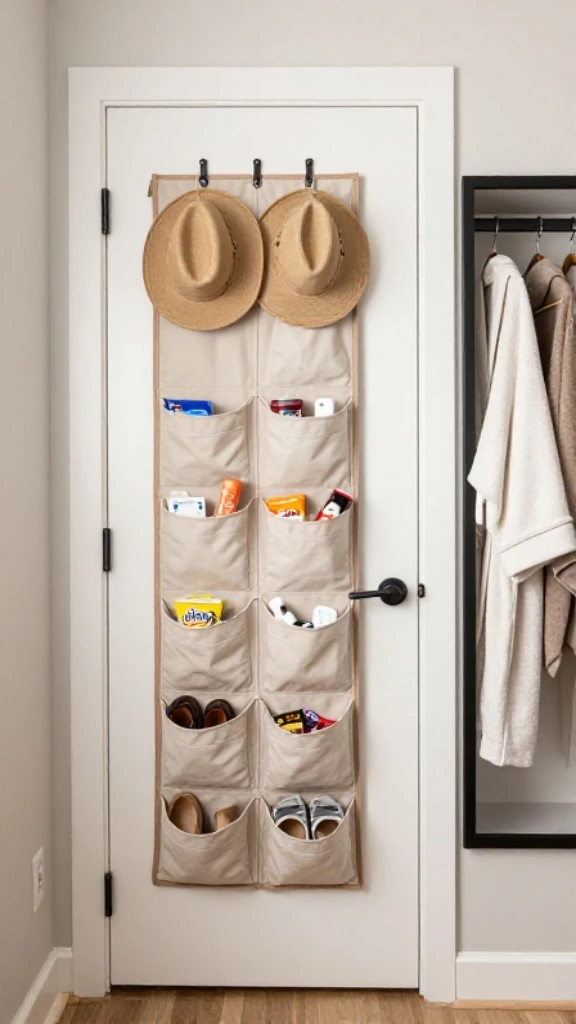
Your closet and door real estate typically go unused, yet they’re goldmines for storage. Hang an over-the-door shoe organizer—but don’t just use it for shoes. These pockets are excellent for holding snacks, toiletries, school supplies, chargers, or makeup.
Inside your closet, install a second hanging rod to increase your hanging space, or use cascading hangers to fit more items vertically. Stick adhesive hooks on the inside of your closet door for bags, hats, or jewelry. You can also hang a tiny mirror there for a final dress check before leaving. The back of your room door works nicely for robes, towels, or a full-length mirror.
These often-overlooked niches may hold a surprising amount of goods when used carefully. The best part? Everything stays hidden behind closed doors, keeping your visible room space neat and uncluttered. It’s like having secret storage sections that guests never notice.
10. Personalize Your Desk Setup for Productivity
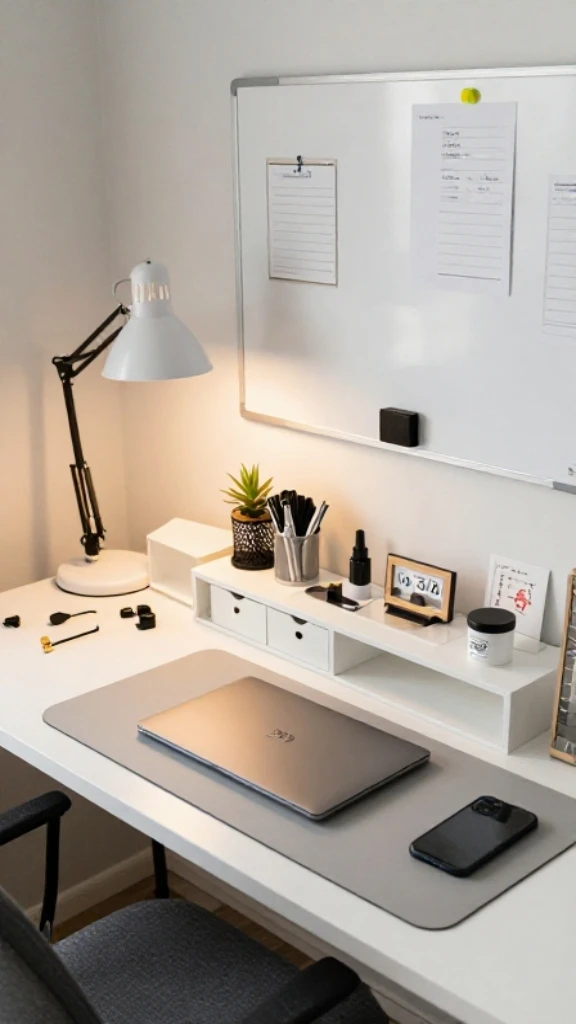
Your desk will be your command center for studying, writing papers, and possibly munching at 2 AM, so make it functional and inspiring. Invest in decent desk organizers—drawer dividers, pen holders, file sorters—to keep resources accessible but tidy. Add a bulletin board or whiteboard above your desk for tracking assignments, pinning reminders, or posting motivation.
Make sure you have appropriate lighting with an adjustable desk lamp that won’t bother your roommate. Consider a little desk plant, a photo frame, or important trinkets that make you smile during long study periods. Keep your most-used products at arm’s reach and store occasional-use supplies away.
Cable management clips help tame the pandemonium of phone chargers, laptop cords, and headphone wires. A comfortable desk chair pad can make hours of studying more bearable if your usual chair isn’t terrific. When your desk feels organized and personalized, you’ll actually want to sit there and be productive rather than avoiding it.
11. Create a Cozy Reading or Chill Corner
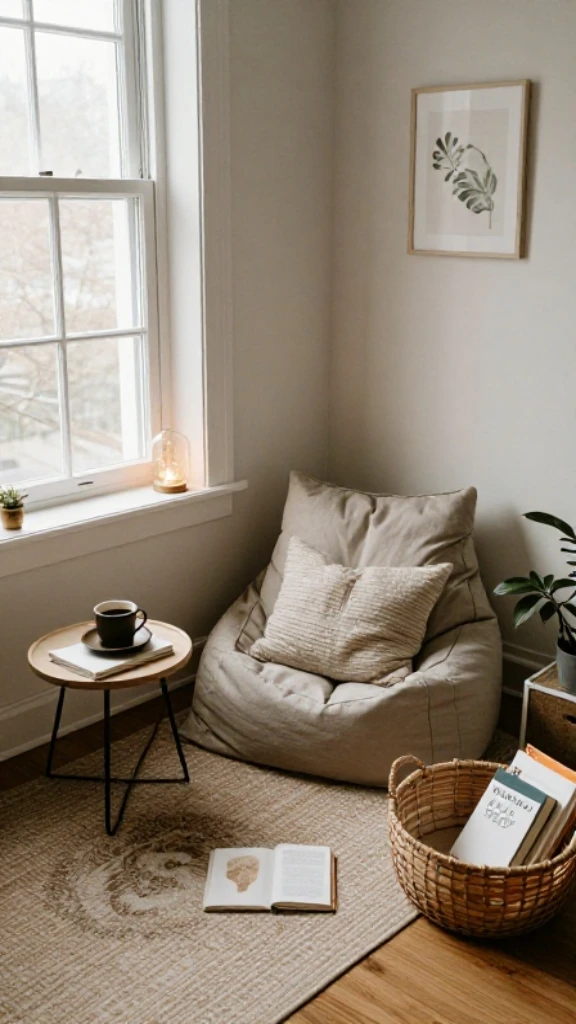
If space allows, carve yourself a modest location that’s solely for relaxation—somewhere that’s not your bed or desk. This may be a floor cushion by the window, a bean bag chair in the corner, or even just a specific area on your bed with additional pillows. Having a distinct relaxation zone gives you somewhere to unwind that doesn’t mess with your sleep or study habits.
Add a tiny side table for your coffee or tea, and have a basket nearby with your current readings or diaries. Good illumination is needed here too—maybe a reading lamp or the string lights described before. This becomes your retreat for phone conversations with family, meditation, journaling, or just staring out the window between classes.
I used to believe this was a luxury I couldn’t afford in a smaller room, yet even the smallest corner fulfills this role. Your mental health will benefit from having an area that exists exclusively for unwinding without screens or academics demanding your attention.
12. Smart Storage for Snacks and Mini Fridge Organization
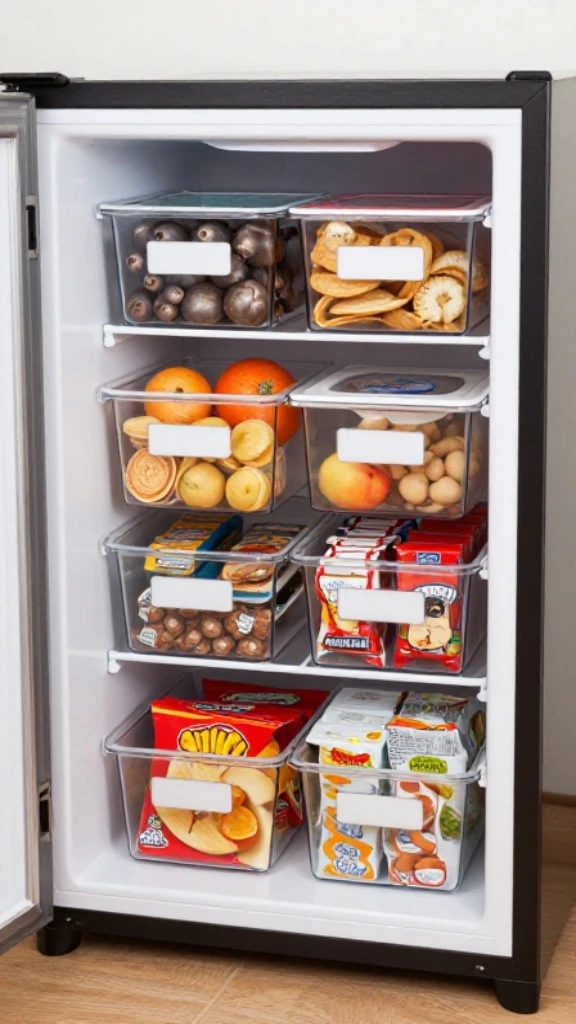
Let’s be real—late-night nibbling is a college staple, but food storage may rapidly become disorganized. If you have a compact fridge, use small bins or drawer organizers inside to divide categories like drinks, fruits, leftovers, and sauces. This prevents the avalanche effect when you open the door at midnight, hunting for anything special.
For non-refrigerated snacks, use a rolling cart, stackable boxes, ora separate drawer space to keep things organized and accessible. Label containers if you’re sharing with a roommate to minimize confusion or inadvertent theft. Keep healthy grab-and-go alternatives accessible and convenient—when nutritious snacks are simple to reach, you’re more likely to choose them than junk food.
Store chips, crackers, and other crushable foods where they won’t get smashed by textbooks. A specialized food storage system also lets you track what you have, eliminating waste and unnecessary trips to the campus store. Plus, when friends come over, you’ll look like you absolutely have your life together with your arranged snack station.
13. Coordinate with Your Roommate on Shared Items
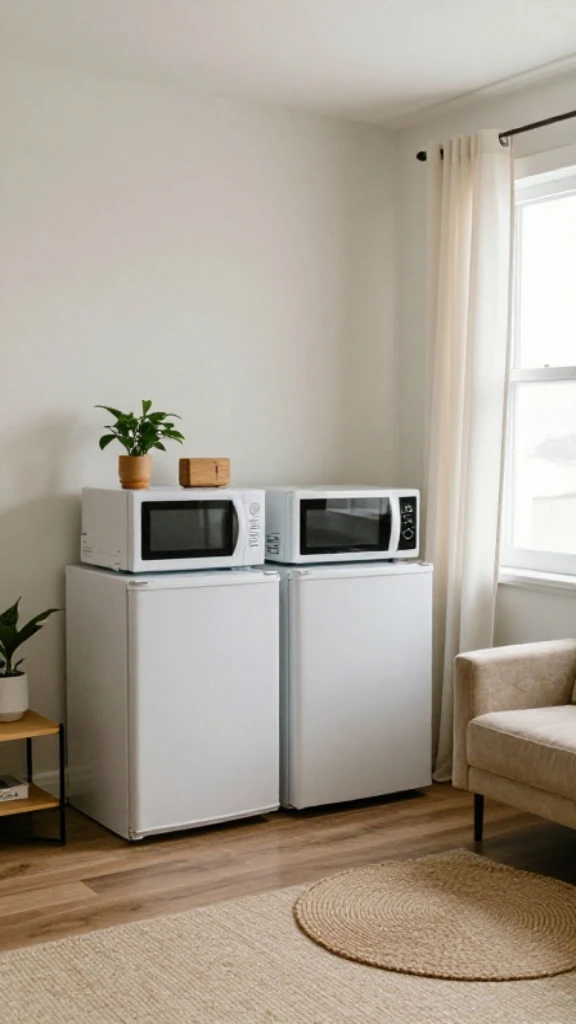
Before you both walk up with identical goods, discuss who’s carrying what shared essentials. Do you really need two mini fridges, two microwaves, or two printers eating up precious space? Coordinate on these larger products and split the expense if possible. Discuss preferences for things like room temperature, lighting, cleanliness standards, and quiet hours early on to minimize issues later.
If you’re decorating together, try to find a middle ground where both styles are represented—maybe one person handles one side of the room while the other takes their section. Shared goods like a rug, drapes, or cleaning supplies should be agreed upon collectively. This teamwork not only saves money and space but also helps develop a great roommate connection from the start.
Even if you’re not best friends, mutual respect and straightforward communication make sharing a small place much more comfortable. Set up a joint shopping list or spending tracker for products you split. The idea is to create a space where you both feel comfortable and represented.
14. Incorporate Multi-Functional Furniture Pieces
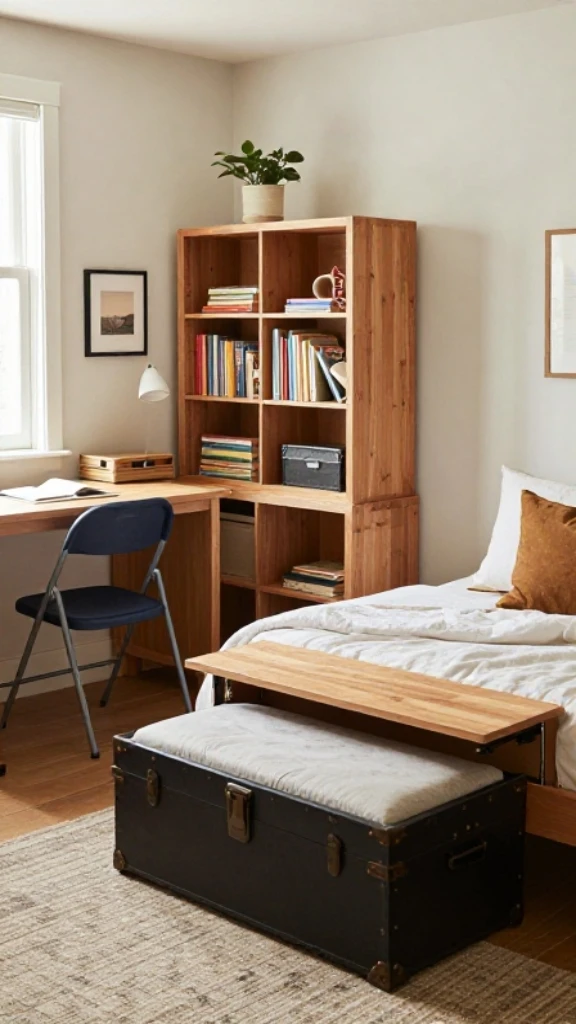
When every square foot counts, furniture that serves several tasks is worth its weight in gold. Look for an ottoman that opens up for storage inside, a bed frame with built-in drawers, or a desk with hutch shelving. A folding chair or collapsible side table can provide extra seating or surface area when needed, then tuck away when not in use.
Some students utilize robust storage cubes both as sitting and as organized units—stack them to create a nightstand or bookshelf, then rearrange as needed. A trunk at the foot of your bed offers storage and functions as a coffee table or extra seating for gatherings.
Rolling carts are highly versatile—use them for art supplies, toiletries, snacks, or even as a mobile bedside that can tuck under your desk when unnecessary. The trick is choosing items that adapt to your changing demands during the semester. Multi-functional objects eliminate clutter while optimizing what your limited area may provide you.
15. Add Personal Touches with Scent and Sound
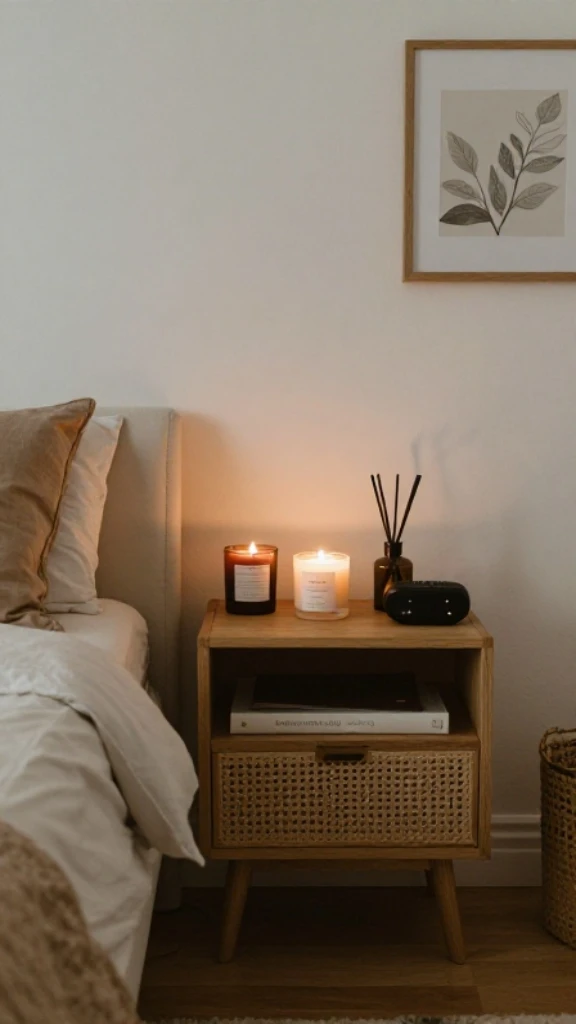
The sensory experience of your space matters more than you would believe. A personal aroma makes your place feel yours and more like home. Use candles (if allowed), essential oil diffusers, room sprays, or wax warmers to add pleasant fragrances. Just be cautious of your roommate’s tastes and any allergies or sensitivities.
Sound also changes the atmosphere—create playlists for different moods, invest in a small Bluetooth speaker, or use a white noise machine to conceal irritating hallway sounds. Some students appreciate having soft background music while studying, while others demand full silence. Experiment to learn what helps you focus and relax.
These sensory factors seem small, yet they profoundly impact how you feel in your area. Walking into your room after a hard day and being greeted by your favorite aroma and music instantly makes it feel like your personal hideaway. Don’t ignore these finishing touches—they’re the difference between a space you tolerate and one you actually adore returning to every day.
FAQs
What’s the most crucial thing to bring to a college dorm?
Beyond the obvious beds and toiletries, adaptable storage options are vitally necessary. Command strips, under-bed storage containers, and multi-functional furniture will save you when space gets tight. Also, bring a nice desk lamp—you’ll use it a lot more than you imagine.
How can I make my dorm room feel bigger?
Maximize vertical storage to clear floor space, use mirrors to reflect light and create depth, and keep to a coherent color scheme rather than cluttering with mismatched objects. Keeping surfaces generally neat and orderly also makes any tiny area feel more open and breezy.
Are dorm room makeovers expensive?
They don’t have to be at all! Shop secondhand stores, cheap businesses, and back-to-school sales. Focus your spending on critical goods like bedding and lighting, then DIY or thrift the decorative aspects. Small modifications like rearranging furniture or adding plants cost nearly nothing but make a significant impression.
How do I decorate without destroying walls?
Use command strips, detachable adhesive hooks, washi tape, and poster putty exclusively—these won’t leave markings or holes. Always check your school’s unique policies first. At move-out, remove everything carefully and slowly to avoid removing paint. Most harm arises from hurrying the removal process, not the installation itself.
Can I decorate if I have a roommate with a different style?
Absolutely, and it’s actually healthier for your relationship to each have your own area. Divide the room visually and let each participant decorate their portion anyway they wish. Find common ground for shared places like drapes or a rug. Communication and compromise are vital to make it work beautifully.
Conclusion
Transforming your college dorm from a dull, cookie-cutter room into a personalized home you actually adore doesn’t take a big budget or significant design abilities. It only takes some ingenuity, clever planning, and determination to make it your own.
Start with the basics—good storage, comfy bedding, and sufficient lighting—then layer in those personal touches that define who you are. Remember that your dorm is more than simply a place to sleep; it’s your home base throughout one of the most exciting chapters of your life.
Whether you follow all fifteen of these ideas or just a few that appeal to you, each small change leads to an environment that supports your success and wellbeing.
So take those command strips, pick your color scheme, and start building a dorm room that you’ll be delighted to return to every single day. Your future self will thank you!

- 📦 Package Includes – 1 × LED Neon Strip (4 Meter), 1 × Plug-In Power Adapter
- 🤍 Soft Warm White Glow – Creates a cozy, elegant, and relaxing atmosphere.
- 🔌 Plug-In Powered (DC 5V) – Simple plug-and-play design for instant setup.
- 💧 Waterproof & Durable (IP65) – Safe for both indoor and semi-outdoor use.
- ✨ Flexible & Cuttable – Shape and trim to suit your DIY and décor ideas.
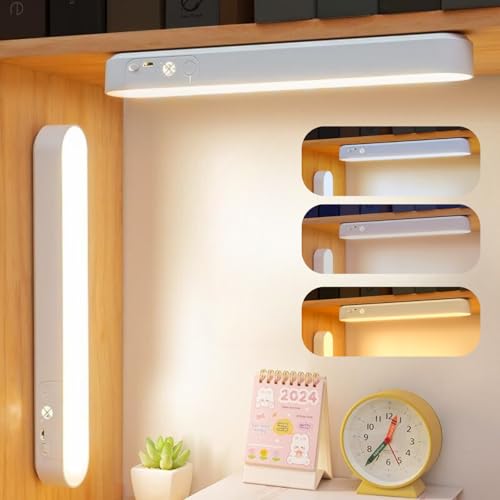
- ✅ Package Contains: 1 × One94Store USB Rechargeable Magnetic Cabinet Light, 1 × Magnetic Mount, 1 × USB Charging Cable, 1 × User Manual
- 💡 3-Color Dimmable Modes: Choose between Warm, Cool, and Neutral lighting to match your mood and environment.
- 🔋 USB Rechargeable & Long Battery Life: Easily charge with any USB adapter, power bank, or laptop — no need for constant battery replacements.
- 🧲 Magnetic Mount Design: Strong built-in magnets allow you to easily attach, remove, and reposition the light without tools.
- 🏠 Multi-Purpose Use: Perfect for kitchen, closet, cabinet, bedroom, office, or as a portable emergency light.
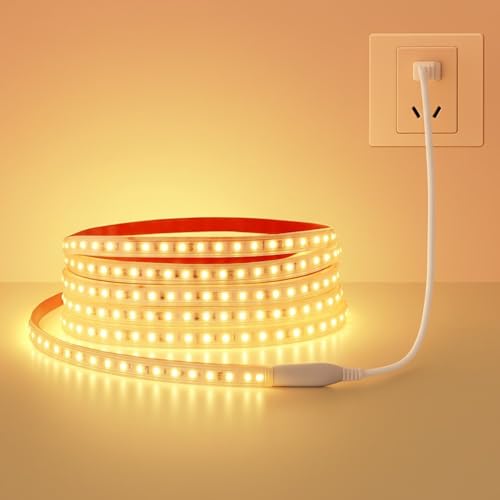
- 1. PACKAGE CONTENTS: Includes 1 × 5 Meter LED Rope Light (Warm White) with plug and connector for easy and quick installation.
- 2. PREMIUM SMD LEDs: Equipped with bright SMD LEDs that deliver a soft and uniform warm white glow for a cozy ambience.
- 3. 5 METER LENGTH FOR DECOR: Compact 5m rope light size is ideal for decorating walls, ceilings, railings, balconies, windows and small spaces.
- 4. WATERPROOF & FLEXIBLE BUILD: Durable waterproof design ensures safe indoor and outdoor use, with flexible material that bends easily for creative setups.
- 5. MULTI-PURPOSE DECOR USE: Perfect for Diwali décor, festivals, Christmas, parties, weddings, home interiors and everyday decorative lighting.
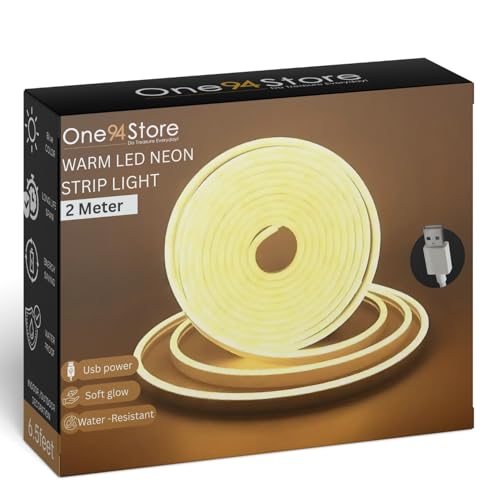
- 📦 Package Includes – 1 × 2M LED Neon Strip (Blue), 1 × USB Cable with switch
- 🔌 USB Powered (DC 5V) – Compatible with laptops, power banks, USB adapters
- 🔘 Built-in Button Switch – Easily turn on/off without unplugging
- 💧 Water-Resistant Design – Suitable for indoor and semi-outdoor use
- 🔄 Flexible & DIY-Friendly – Shape it around corners, walls, desks, or decor items
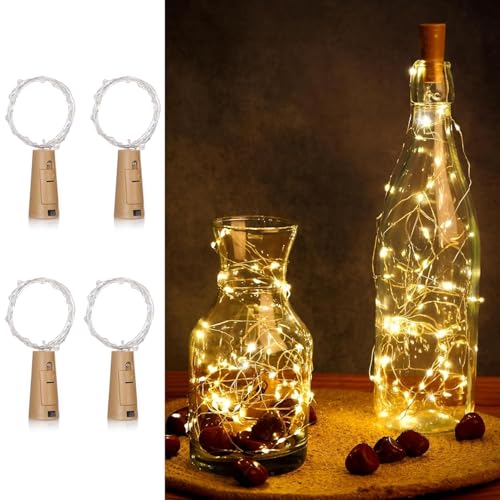
- BEAUTIFUL BOTTLE DECOR LIGHTS – Transform empty bottles into glowing centrepieces with these 20 LED bottle cork lights, perfect for festive decoration, weddings, Diwali, Christmas, parties, and home…
- WARM WHITE FAIRY LIGHTS – Soft warm white glow creates a cozy and magical atmosphere, making it ideal for living rooms, balconies, gardens, restaurants, and event decorations.
- BATTERY OPERATED & PORTABLE – Each cork light comes with a replaceable battery, eliminating the need for sockets or wires. Easy to carry and perfect for indoor & outdoor decoration.
- FLEXIBLE COPPER WIRE DESIGN – 6m premium copper wire is bendable and shapeable, allowing you to design creative bottle decorations, DIY crafts, and gift box lighting.
- SAFE & ENERGY EFFICIENT – Low heat emission, durable LED beads, and safe-to-touch copper wire make these fairy lights long-lasting, energy-saving, and child-friendly.

- Radiant Ambiance Creation: 💫 Elevate your indoor and outdoor spaces with the Desidiya LED Rice Light, a versatile 10-meter strip designed to bring a warm and enchanting glow to any setting.
- Versatile Decor Possibilities: 🏡 Whether you’re decorating a room, patio, garden, or any festive occasion, these lights offer endless possibilities, adding a touch of magic to weddings, parties, or…
- 10-Meter Length: 📏 The generous length of the LED strip provides ample coverage, allowing you to effortlessly weave these lights through trees, around furniture, or along walls for a seamless and…
- Warm White Radiance: ☀️ Emitting a cozy and inviting warm white light, these LED lights create a welcoming atmosphere, making them ideal for both intimate gatherings and festive celebrations.
- Indoor and Outdoor Durability: 🌧️ Designed for versatility, the Desidiya LED Rice Light is suitable for both indoor and outdoor use, bringing the beauty of warm white illumination to any space,…

- 🌟[ENERGY EFFICIENT]: Fairy Lights adapt with LEDs and casting with durable golden/silver copper wires. 0.4mm copper wire and LEDs which is durable and flexible and can be easily bended and shaped…
- 🔌[SAFE TO TOUCH]: Only 5V output voltage, the copper wire is insulated and wont be overheated, and definitely safe to touch with no worry of getting shocked or burnt. with an IP65 protection, the…
- 🔋[BATTERY POWERED]: Require 3 AA batteries (Not Included) for each string lights, with ON/OFF button on the battery box.
- 💫[FLEXIBILITY]: The led string lights can be easily bended, and shaped , it can satisfy your diffrent DIY need for home decoration indoor outdoor using.
- 💧[WATERPROOF FAIRY STRING LIGHT]: This led string light with silver wire which is Waterproof and very safe for hand touch, DIY . But please note that the BATTERY BOX of string lights is not…

- Press Control, Easy Operation: Just press the center lens of the LED push light to turn it on and emit soft light. Press it again to turn off the light. Very suitable for the elderly and children,…
- Ultra-high Quality Light Source with Soft Lighting: Our under cabinet puck lights have 4 pcs 0.5W 140 Lm/W Ra 90 LEDs output 50 lumens with high CRI. Adopt milky white anti-glare panel, provide soft…
- Battery Operated: Each stick on light is powered by 3 AAA batteries (not included). Wireless lighting, uncomplicated and safe, no worries about the risk of electric shock to children. For extended…
- Split Design and Easy Installation: Just twist it, our touch closet light is easy to remove and reinstall when the battery needs to be replaced. Customized ultra-adhesive pads ensures a stable…
- Mini Size and Wide Application: 2.76 inch samll size makes our tap light perfect for anywhere you need extra light, such as closet, cabinet, wardrobe, kitchen, bedroom, bathroom, classroom, laundry…
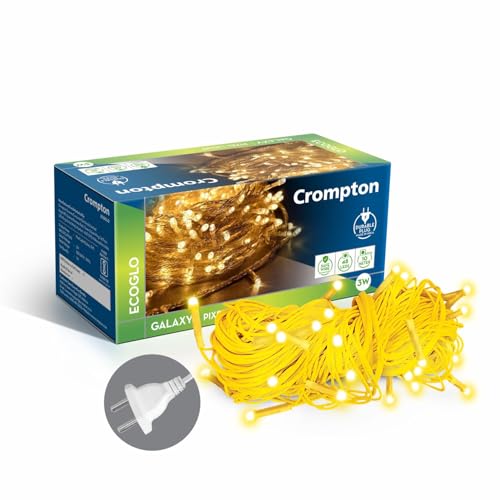
- Festive, Vibrant Illumination — 48 LEDs on a 10-metre flexible copper wire cast bright, colourful lights, ideal for festivals, weddings, birthdays, parties, or home decoration.
- Easy Plug-and-Play Operation — Comes with a standard 2-pin plug for instant setup. Simply connect to a wall socket and enjoy bright decorative lighting
- Durable High-Quality Wire — Built with strong, insulated festival-grade wiring that ensures safe, long-lasting performance during extended usage.
- Low Power, Energy-Efficient LED — Uses minimal electricity while providing bright, attractive lighting — ideal for long festive nights without heavy bills.
- Versatile Decoration Use — Great for festivals (Diwali, Christmas), birthdays, weddings, anniversaries, parties, or to add ambient lighting to bedrooms, balconies, gardens, or cafés.
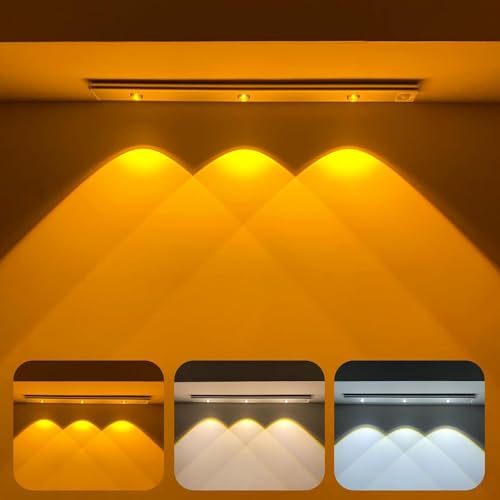
- 📦 What’s in the Box? 1 x 40CM Under Cabinet Light (USB Rechargeable, 3 Dimmable Modes)
- ✨ Product Highlights: 🔋 USB Rechargeable Convenience Forget the hassle of changing batteries! This light comes with strong 400mAh battery capacity that charges quickly with a USB cable, making it…
- 💡 Customizable Brightness Choose from 3 dimmable modes to create the perfect ambiance—whether it’s a soft night glow or bright task lighting.
- 📡 Wireless & Hassle-Free No messy wires or tools needed! Just peel and stick using the included adhesive strip—install it anywhere in seconds.
- 🛠️ Quick & Removable Installation Mount it under cabinets, inside wardrobes, or along stairs. When it’s time to recharge, simply remove and reattach with ease.
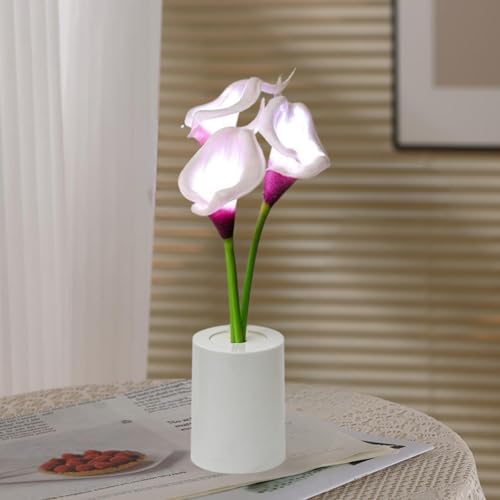
- 🎁 Package Contains: 1 × REFULGIX LED Flower Lamp with artificial calla lilies in a stylish white pot (batteries not included).
- 🪔 Perfect for Diwali & Festive Lighting: Brighten your home for Diwali, Navratri, Christmas, or any celebration with this elegant glowing flower lamp.
- 🌸 Elegant Floral Design: Features lifelike calla lilies with a soft LED glow — adds sophistication and beauty to your décor.
- 💡 Warm Ambient Light: Creates a relaxing and romantic atmosphere, perfect for pooja rooms, bedrooms, or office desks.
- 🪴 Stylish White Pot Base: Minimalist and premium design that fits perfectly with modern or traditional home décor.
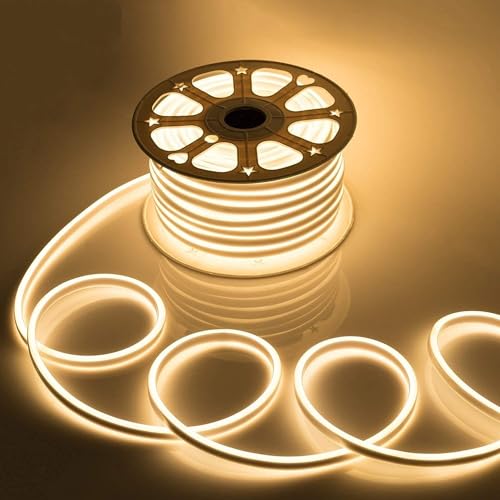
- 💡 Bright SMD LED Neon Rope Light for All Decor – High-brightness SMD LEDs ensure vibrant, uniform glow for both indoor and outdoor settings. Use as a profile light strip for false ceilings,…
- 💡 Create Custom Names, Signs & Shapes – Bring your ideas to life with this DIY-ready neon rope light. Craft personalized signs like “Happy Diwali,” “Let’s Party,” “Happy Birthday,” or your name….
- 💡 Waterproof Silicone with 12V Adapter – Comes with a 12V adapter (1-meter cable), and waterproof silicone coating for indoor-outdoor use. No adhesive or clips included — just plug and create…
- 💡 Versatile Ambient & Festival Lighting – Use this LED strip light for room decor, ceiling lighting, birthdays, Diwali, Christmas, weddings, or home ambiance. A must-have for LED strip lights for…
- 💡 Flexible & Cuttable Neon Strip Light –Made from soft silicone, this 16.4 ft/5 Meters LED strip is fully flexible and cuttable for any DIY shape or space. Perfect for wall decor, neon sign…

- Crompton Galaxy Copper String Lights with USB : Operate the led copper string lights anywhere you like, such as party, cafe, wedding, home – living room, bedroom. 5V USB connection to adapters, power…
- Optimum length for decoration: Transform your house into a captivating space with 100 LED lights strung along a 10-meter (33 feet) long flexible yet strong copper wire.
- Their lengthy design allows for versatile decorating options and the ability to shape them as desired. These lights are perfect for room decorations, weddings, parties, and various imaginative DIY…
- Transform your living space: infuse warmth into your study, or add a colorful charm to your bedroom. Our LED string lights offer the ideal solution for these desires. Enhancing any room with a…
- The Led Copper String lights are available in multiple colors like Warm White, Cool Day light, Red, Green, Blue, Pink.

- 🌟 Enchanting Illumination: 200 vibrant LEDs woven into a 10×3 feet curtain emit a mesmerizing glow, transforming any space with a touch of magic.
- 💫 8 Dynamic Lighting Modes: Explore 8 versatile lighting patterns, including steady glow, twinkling, and blinking effects — all controlled through the in-line button controller attached to the…
- 🔆 Adjustable Brightness: Customize brightness levels with the in-line button controller — no remote or battery required.
- 🌿 Durable & Nature-Inspired Design: High-quality artificial leaves combined with LED technology create a long-lasting and captivating aesthetic.
- 🏡 Versatile Decor Accent: Perfect for bedrooms, gardens, festive celebrations, or birthday decorations — adding charm and warmth to your space.
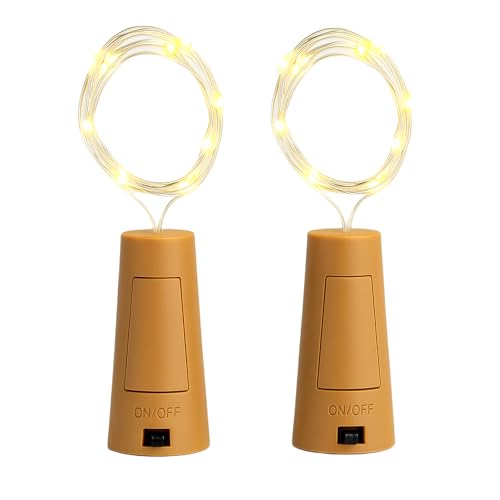
- Soft warm lighting adds gentle ambience to home spaces events and decorative displays creating a cozy inviting atmosphere.
- Bendable wire allows shaping wrapping and arranging around decor crafts jars centerpieces and tabletop accents.
- LED bulbs stay cool offering illumination without heat smoke or flame concerns for homes gatherings and daily decor.
- Long lasting battery operation provides dependable lighting controlled with a simple on off switch on each base
- Suitable for parties holidays bedrooms living rooms patios weddings and creative home design projects.
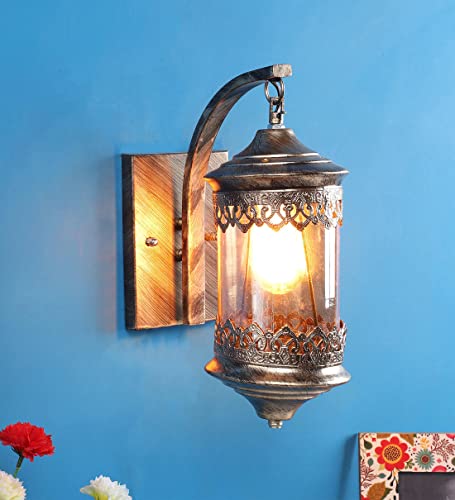
- Material & Color- Metal ( Gold) Glass (Amber)
- Vintage-Inspired Design: Featuring intricate metal detailing and a luxurious golden finish, this wall light combines timeless antique charm with modern elegance.
- E27 Bulb Holder: Equipped with a versatile E27 bulb holder (Bulb not Included)
- Versatile Lighting: Perfect for living rooms, bedrooms, hallways, entryways, and goes with both traditional and modern décor seamlessly
- Easy Installation: Quick and straightforward wall mounting for hassle-free setup.

- Press Control, Easy Operation: Just press the center lens of the LED push light to turn it on and emit soft light. Press it again to turn off the light. Very suitable for the elderly and children,…
- Ultra-high Quality Light Source with Soft Lighting: Our under cabinet puck lights have 4 pcs 0.5W 140 Lm/W Ra 90 LEDs output 50 lumens with high CRI. Adopt milky white anti-glare panel, provide soft…
- Battery Operated: Each stick on light is powered by 3 AAA batteries (not included). Wireless lighting, uncomplicated and safe, no worries about the risk of electric shock to children. For extended…
- Split Design and Easy Installation: Just twist it, our touch closet light is easy to remove and reinstall when the battery needs to be replaced. Customized ultra-adhesive pads ensures a stable…
- Mini Size and Wide Application: 2.76 inch samll size makes our tap light perfect for anywhere you need extra light, such as closet, cabinet, wardrobe, kitchen, bedroom, bathroom, classroom, laundry…

- PACKAGE CONTAINS: 20 LED Cork Light (Warm White – Pack of 2)
- These lights comes with a 3 Months Warranty & Replacement. Do not worry about electrical problems, the use of power-saving LED enables the lights power consumption to be only one-fifth of that of the…
- The wires and LED are IP44 waterproof. It can be used both indoor and outdoor without any worry of moisture, weather damage or short circuit.
- Lights a enameled copper wire. Ensuring low current as the copper wire is insulated and won’t overheat. You can fully enjoy a warm bright dimmable LED lights.
- The cork string lights lights make a great holiday decoration or perfect for Valentine’s day, Christmas, room decor and Diwali parties.
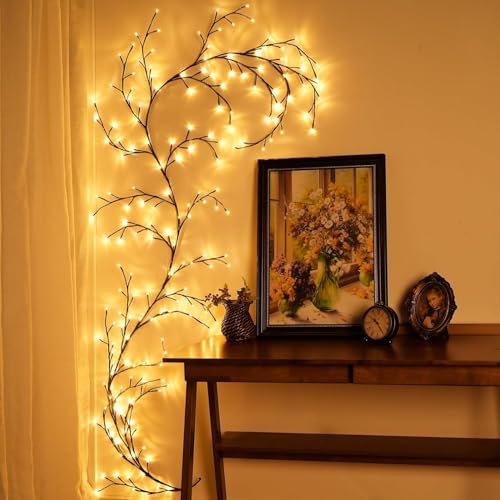
- Elegant DIY Willow Vine Lights – Designed with 96 warm white LEDs and handcrafted branch tips for a natural, rustic aesthetic.
- Warm & Cozy Glow – Creates a soft, inviting ambiance that enhances both festive décor and everyday home styling.
- 8 Dynamic Lighting Modes – Includes Combination, In-Waves, Sequential, Slo-Glow, Chasing/Flash, Slow Fade, Twinkle/Flash, and Steady On.
- Customizable Lighting Effects – Easily switch modes to match your mood, occasion, or décor theme.
- Flexible & Bendable Branches – Sturdy yet adjustable vine branches can be shaped and styled effortlessly.
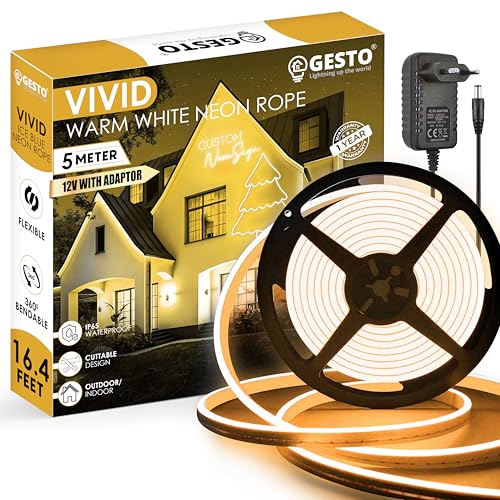
- 💡 Bright High-Quality SMD LEDs – Featuring high-brightness SMD LEDs that deliver a vivid, uniform glow indoors or outdoors. Ideal for ambient lighting,Signage boards,birthday parties,false…
- 💡 Durable Waterproof Silicone Design –Built to withstand indoor and outdoor environments with a waterproof silicone coating. Great for neon rope light usage in gardens, cafes, party setups,…
- 💡 Plug & Play with 12V Adapter Included – Includes a safe, energy-efficient 12V adapter with a 1-meter cable for easy installation. No wiring or soldering needed — just plug in and light up…
- 💡 Versatile Festive & Ambient Lighting – Perfect for Diwali, Christmas, birthdays, weddings, and everyday home décor. Use as neon light strip, party light strip, LED rope light, custom name…
- 💡 Flexible & Cuttable Neon Strip Light –Made with soft, silicone-coated material, this 5 meters/16.4 ft LED strip is fully flexible and cuttable. Perfect for custom DIY shapes, names, neon sign…