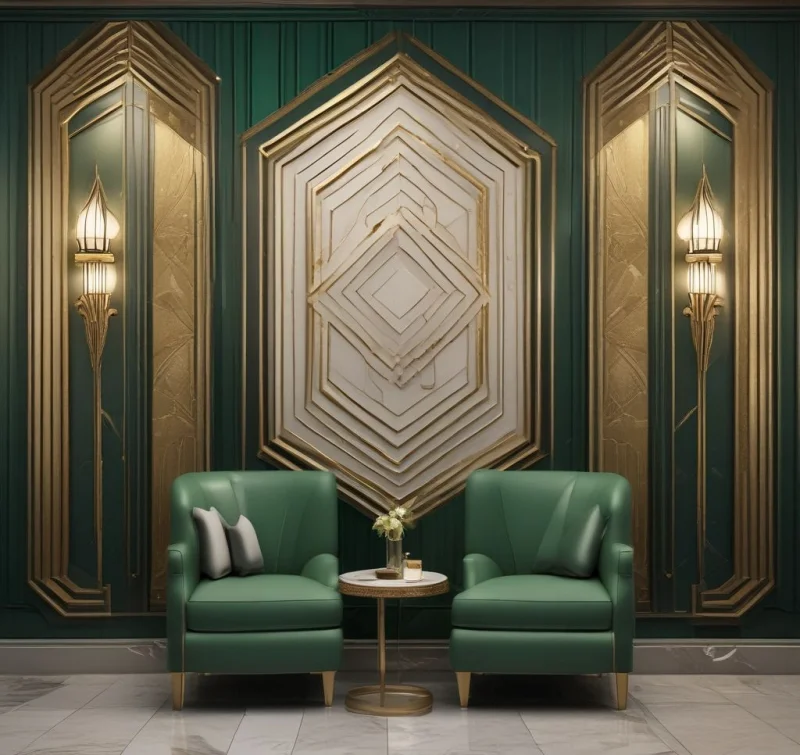
There’s something unquestionably compelling about entering into a place covered in black. It feels private, adventurous, and unexpectedly warm when done well. I’ve always believed that small spaces shouldn’t shy away from vivid colors—in fact, they thrive on them.
A black living room isn’t gloomy or tight if you know how to combine texture, light, and carefully chosen accents. Whether you’re dealing with a tiny apartment corner or a cozy family room, going black can really make your space feel more deliberate and inviting.
Ready to see how black can improve your living area? Let’s dive into these fascinating concepts that reveal little and dark can be very stunning.
1. Contemporary Dark Lounge With Sleek Lines
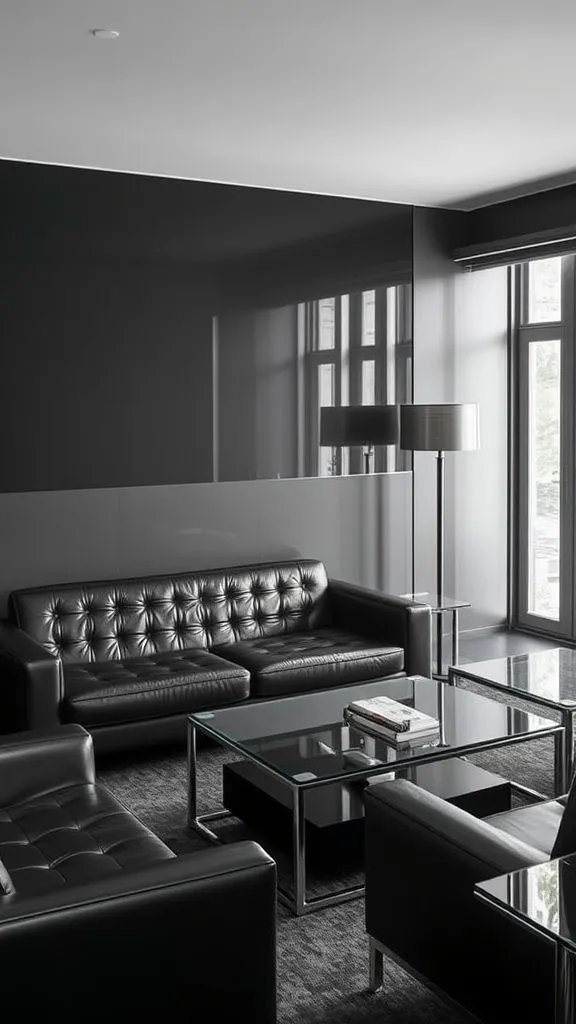
Clean lines and shiny surfaces distinguish this approach. Think charcoal sofas teamed with glass coffee tables and chrome lighting fixtures that reflect light brilliantly. The trick here is minimizing clutter—every element should serve a purpose.
Black leather or faux leather furniture works great because it’s easy to clean and offers that sophisticated vibe. Incorporate a single statement piece, such a sculptural floor lamp, to drive the attention upward.
I’ve discovered that keeping surfaces uncluttered makes even the tiniest room feel twice as spacious. Add one or two metallic accessories for modest sheen. This style suits anyone who loves that hotel-lobby sophistication without overwhelming a limited setting.
2. Warm Black Retreat With Ambient Glow
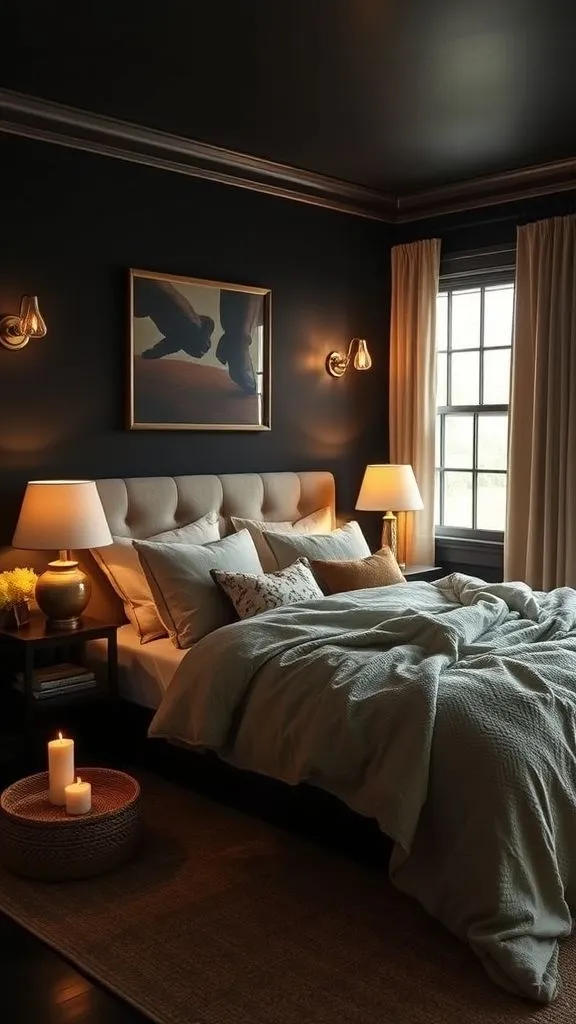
Nothing rivals the comfort of a dark space bathed in gentle, golden lighting. Use table lamps, string lights, or dimmable sconces to create layers of warmth. Black walls become comfortable rather than frigid when coupled with brass or copper fixtures that create a soothing glow.
Throw in thick blankets and large cushions in milk or caramel tones to lessen the drama. I adore how candles instantly change the mood—flickering flames against dark surfaces feel beautiful during twilight hours.
Consider frosted bulbs instead of bright white lights; they disperse wonderfully and prevent that sterile sensation. This configuration is excellent for movie nights or quiet reading sessions where you desire ultimate relaxation.
3. Dark Space With Expansive Window Views
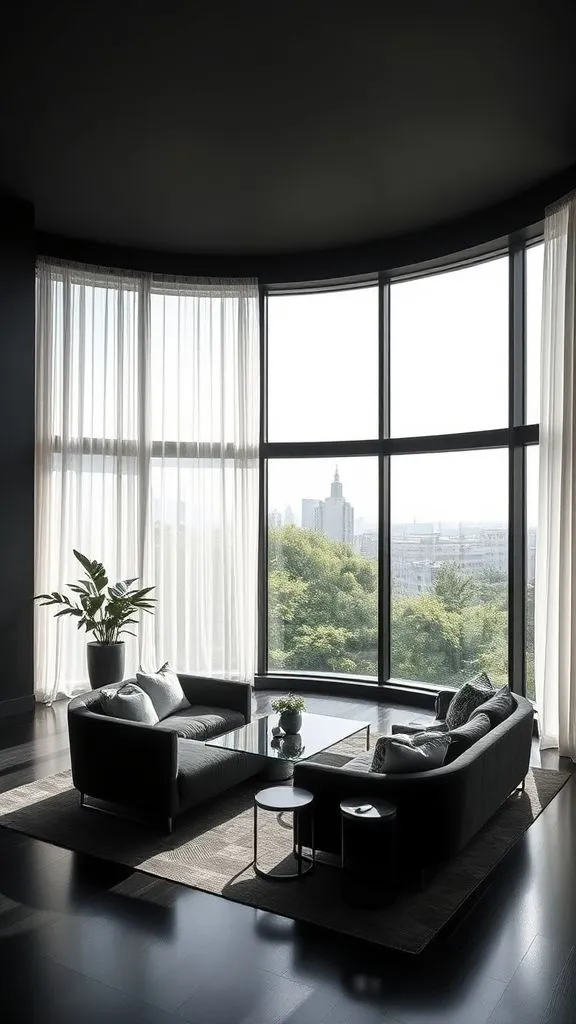
Large windows are your best friend when designing with black. Natural light flows in during the day, preventing any cave-like environment but preserving that refined edge. Position your chairs to face the windows so you’re always linked to the outdoors.
Sheer drapes in white or ivory let sunshine filter through without sacrificing seclusion. The contrast between bright lighting and deep walls generates incredible visual depth that pictures exceptionally well.
I’ve seen this work in both urban flats with city views and suburban homes overlooking gardens. Keep window sills free to maximize light flow. By evening, those same windows become reflecting surfaces that bounce back inside lighting beautifully.
4. Simple Black Haven With Raw Concrete
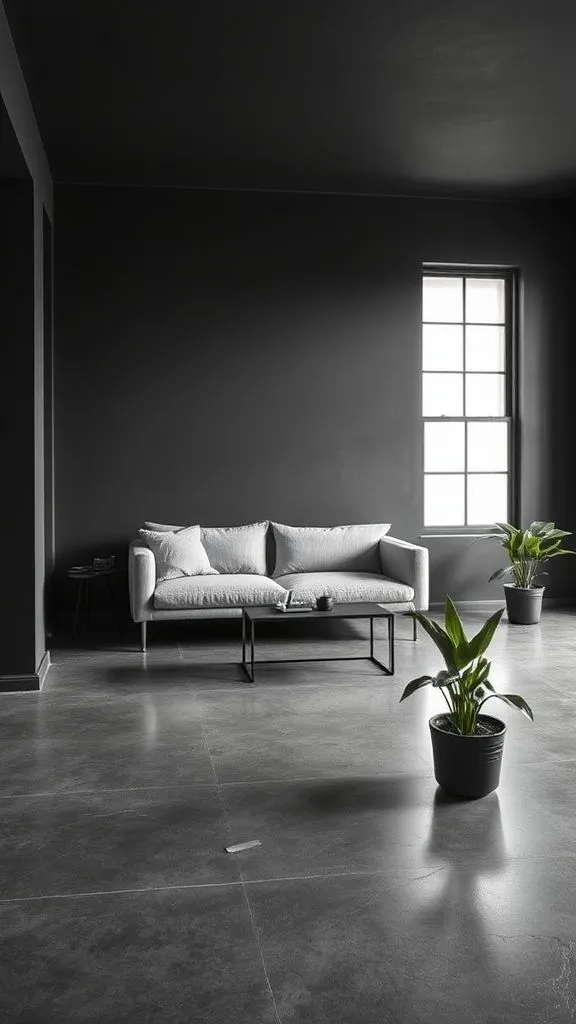
Industrial vibes meet simplicity here. Exposed concrete floors mixed with matte black walls produces an urban loft design that is both edgy and refined. This combo requires very little more decor—maybe a low-profile sofa and a metal side table.
The textural contrast between smooth painted surfaces and rough concrete offers surprising appeal without excessive patterns. Plants in simple black pots preserve the coherent effect while softening rough edges.
I enjoy how this style matures smoothly since little scuffs or blemishes blend into the purposely raw appearance. It’s also budget-friendly if you’re working with existing concrete that just needs sealing rather than covering up.
5. Charcoal Living Area With Natural Wood Elements
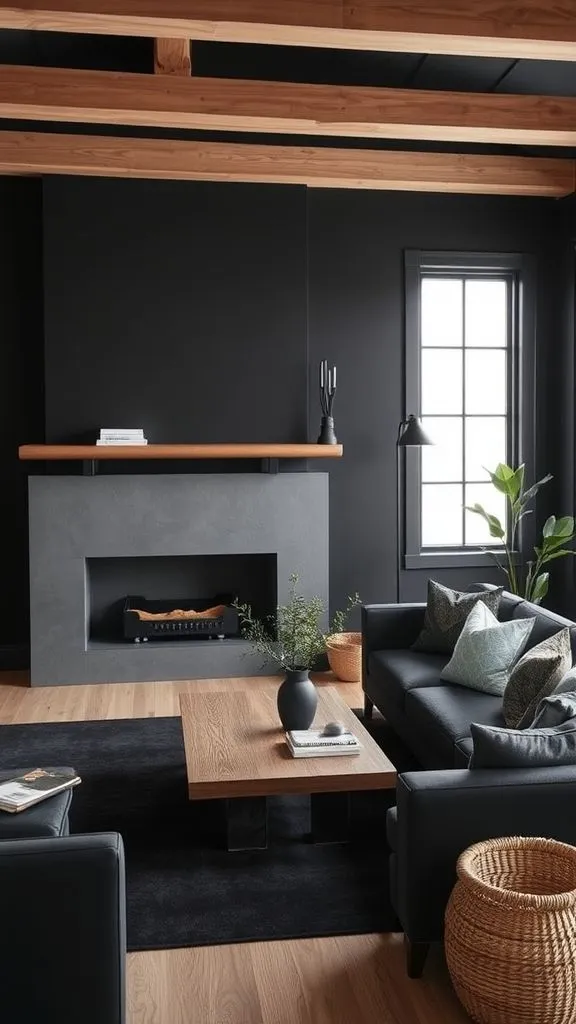
Mixing black with wood tones brings warmth and organic texture into the equation. Choose a wooden coffee table, floating shelves, or even exposed ceiling beams to break up the darkness.
Light oak or walnut works nicely because the grain pattern becomes a focal point against solid black backdrops. This mix seems grounded and inviting—less formal than all-black but still dramatic.
I’ve noticed that wooden photo frames and woven baskets offer that finishing touches that make a space feel lived-in.
The natural material keeps the room from feeling too monotonous or fake. Plus, wood reflects light differently than painted surfaces, providing subtle highlights throughout the day.
6. Factory-Inspired Dark Living Quarter
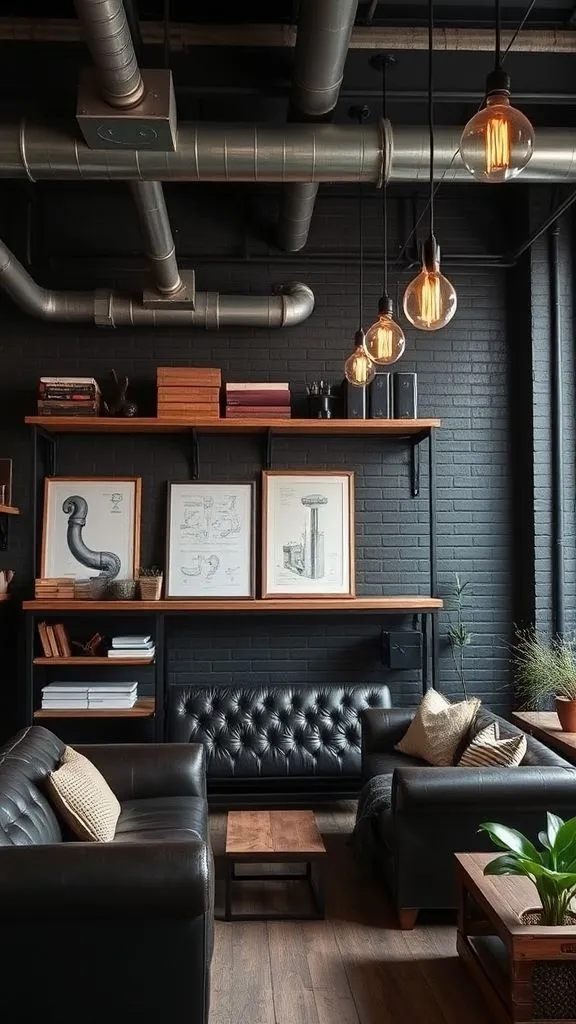
Exposed pipes, metal shelving, and Edison lighting define this gritty look. Black becomes the perfect backdrop for showing off structural components usually buried beneath drywall. Distressed leather chairs and recycled wood details complement the warehouse sense without feeling staged.
Keep dcor minimal—think vintage manufacturing signs or blueprint art in plain frames. The beauty here is in the raw, unrefined feel that honors practical design. I adore how this style gives little places flair and stories, like you’re living in a converted workshop.
Metal storage solutions optimize vertical space while preserving the industrial vibe. It’s surprisingly useful for everyday living while seeming so design-forward.
7. Dark Scheme With Crisp White Highlights
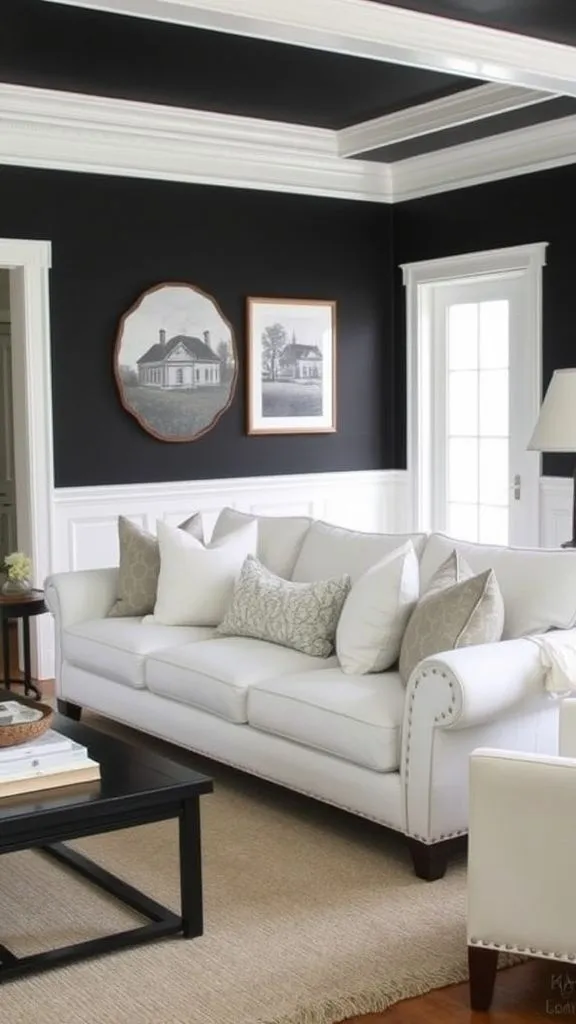
Strategic white touches keep a dark area from looking overly substantial or closed-in. White crown molding, door frames, and baseboards add architectural interest that draws the eye around the space.
A white or cream sofa becomes the room’s anchor, offering visual respite while maintaining sophisticated. Throw pillows in varying tones of white, ivory, and light gray add depth without introducing competing colors.
I’ve noticed this method makes ceilings appear higher since the white trim pulls attention upward. Consider white lampshades or picture mats to diffuse brightness equally. This classic contrast works in any design style, from traditional to contemporary, and pictures well for those Instagram-worthy events.
8. Opulent Dark Room With Metallic Details
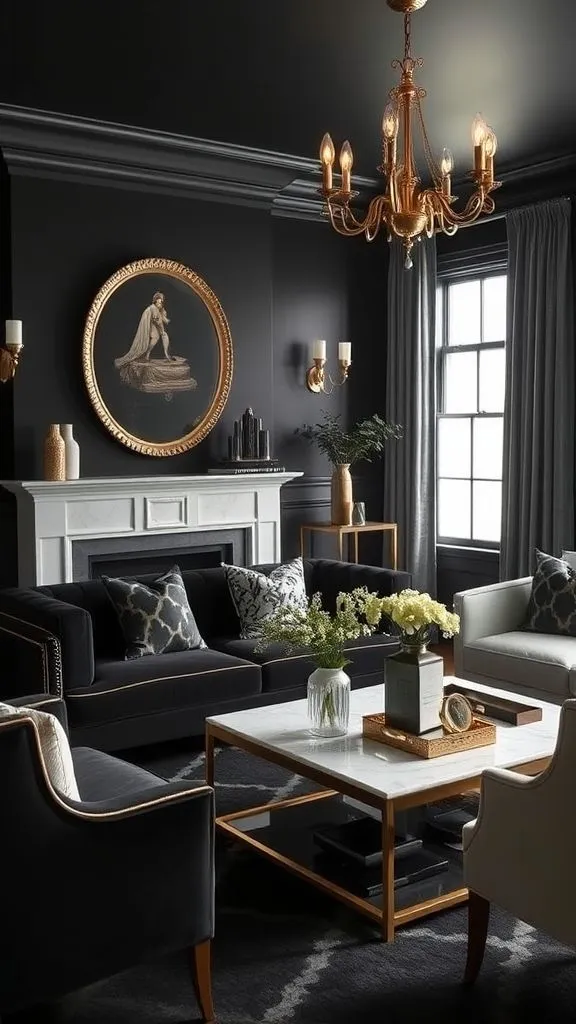
Gold hardware, brass light fixtures, and copper accents enhance black from striking to plain gorgeous. Think velvet couches with gold piping, a mirrored coffee table with gold legs, or marble trays with metallic accent.
The trick is utilizing warm metallics sparingly so they read as rich touches rather than overbearing glitter. Black provides the perfect neutral canvas that makes gold shine without competing. I’ve always felt this mix carries old Hollywood grandeur into modern living.
Even affordable gold-toned objects from discount stores look pricey against dark walls. Add a single chandelier or pendant light with gold embellishments to provide that stylish touch overhead.
9. Tight Black Living Space With Art Display
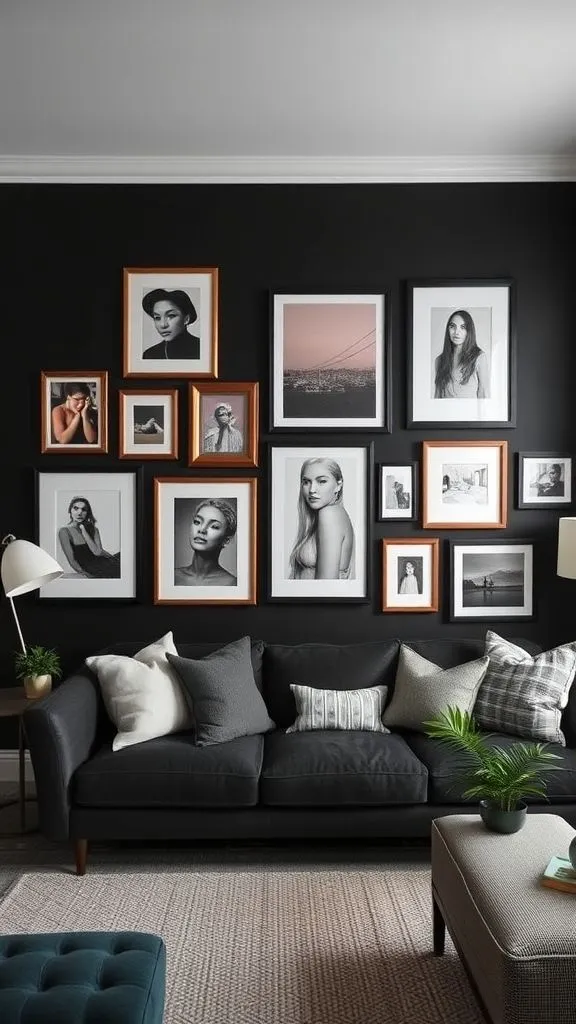
Turn your little square feet into a curated exhibition. Black walls make artwork pop dramatically—colors appear more bright and photography gains emphasis. Use a range of frame sizes and orientations to generate visual rhythm along one wall.
The dark background combines incongruous items into a unified grouping that feels planned rather than random. I appreciate how this method adds flair without taking up floor space, which is vital in compact settings.
Swap out items seasonally to keep the design new without substantial redecorating. Include small spotlights or picture lights to highlight favorite objects and give dimension. This works especially effectively for renters who can’t make permanent structural alterations.
10. Compact Dark Area With Reflective Surfaces
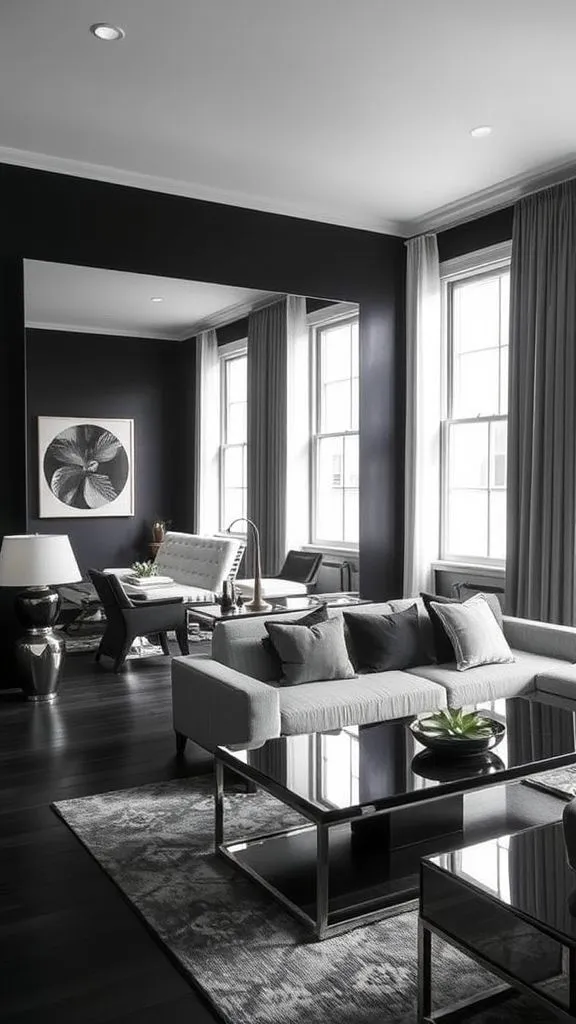
Mirrored walls or huge mirrors properly placed opposite windows quadruple your visual space instantaneously. The reflection tricks the eye into perceiving more square footage while bouncing light across the room.
Black becomes less constricting when coupled with these reflective pieces that generate depth and movement. Consider a floor-to-ceiling mirror behind your sofa or across from your primary seating area. I’ve seen modest living spaces feel almost spacious with this easy addition.
Mirrored furniture components like console tables or cabinet doors retain the appearance without dominating the room. Just be conscious of what’s being reflected—you want beautiful vistas, not cluttered corners or uncomfortable angles reproduced.
11. Dark Sanctuary With Leafy Green Touches

Houseplants become live art against black backgrounds. The contrast makes every leaf and stem show out magnificently, converting basic pothos or fiddle leaf figs into statement pieces. Choose plants with diverse textures—glossy monstera leaves, feathery ferns, or trailing ivy all look wonderful.
Black planters preserve the consistent color scheme while allowing the vegetation show. I’ve discovered plants really tend to grow better when they’re displayed so publicly because you remember to water them!
The natural element softens hard edges and cleanses air, making your little area healthier and more welcoming. Even a single huge plant may radically shift the energy of a dark space.
12. Black Living Zone With Statement Floor Covering
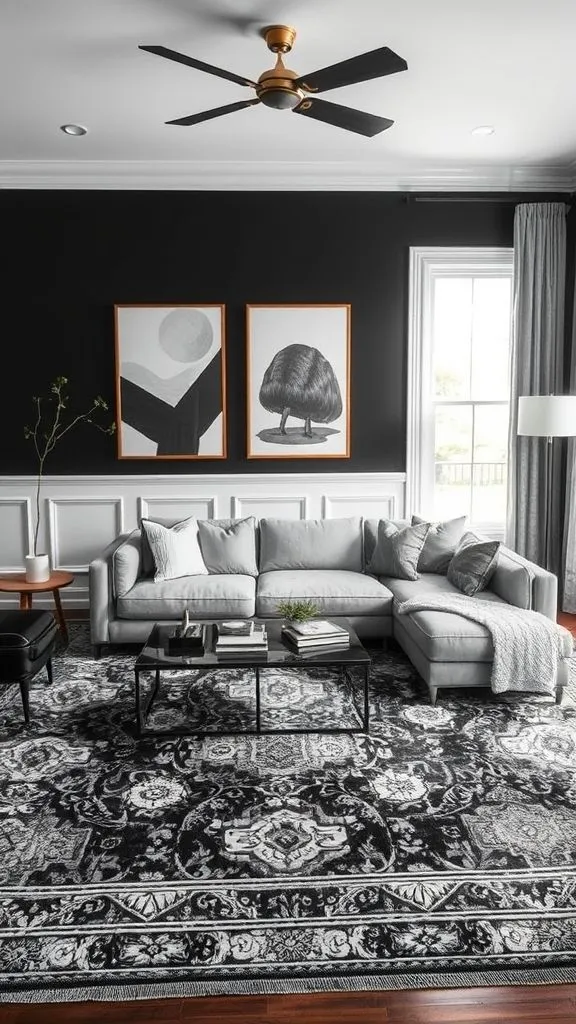
A dramatic area rug grounds your sitting arrangement while adding texture and design. Choose anything with white, cream, or silver threads to lighten the overall sensation and shield your eyes from monotony.
Geometric patterns work nicely in modern environments, while classic Persian or Moroccan designs bring unexpected eclecticism. The rug defines your living area even without walls, which helps in open-concept layouts.
I appreciate how this grounds furniture visually and makes the area appear carefully created rather than randomly distributed. Plus, rugs give warmth underfoot, which is especially appreciated if you have tile or concrete flooring.
Don’t be afraid to go oversized—in tiny rooms, larger carpets really make the area feel bigger than little ones do.
13. Free-Spirited Black Lounge With Eclectic Flair
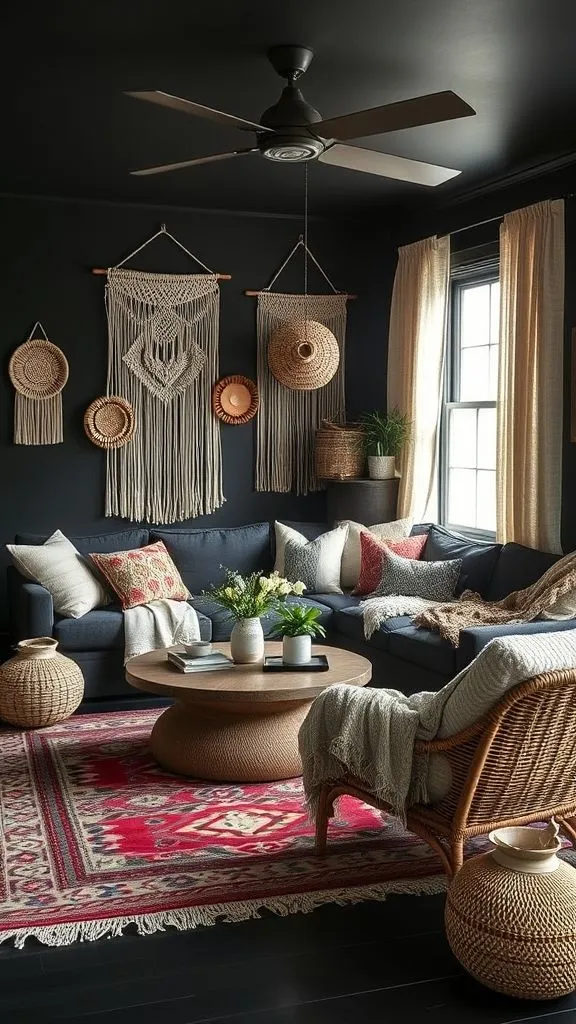
Mix patterns, textures, and worldwide inspirations for a casual, collected-over-time vibe. Layer a vintage kilim rug over dark floors, add macramé wall hangings, and include woven baskets for storage.
Black offers the anchoring neutral that helps these various elements coexist together without visual confusion. Include plenty of textiles—embroidered cushions, woolen throws, and tasseled curtains all lend to that boho coziness.
I enjoy how your design feels personal and unassuming, like you’ve gone and brought back things. Wooden beads, rattan furniture, and pottery objects in earthy tones complete the theme. This technique is tolerant since there’s no precise rulebook—if it makes you happy, it belongs.
14. Intimate Black Space With Hearth Feature
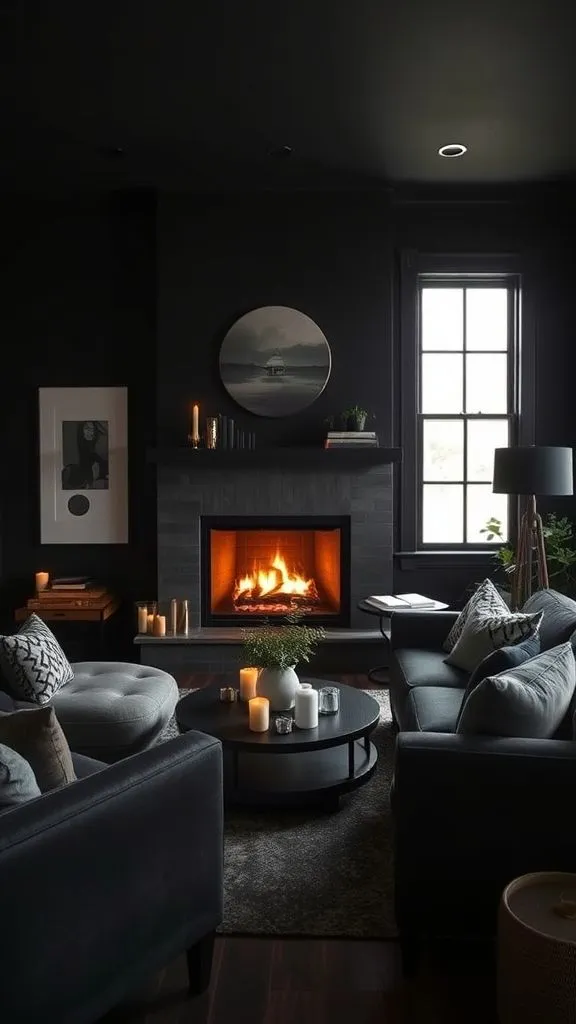
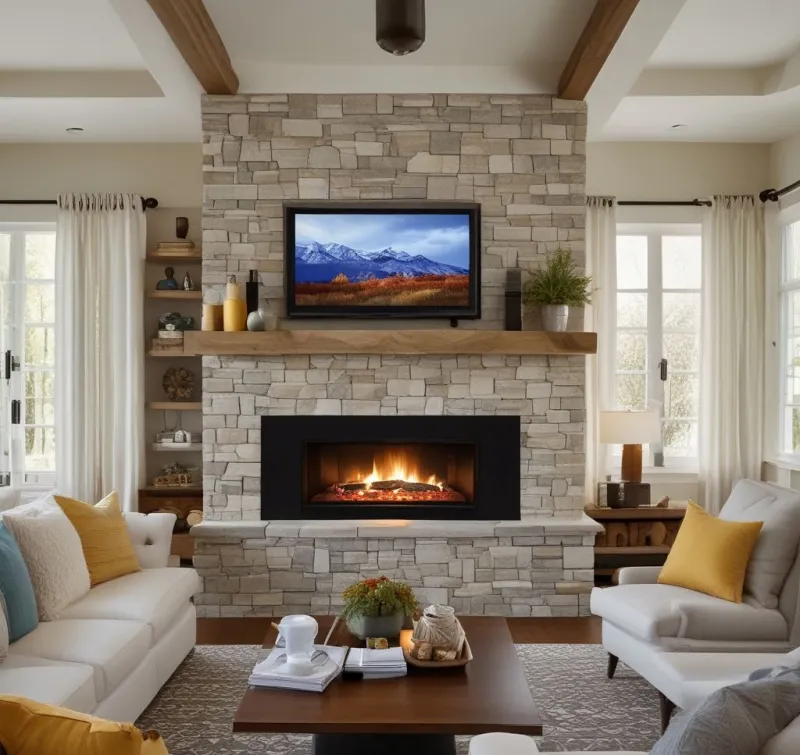
A fireplace becomes the ultimate center point in a gloomy room, creating warmth both literally and figuratively. Whether it’s a traditional wood-burning arrangement, gas insert, or modern electric device, the flames attract people together naturally.
Arrange chairs in a semicircle facing the fireplace to encourage conversation and relaxation. Black walls amplify the glow, making even modest fires feel more significant. I’ve found that fireplace mantels offer great display area for candles, small plants, or seasonal decor without crowding the room.
The crackling sound and flickering light offer sensory richness that makes small places seem especially warm during colder months. If you don’t have a genuine fireplace, realistic electric ones generate similar ambiance at a fraction of the installation expense.
15. Dark Living Area With Bright Borders And Details
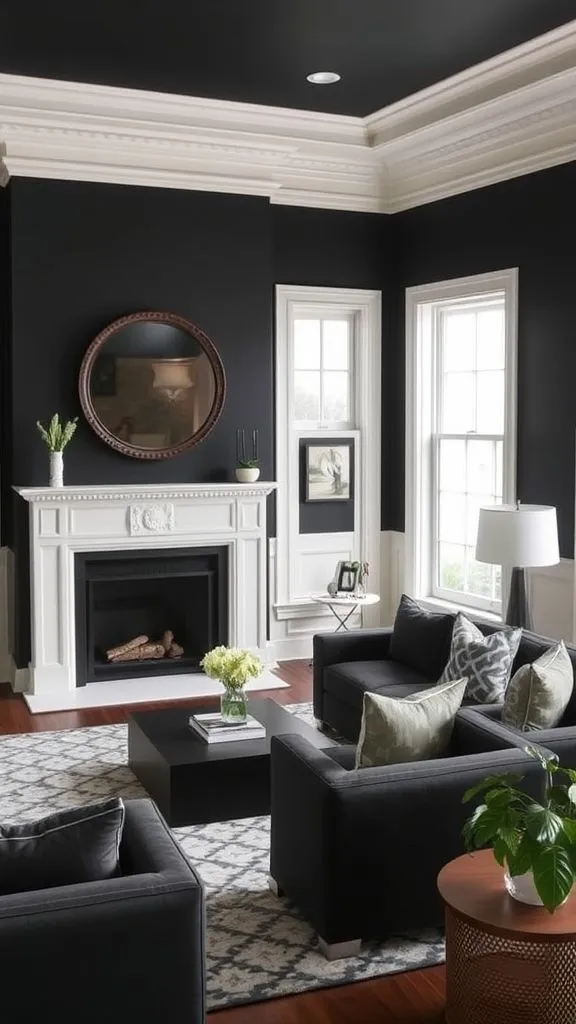
White or cream-colored trim, molding, and architectural elements create built-in contrast that makes rooms feel more spacious and polished. Crown molding leads eyes upward, making ceilings appear higher than they are.
Baseboards protect walls while creating a polished, deliberate look that improves the entire space. This timeless mix works in both modern and traditional homes, adapting to your furniture choices. I appreciate how the trim creates natural gaps that guide the eye across the space, preventing that overwhelming all-black look.
Consider painting window frames and door casings in similar white for unified flow. This process demands some patience during painting (tons of taping!) but the sharp, professional results are worth the effort.
16. Petite Apartment Corner In Deep Charcoal
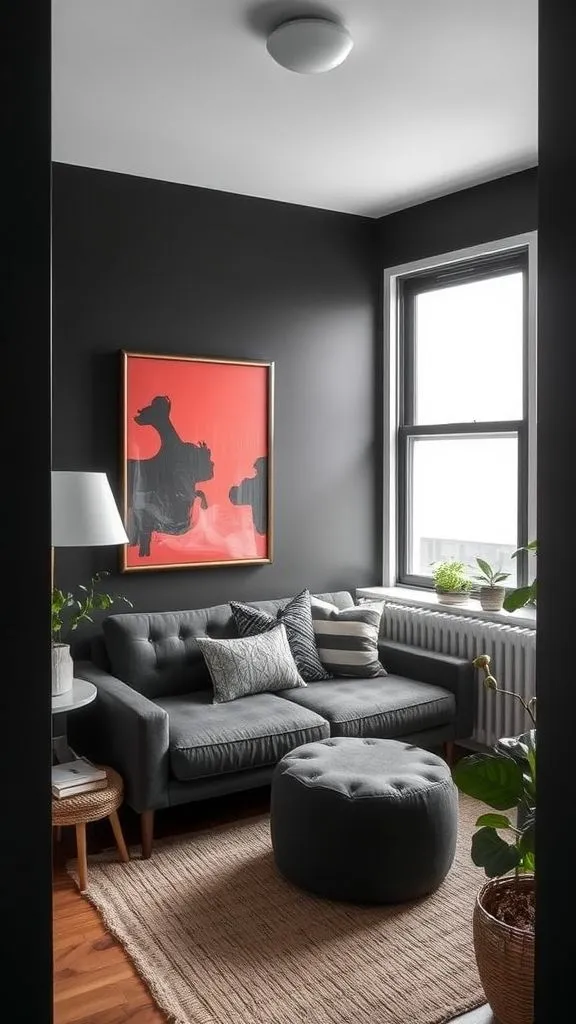
Small doesn’t mean uninteresting, and this demonstrates it. Embrace your limited square footage by going all-in with black walls that make the area feel like a jewel box rather than a compromise. Use multi-functional furniture—a couch bed, nesting tables, or an ottoman with storage inside.
Vertical storage solutions like towering bookcases or floating shelves utilize every inch without eating into floor space. I’ve discovered that reducing down possessions makes tiny dark rooms appear intentional rather than claustrophobic.
Keep those pieces you actually love and use consistently. One noteworthy element like a vibrant picture or distinctive furniture adds personality without clutter. This design is great for studio dwellers or anyone creating a defined living zone in an open style.
17. Sultry Dark Retreat With Sumptuous Upholstery
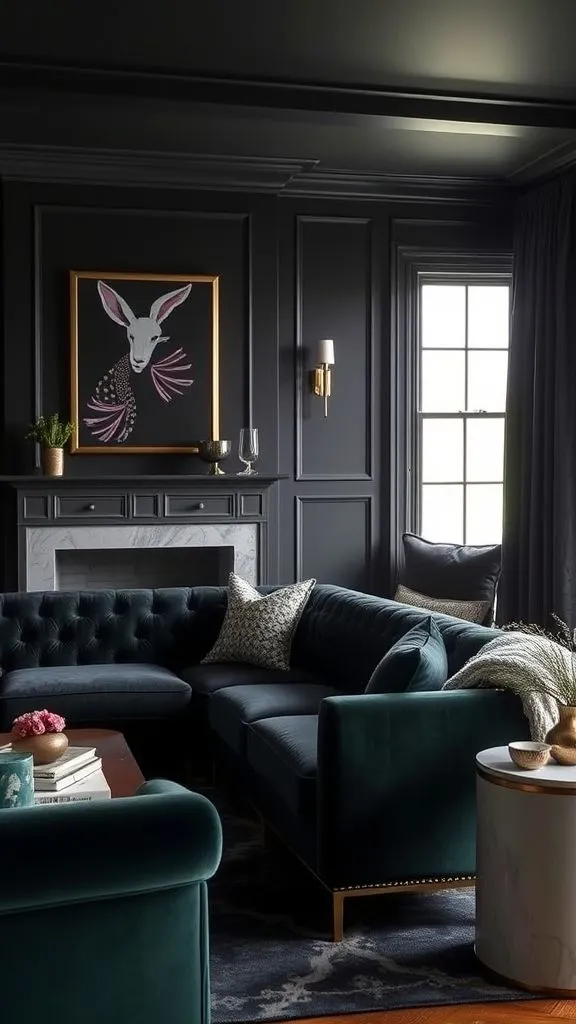
Velvet furniture in charcoal, navy, or even emerald green offers touchable luxury that urges you to dive in and remain. The fabric’s light-catching quality adds dimension to black interiors, generating subtle shine as you move about the space.
Pair with brass legs or nailhead trim for more sophistication. I’m obsessed with how velvet makes even budget furniture look luxurious and designer-worthy. Layer diverse textures—a leather chair, knit throw, and smooth marble side table—to keep things fresh.
This somber design works brilliantly for nighttime events when muted lighting makes everything feel personal and unique. Just remember that velvet displays footprints and seat marks, so include blankets for protection on high-use furniture.
18. Black Living Quarter With Dramatic Drapery
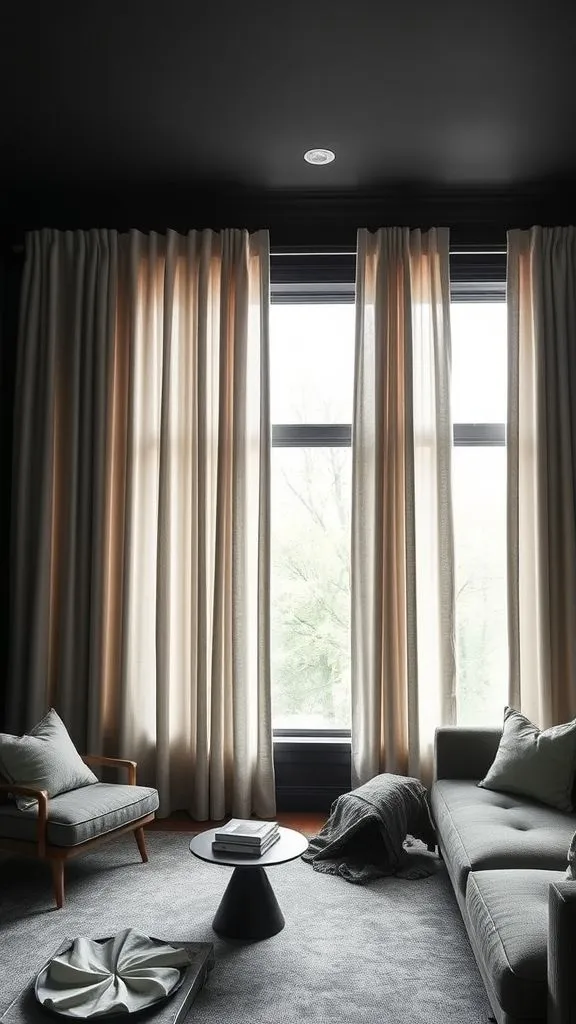
Floor-to-ceiling drapes generate vertical lines that make ceilings appear higher while bringing softness to strong architectural components. Choose thick materials like linen or velvet in light hues to contrast with black walls and regulate natural light.
The drapes surround your windows like artwork, making even basic openings look bespoke and expensive. I’ve noticed that extending curtain rods considerably beyond the window frame makes openings appear wider than they actually are. When closed, they contribute insulation and sound dampening—practical benefits beyond looks.
This element transforms a plain area into something that feels lovingly created and professionally decorated. Puddle the cloth gently on the floor for extra elegance, or keep it hovering just above for easy upkeep.
19. Dark Space With Pale Wood Underfoot
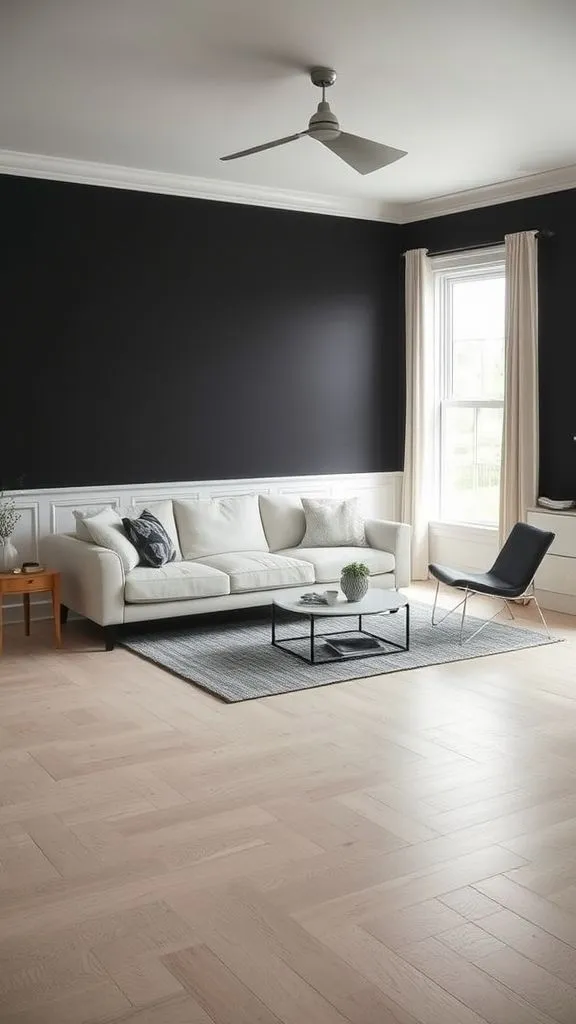
Light-colored wood or laminate flooring keeps black walls from looking too cave-like by reflecting light upward. The natural grain offers warmth and character that contrasts wonderfully with smooth painted surfaces.
This mix feels balanced—dramatic but not overwhelming, modern but not frigid. White oak, maple, or light ash are popular alternatives that wear well and match numerous furniture types.
I enjoy how this flooring choice illuminates the area from the bottom up, making even small spaces feel open despite dark walls. It’s also practical since dust and pet hair appear less than on dark floors. Add a basic area rug in the seating zone for extra comfort and visual appeal.
20. Single Black Statement Wall In Neutral Room
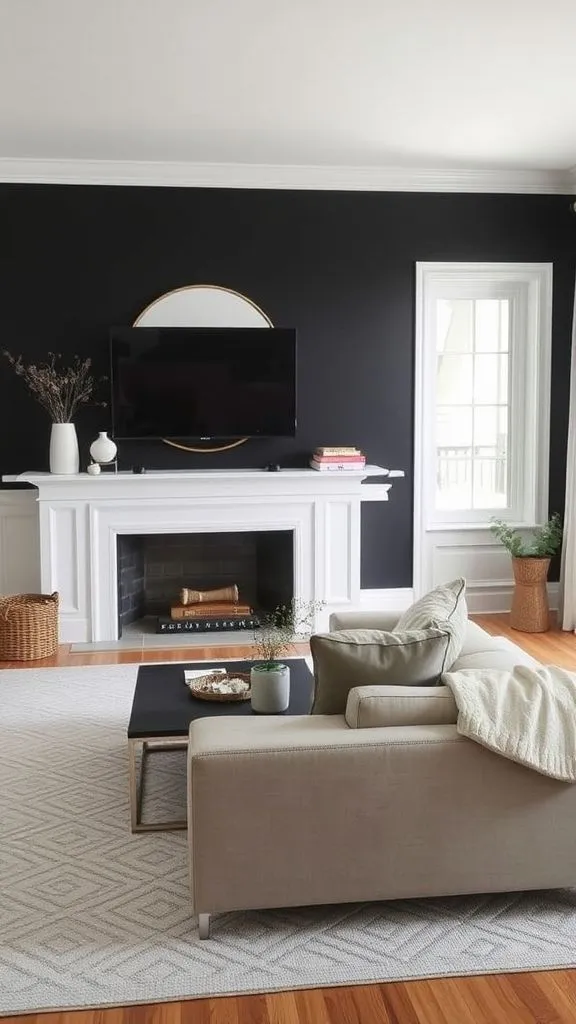
If pure black feels too committed, try one accent wall behind your sofa or TV. This produces a dramatic backdrop without enclosing the entire space in darkness. Keep other walls in light white, gray, or beige to preserve brightness and airiness.
The black wall becomes your room’s focal point, suitable for installing artwork, shelving, or a large mirror. I adore this idea for renters or anyone testing out dark decor before jumping in entirely.
It’s also budget-friendly since you’re just painting one surface. Choose the wall that gets the most natural light to prevent it from feeling like a black hole in your home.
21. Streamlined Black Area With Space-Saving Pieces
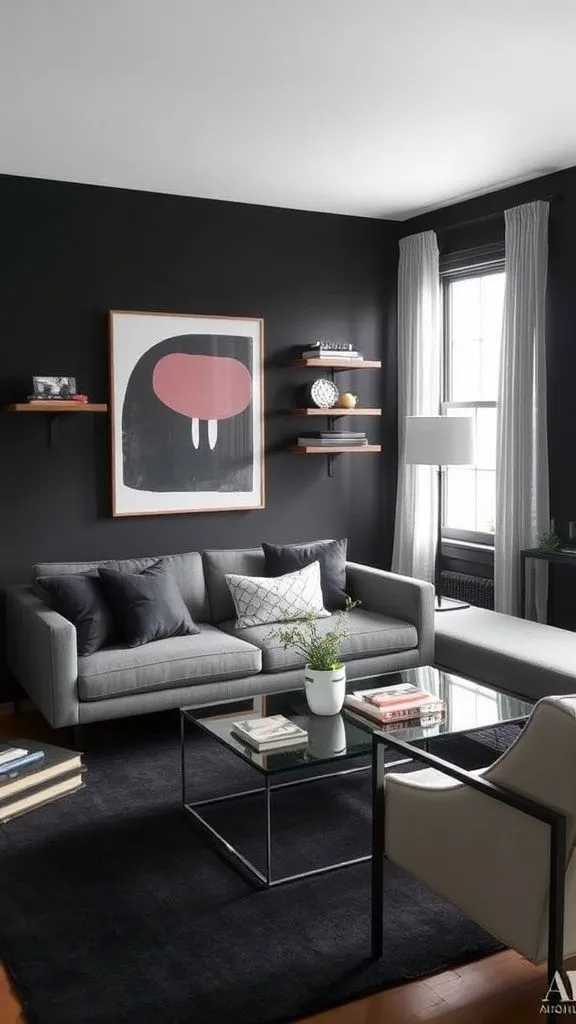
Narrow furniture with narrow profiles makes all the difference in confined confines. Choose a sofa with exposed legs (they provide visible space underneath), armless chairs, and floating shelves instead of cumbersome bookcases.
Glass or acrylic tables nearly disappear, making the area feel less congested. Black walls actually help by establishing a uniform backdrop that doesn’t compete with your carefully picked furniture items.
I’ve found that measuring everything before purchase minimizes those “it looked smaller in the store” calamities. Stick to necessary elements only—in small black rooms, less really is more. Multi-functional objects like storage ottomans or foldable coffee tables improve functionality without losing elegance.
22. Black Haven With Sandy Neutral Accents
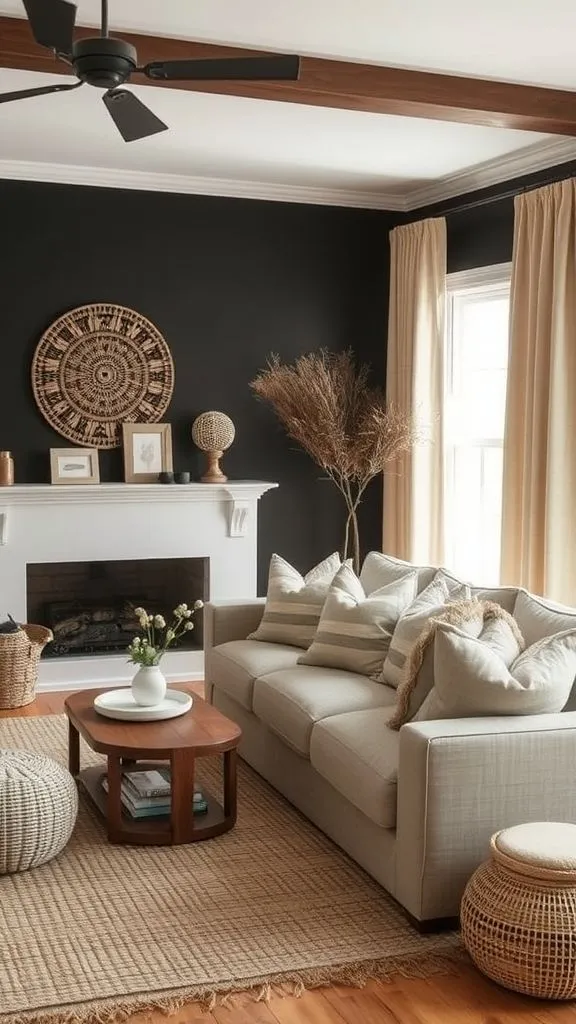
Soft beige, taupe, and cream elements warm up black’s intensity without weakening its impact. Think beige linen drapes, oatmeal-colored rugs, and pillows in various sandy tones that enhance comfort. This earthy color feels organic and relaxing, like a modern desert getaway.
The neutral tones prevent the area from reading as overly stark or macho. I appreciate how this mix works in both modern and classic settings, according to your personal style. Woven textures like jute, rattan, and linen emphasize the natural, casual vibe.
Add wooden components in medium tones to bridge the color disparity and create seamless flow across the area.
23. Dark Living Space With Angular Visual Art
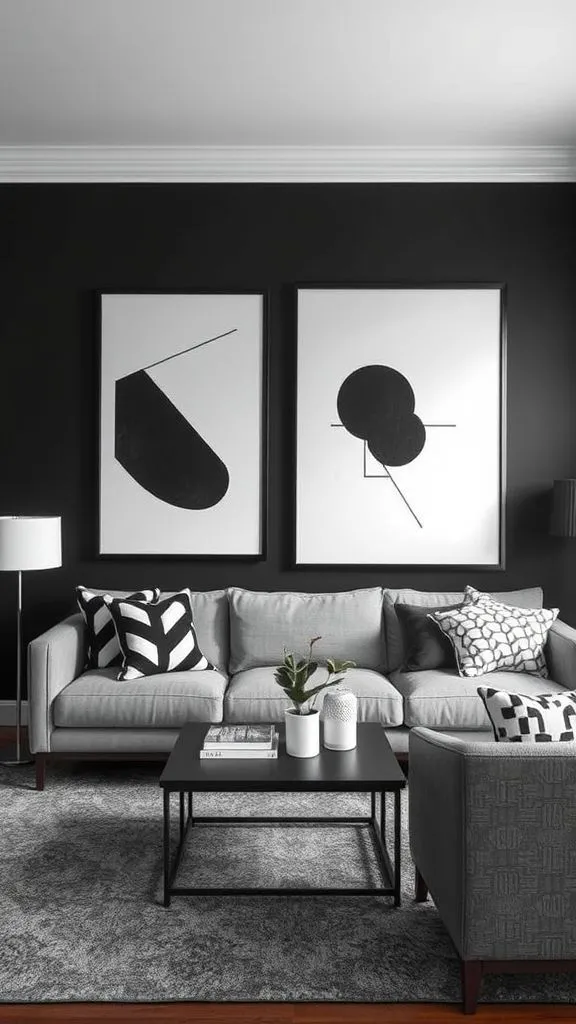
Geometric prints, abstract shapes, and dramatic patterns provide vitality and individuality without introducing competing hues. Black-and-white photos or line drawings retain the monochrome concept while giving visual interest.
Large-scale pieces generate more impact than clusters of small prints in cramped rooms. The rigid elements contrast nicely with soft furnishings and textiles, giving equilibrium. I prefer blending framed prints with canvas pieces for varying dimension on the wall.
This strategy works especially effectively for modern or minimalist rooms where clean lines dominate. Consider removable wall decals if you’re renting—they offer the same graphic impact without permanent commitment or harm to walls.
24. Black Room With Integrated Illumination
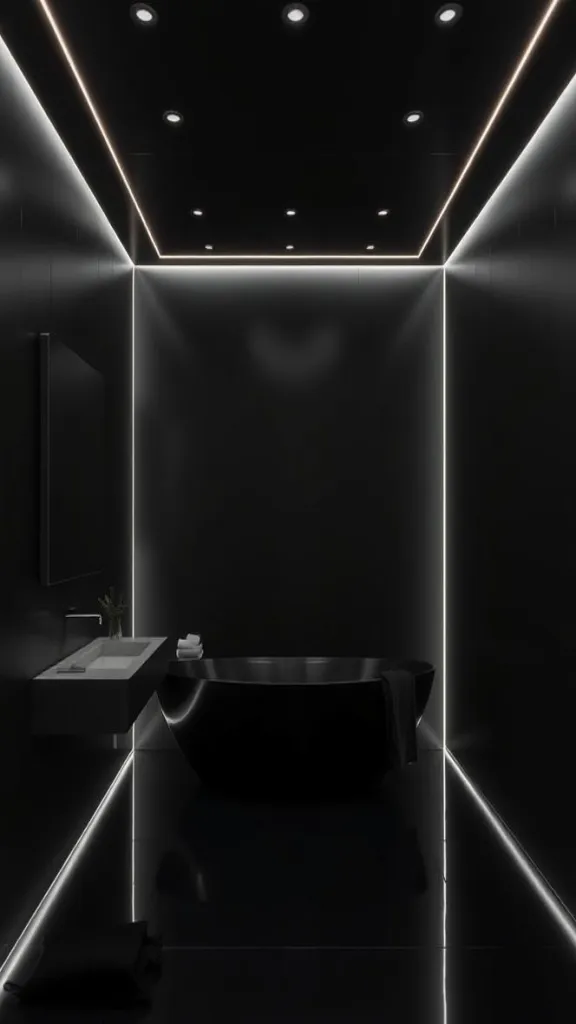
Built-in LED strips, recessed lighting, or cove lighting adds architectural character while solving the old “is it too dark?” concern. Install strips behind floating shelves, behind the TV, or along crown molding for indirect ambient glow.
Dimmable systems enable you modify brightness for different moods and times of day. This provides levels of light that professional designers swear by but many homes lack. I’ve witnessed how appropriate lighting changes black areas from potentially dismal to wonderfully magnificent.
The smooth flood of light highlights textures and gives depth that single overhead lighting can’t achieve. It’s worth employing an electrician for appropriate installation—the dramatic results warrant the expenditure.
25. High-Contrast Black Retreat With Striking Decor
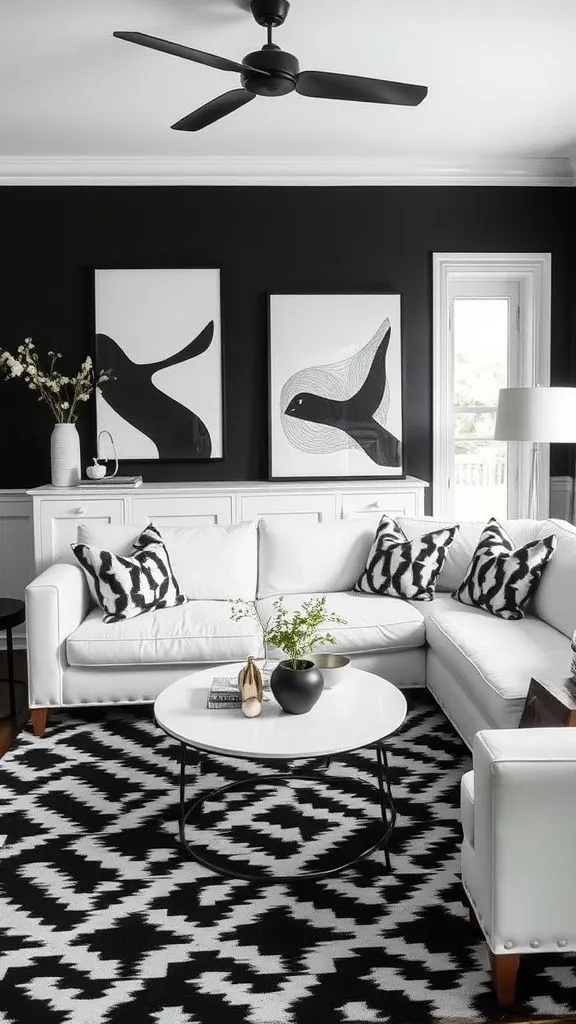
Embrace the full drama of black and white with no in-between. Think crisp white furniture, dramatic black-and-white art, and stark geometric patterns that make a powerful statement. This graphic style feels current and confident, excellent for folks who like clean design concepts.
Every element should be intentional—there’s no space for clutter in this approach. I appreciate how this style shoots wonderfully and never goes out of trend.
Add texture with materials rather than color: glossy vs matte finishes, smooth leather against nubby fabric, or polished metal near gritty concrete. The high contrast easily defines zones even in open layouts, helping small spaces feel structured and meaningful.
FAQs
Does painting a tiny living room black make it look smaller?
Not necessarily. Black can really blur boundaries and create depth when matched with good lighting and mirrors. The trick is balancing darkness with reflective surfaces, light-colored furnishings, and adequate light sources. Many designers choose black intentionally to make small spaces feel more intimate and intentional rather than crammed.
What’s the greatest lighting for a little black living room?
Layer your lighting with a combination of ambient, task, and accent sources. Use dimmable overhead lighting, table lamps at varying heights, and LED strips for indirect glow. Warm-toned lights (2700-3000K) create comfort, while cooler tones feel more invigorating. Multiple light sources prevent harsh shadows and create complexity.
How can I keep a black living room from feeling cold or unwelcoming?
Incorporate warm textures like velvet, wool, and wood with your black palette. Add plenty of soft materials through throws, cushions, and rugs. Use warm metallics like brass or copper instead of chrome. Plants add vitality and warmth naturally, while candles create instant coziness during twilight hours.
Can I use black in a rental apartment living room?
Absolutely! Try removable wallpaper, huge artwork, or black furniture against white walls instead of painting. Black curtains, rugs, and accent pieces create the feel without permanent alterations. If your lease allows painting, collect swatches and paint codes for quick restoration when moving out. Many landlords appreciate renters who enhance spaces tastefully.
What colors go best with black in small living rooms?
White creates classic contrast, while beige and cream give warmth. Metallics like gold or brass provide luxury, and emerald or blue introduce subtle color without dominating. Natural wood tones ground the space organically. Even modest splashes of blush pink or terracotta can work if you want a softer, more bohemian feel.
Conclusion
Designing a little black living room is all about confidence and harmony. Don’t let limited square footage scare you away from bold choices—embrace the drama and watch your space change into something genuinely exceptional.
Remember that lighting, texture, and clever accents are your best weapons for making black work beautifully in confined places. I’ve seen countless modest rooms come alive with the appropriate approach to gloomy design.
Start with one black element if you’re nervous, then develop from there as your comfort grows. Whether you go somber and maximalist or elegant and simple, black gives amazing adaptability. Your living room should represent your personality, so trust your instincts and enjoy the process.
Sometimes the smallest areas make the biggest statements, and black helps you communicate exactly what you mean with style and sophistication.
No products found.